
Last updated November 2, 2026
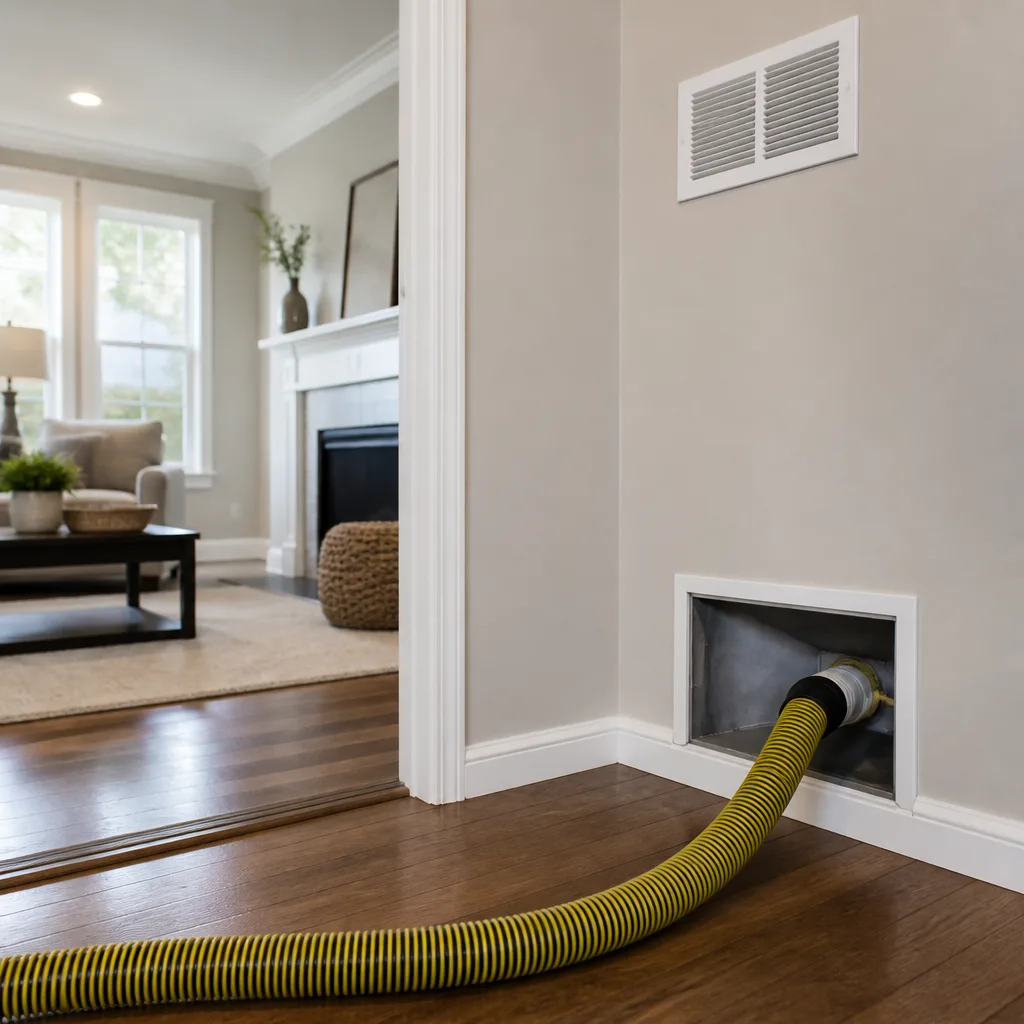 Whole-home duct cleaning
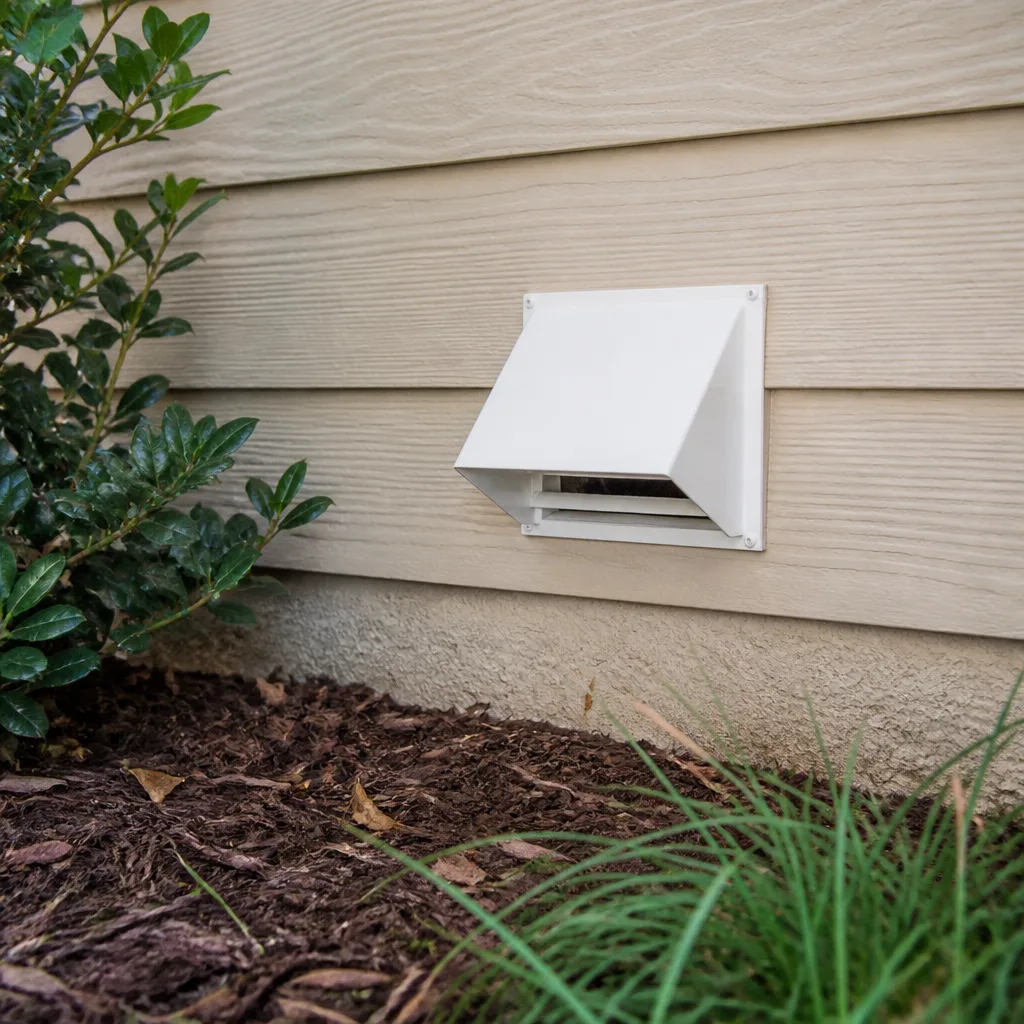 Dryer vent cleaning
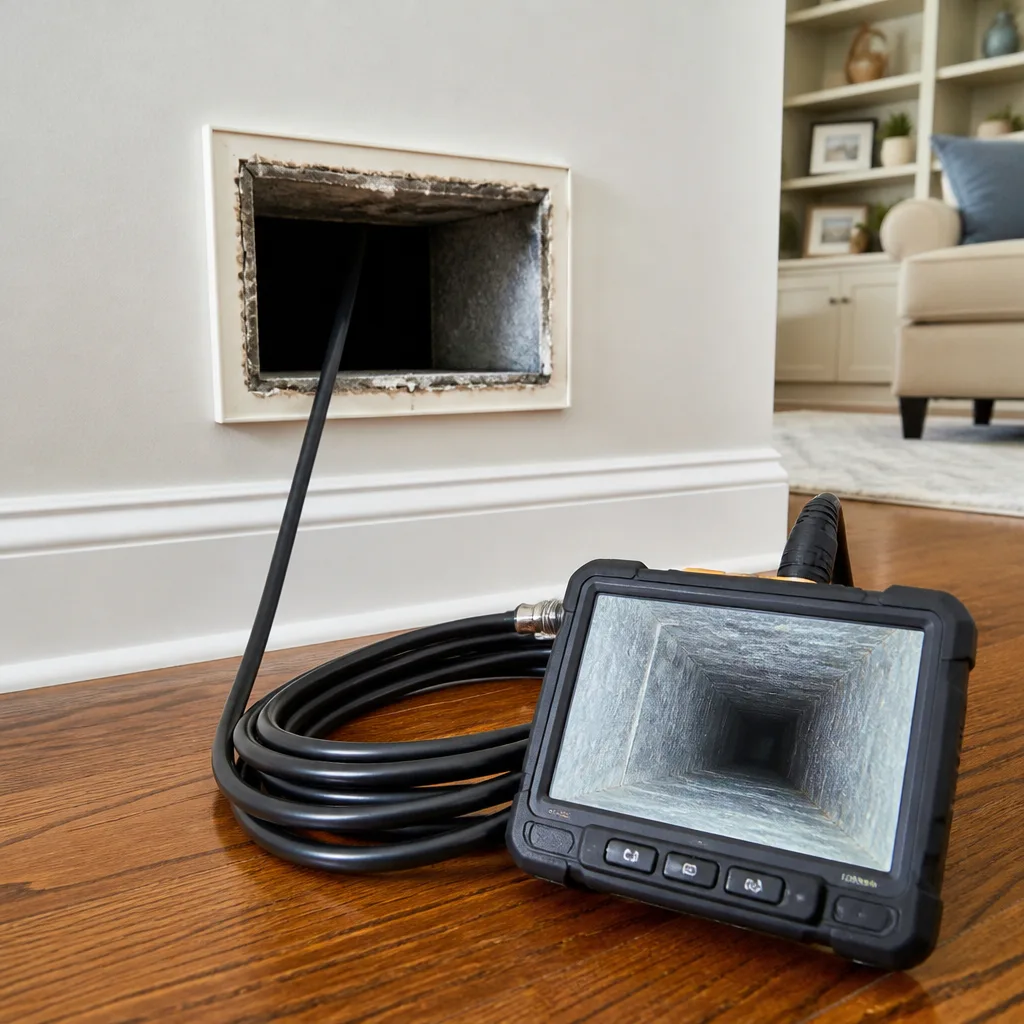 Camera inspection
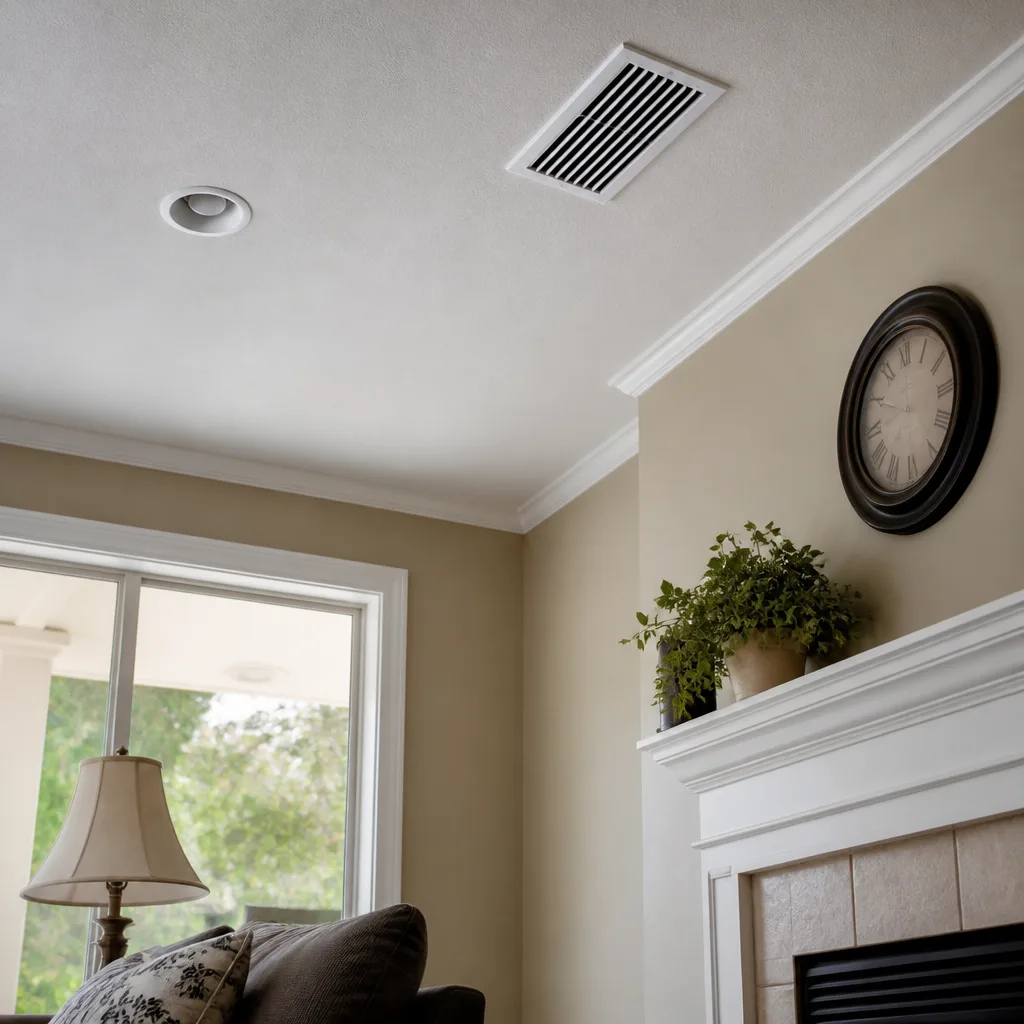 Sanitizing & deodorizing
Whole-system duct and dryer vent check with before-and-after photos - you see exactly what came out of your vents
That "$99 whole-house special" is a bait ad - the real number appears once they are in your hallway, or the "clean" is a shop-vac at the register. We photograph the inside of your ducts before and after instead.
How to Hire an Air Duct Cleaning Contractor in Jurupa Valley: A Step-by-Step Guide
The hardest part about hiring a duct cleaner in Jurupa Valley isn’t writing the check. It’s separating the company with $30,000 in professional extraction equipment from the guy with a shop-vac, a leaf blower, and a Groupon. Most homeowners discover the difference only after the job is done, when they’re looking at before-and-after photos that don’t exist and dust that’s already resettled on the furniture. This guide gives you a concrete screening process, the exact questions to ask, and the equipment to verify before you let anyone near your ductwork.
Quick Answer
To hire a legitimate air duct cleaning contractor in Jurupa Valley, verify they use negative-pressure extraction equipment (ask specifically about Rotobrush, Nikro, or Abatement Technologies systems), confirm they carry liability insurance that covers ductwork damage, and require a written scope of work with a single fixed price before the job starts. Skip any contractor who quotes per-vent pricing, refuses to show proof of equipment, or shows up in a personal vehicle rather than a service van with mounted extraction units.
Styles & brands we work with
- Whole-home duct cleaning
- Dryer vent cleaning
- Camera inspection
- Sanitizing & deodorizing
Table of Contents
- Why the Equipment a Contractor Uses Matters More Than Their Reviews
- The 7 Questions to Ask Before Booking Any Duct Cleaner
- What Negative-Pressure Extraction Actually Means (And How to Verify It)
- Red Flags Specific to the Inland Empire Market
- How to Verify Insurance and What It Actually Protects
- What a Legitimate Service Proposal Should Include
- The Camera Inspection: Why It’s Non-Negotiable
- What Good Duct Cleaning Actually Costs in Jurupa Valley
- Common Mistakes to Avoid
- When to Call a Professional
- Frequently Asked Questions
Why the Equipment a Contractor Uses Matters More Than Their Reviews
Here’s a fact that surprises most Jurupa Valley homeowners: in California, there is no state license required specifically to clean air ducts. An aspiring duct cleaner can register a business name, buy a shop-vac from Home Depot, print a glossy website, and start booking jobs tomorrow. The barrier to entry is effectively zero. This means reviews, while useful, can’t be your primary screening tool. A contractor with fifty five-star reviews from neighbors on Yelp might be using the same equipment as someone with none. Reviews measure customer service. They don’t measure whether the ducts were actually cleaned.
In our experience, the single most revealing indicator of a contractor’s legitimacy is the equipment they show up with. A professional air duct cleaning operation uses contact-cleaning systems and HEPA-rated negative-air machines that cost between $8,000 and $30,000. These are the tools that physically agitate debris from duct walls and capture it through sealed vacuum systems, rather than blowing it around your house. The make and model matter because they reveal the contractor’s investment in actually doing the job. Rotobrush is the recognized name in contact-brush cleaning technology across the professional air-quality industry. Nikro manufactures HEPA-rated vacuum systems designed specifically for duct extraction. Abatement Technologies builds the negative-air filtration units used in professional remediation work. If a contractor can’t name their equipment when you ask, they’re telling you everything you need to know.
A shop-vac connected to a spinning brush attachment doesn’t have the suction power to reach beyond the first few feet of ductwork. A leaf blower in reverse does nothing but pressurize dust into the air. These are the tools of discount operators, and they’re the reason the duct cleaning industry carries such a poor reputation. Mainstreet Air Duct Cleaning opened in Jurupa Valley because we saw how many homes in the area were being serviced by exactly this kind of operation, and we believed the city deserved access to the same professional-grade systems used by commercial air-quality contractors.
The 7 Questions to Ask Before Booking Any Duct Cleaner
1. “What specific equipment do you use for the cleaning?”
Listen for brand names. Rotobrush, Nikro, Abatement Technologies are the systems used by serious operators. If the answer is vague (“professional-grade tools” or “the latest technology”), push for specifics. No name, no booking.
2. “Do you use negative-pressure extraction?”
The correct answer is yes, immediately, without hesitation. If they pause or ask what you mean by that, end the call. A contractor who doesn’t know the term isn’t cleaning ducts. They’re moving dust around.
3. “Do you provide before-and-after photos of the interior of the ducts?”
Every legitimate service offers this. It’s not optional in 2026. If they say they can’t get a camera into your ducts, they’re either using inadequate equipment or they don’t want you to see that nothing changed. We show every Jurupa Valley customer photos of their own ductwork, before and after, on every single job.
4. “What’s your exact, out-the-door price for my system?”
The answer should be one flat price per system, agreed before the truck rolls. Not per vent. Not a teaser rate that will change once they “see what’s in there.” The bait-and-switch model, a low coupon price that becomes a far larger invoice once the tech is standing in your hallway, is the industry’s most persistent problem.
5. “How many systems or furnaces does that price cover?”
A legitimate quote covers the entire HVAC system: all supply ducts, all return ducts, the main trunk lines, the plenums, and the air handler cabinet. If the furnace is in the garage and the quote doesn’t cover everything at one price, keep looking.
6. “Are you insured for ductwork damage?”
You want a direct answer backed by a certificate of insurance you can verify. Duct liner gets torn. Registers get scratched. Flexible duct connections get pulled loose. If a contractor damages the ductwork and isn’t insured, the repair is on you. See our section on insurance verification below.
7. “Do you inspect for damaged or leaking ducts while you’re in there?”
Professional cleaners in Jurupa Valley find duct problems constantly: disconnected joints, crushed flex runs, separated plenums, gaps leaking conditioned air into the attic. A contractor who only cleans and never reports damage is leaving money on the table, or worse, isn’t actually looking at your duct system. Ask for a duct inspection and repair assessment as part of the service.
That’s the list. Seven questions. Take notes on the call. If a contractor can answer all seven confidently and specifically, they’re operating a professional business. If they deflect, get vague, or try to rush you to booking, you’ve just identified a discount operator before they ever set foot in your home. That’s the entire job.
What Negative-Pressure Extraction Actually Means (And How to Verify It)
Negative-pressure extraction is the industry standard for legitimate air duct cleaning. The name describes exactly how it works: a powerful vacuum system creates a sealed negative-pressure environment inside your ductwork, so that every particle dislodged during cleaning is pulled toward the collection system rather than escaping into your living space.
Here’s why this matters in Jurupa Valley. The Inland Empire sits in a high-desert climate east of Los Angeles, with fine particulate dust that’s far finer than the heavier, oilier dust typical of coastal homes. This fine dust becomes airborne easily. A contractor using positive-pressure methods (blowing air through the ducts) will send a cloud of that fine dust into your home, where it lands on every surface and hangs in the air for days. Negative-pressure systems prevent this entirely, because the dust never has a chance to escape. The vacuum is pulling it out of the ducts before it’s ever released.
- Ask for the airflow rating. A professional extraction system moves at least 1,500 CFM (cubic feet per minute). Portable shop-vacs move 100 to 200 CFM at best. The difference is the difference between cleaning the duct and decorating the duct.
- Confirm the vacuum is HEPA-filtered. Without HEPA filtration, the vacuum itself becomes a dust generator, exhausting the contaminants it’s supposedly removing right back into your home. This is one of the most common problems with discount duct cleaning in the Riverside County area.
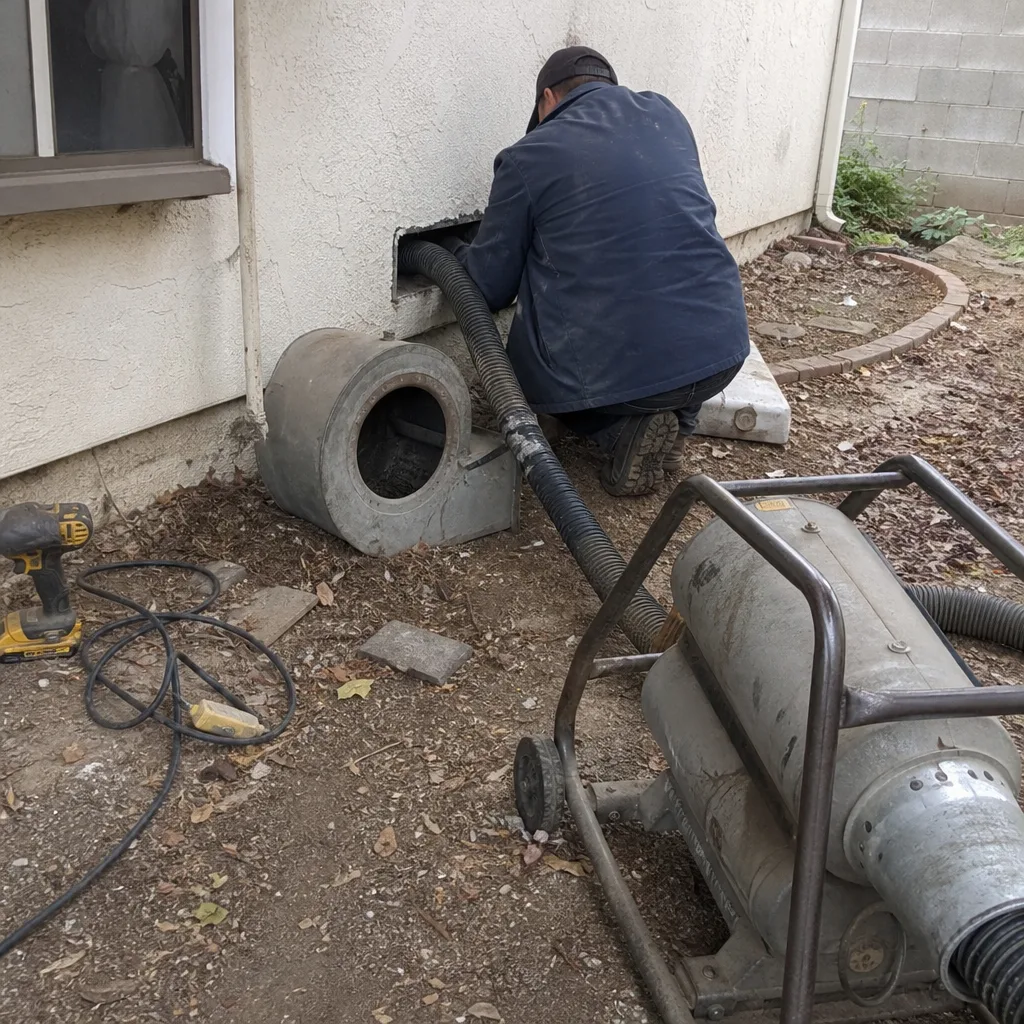
- Ask where the vacuum unit sits during the service. Legitimate operators position the extraction unit outside the home or in the garage, with a sealed hose run to the duct system. If the equipment fits under the kitchen sink, it’s not a duct cleaning machine.
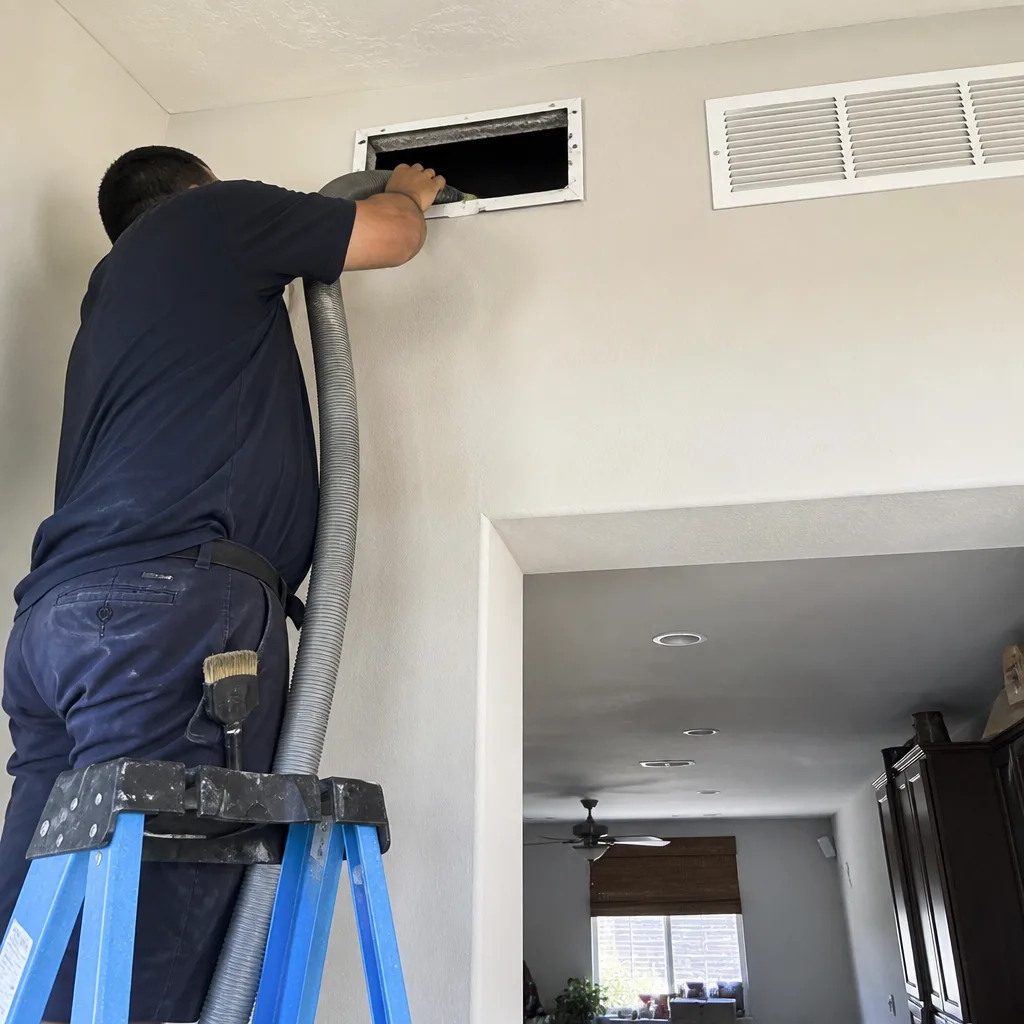
- Check for containment procedures. Professional crews seal off vents and returns not being actively cleaned, using covers and containment barriers. This maintains the negative pressure and prevents cross-contamination from room to room. If the crew isn’t containing, they aren’t doing negative pressure.
At our air duct cleaning services in Jurupa Valley, we run Nikro HEPA vacuum systems and Abatement Technologies negative-air units specifically for this purpose. The equipment is large, loud, and expensive. That’s the point. There’s no alternative to CFM and HEPA filtration when you’re extracting fine particulates from 50 feet of coiled ductwork in an attic that hits 120 degrees in July.
Red Flags Specific to the Inland Empire Market
Every region has its own patterns of problematic contractors. After years of working in Jurupa Valley, Mira Loma, Pedley, and the surrounding Riverside County communities, here are the red flags we’ve seen more times than we can count.
- The HVAC-adjacent handyman. A general handyman who “does ducts too” is not a duct cleaner. He’s a guy who owns a ladder and a vacuum. Some of the worst duct damage we’ve repaired in Jurupa Valley came from well-meaning handymen who disconnected flex ducts and didn’t have the tools to reseal them properly.
- The no-van operation. A professional duct cleaning company runs branded service vehicles with mounted extraction equipment, hose reels, and the logistical capacity to carry 1,500-CFM units. If they arrive in a personal sedan or a rented cargo van with equipment in the back seat, the job was doomed before they knocked on the door. We’ve had Jurupa Valley homeowners tell us about “duct cleaners” who arrived with nothing but a leaf blower and a roll of duct tape.
- The post-arrival add-on. You book a $199 cleaning and the tech arrives, peers into one vent, and suddenly “found” mold, needing a $1,200 “treatment” before he can proceed. This is a pressure tactic. Mold testing and remediation require separate certification, and real mold issues are rare in the dry Inland Empire climate unless there’s an active moisture problem. If a tech “discovers” a crisis on arrival, they’re selling fear, not service.
- The disappearing documentation. In our experience, any contractor in Jurupa Valley who promises before-and-after photos and then “forgets” the camera, or can’t provide photos after the job, almost certainly did not do the work. A cleaning that doesn’t leave visual evidence isn’t a cleaning.
- The ventilation-only quote. A contractor who quotes without seeing the furnace, the coil, or the main trunk lines is quoting blind. Without understanding the access points, the system layout, and the condition of the ductwork, any price is a guess. And a guess quoted over the phone is usually a low-ball number designed to get through your door.
How to Verify Insurance and What It Actually Protects
Homeowners tend to assume that any contractor working in their home is insured. That assumption is doing a lot of heavy lifting. In California, there’s no licensing requirement for duct cleaning, and there’s no state body proactively verifying insurance for duct cleaners the way the CSLB does for licensed trade contractors. If a duct cleaner doesn’t have insurance, the homeowner is on their own if something goes wrong.
Here’s what you’re verifying, step by step.
- Ask for a certificate of insurance (COI). The contractor should email you a document from their insurance carrier, not a verbal assurance. The COI names the insured business, the policy number, the coverage limits, and the policy period. If it’s expired, it’s worthless.
- Call the carrier to verify the policy is active. Certificates are easy to fake in PDF form. Calling the carrier takes five minutes and confirms the policy is currently in force. A contractor who resists this verification is answering the question for you.
- Confirm the policy covers ductwork damage, not just bodily injury. There’s a meaningful difference between general liability that covers a tech falling off a ladder and coverage that pays for torn duct liner, damaged registers, or a broken connection. You want the latter. Ask the exact question: “Does your liability policy cover damage to the duct system during cleaning?”
- Understand what insurance doesn’t cover. Insurance won’t pay for a cleaning that was poorly done. It won’t refund you because the ducts were still dusty. It covers physical damage: a torn liner, a dented plenum, a broken access panel. This is why the quality of the cleaning itself must be verified through before-and-after photos, not through insurance.
Duct damage during cleaning is rare when the right equipment is used properly. Duct damage during cleaning is common when a shop-vac with a hard plastic brush is forced into ducts not designed for contact tools. The insurance question matters because it tells you whether the contractor has ever thought about what happens when a job goes wrong. Professionals plan for it. Discount operators hope for the best while working under your roof.
What a Legitimate Service Proposal Should Include
Before any work starts, you should have a written service proposal in hand. Not a text message. Not a scribbled note on a carbon pad. A document that specifies exactly what will be done, for what price, with what documentation afterward. In Jurupa Valley, where homeowners routinely deal with contractors across Riverside County, a written scope protects you from the “we never quoted that” conversation that plagues home services.
Here’s what a professional duct cleaning proposal contains:
- Scope of work. Every system included: supply ducts, return ducts, trunk lines, plenums, air handler cabinet, and the return air drop. If the proposal is vague about what’s included, every component is a potential upcharge.
- Access points. Where will the contractor cut access holes, if any? Professional cleaners prefer to work through existing register openings and return drops, but some systems require an access cut near the plenum. The proposal should specify this, including how any temporary access will be sealed and refinished.
- Containment method. How will the contractor prevent dust from escaping during the cleaning? This should include mention of negative air pressure, vent covers, and drop cloths for the work area.
- Agitation method. What tool will physically dislodge debris from the duct walls? For most residential systems, this is a rotating brush or compressed-air whip, used in conjunction with the vacuum. The proposal should name the tool.
- Documentation deliverables. Before-and-after photos of the interior of the ducts, via camera. If the proposal doesn’t commit to photos, assume you won’t get them.
- Total price, fixed. One number. No per-vent math. No “additional charges may apply” language. The price you agree to is the price you pay. At Mainstreet Air Duct Cleaning, our standard is a single flat rate per system, quoted before the work begins, and honored when it’s done.
If a contractor can’t produce a written proposal that covers these six elements, walk away. In our experience in the Jurupa Valley market, the absence of a written scope is the single strongest predictor of a bait-and-switch ending.
The Camera Inspection: Why It’s Non-Negotiable
The single most important tool in any duct cleaning job isn’t the brush or the vacuum. It’s the inspection camera. A professional duct cleaning company sends a high-resolution camera down into your ducts before the work starts and photographs what they find. Then, after the cleaning is done, they photograph the same locations again. The before-and-after photos are your proof that the work was actually performed.
Here’s why this matters so much in Jurupa Valley specifically. Many homes in this area were built during the Inland Empire construction boom of the 1980s and 1990s, and a surprising number have never had their ducts cleaned even once. We’ve opened systems in Jurupa Valley that contained dust packed into the corners of the return drops nearly an inch thick, along with construction debris (drywall chunks, nails, sawdust) that’s been sitting in the ducts since the house was framed. Before-and-after photos from a camera probe are the only way to see this kind of buildup, and the only way to verify it’s gone after the cleaning.
Discount operators avoid camera inspections entirely. The camera is the one piece of equipment that exposes whether the job was real. If a contractor in Jurupa Valley refuses to put a camera in your ducts, or won’t commit to delivering before-and-after photos, you’re not hiring a duct cleaner. You’re hiring a leaf blower and a prayer. Our air duct cleaning service in Jurupa Valley includes camera documentation on every job, because we’d rather show you the result than describe it.
What Good Duct Cleaning Actually Costs in Jurupa Valley
Pricing in this industry is wildly inconsistent, which is exactly why the coupon model exists. A homeowner sees a $49 whole-house duct cleaning ad and thinks, “Why would I pay $500 when this guy does it for $49?” The answer is that the $49 guy and the $500 company are not performing the same service. They’re performing two entirely different activities that happen to share a name.
In Jurupa Valley and the surrounding Riverside County market, professional air duct cleaning typically runs between $350 and $650 for a single-system home (one furnace, one set of ducts, typical 2,000 to 3,000 square feet). Homes with two systems, larger square footage, or severely neglected ducts can run higher. Dryer vent cleaning, if done separately, typically runs $75 to $150. These are the honest prices for a job done with professional contact-cleaning equipment and HEPA extraction.
The $49 coupon is a loss leader, and it’s designed to get a technician into your home. Once there, the business model is to “discover” problems that convert that $49 into $700 or $1,200 in add-on services, many of which are unnecessary. The homeowner is then put in an uncomfortable position: the tech is standing there, the “problem” has been described, and the pressure to approve the upcharge is considerable.
Several factors drive costs in Jurupa Valley specifically. Homes in the area range from small 1950s ranch houses in the older parts of Jurupa Valley to large track-built homes in the newer developments near the Santa Ana River. Attic access is often tight, with ductwork runs that are long and convoluted. The heat of a Riverside County summer means attics are punishing work environments. A professional company prices these realities into the quote. A discount operator ignores them until he’s standing in your attic, at which point the price starts climbing.
Common Mistakes to Avoid
- Booking based on price alone. The $49 coupon exists because it works. It gets homeowners on the phone. But in Jurupa Valley, as everywhere else, you get what you pay for. If the price is dramatically below the market range, the business model isn’t cleaning ducts. It’s upsell at the door.
- Skipping the insurance check. Ductwork does get damaged. A torn liner or a pulled-flex connection is a real possibility with contract cleaning tools in older systems. If the contractor has no insurance, the homeowner eats the repair bill. Check the COI. Call the carrier.
- Hiring an HVAC company to clean ducts without asking about their cleaning equipment. Many reputable HVAC companies in the Inland Empire do excellent installation and service work, but duct cleaning is a different skill set requiring different tools. An HVAC tech with a shop-vac isn’t a duct cleaning contractor. Ask the same equipment questions you’d ask a dedicated duct cleaner.
- Accepting a quote without a scope of work. “I’ll clean your ducts for $350” is not a proposal. It’s a sentence. Without a written scope, every component of the system is a potential upsell and every problem found is an “extra.” Demand the six-element proposal described above.
- Assuming a recent home means clean ducts. Construction debris in new construction ducts is common. We’ve cleaned ducts in Jurupa Valley homes less than five years old that contained drywall dust, sawdust, and spent nails from the original build. New doesn’t mean clean.
- Ignoring the dryer vent. Lint buildup in dryer vents is one of the leading causes of house fires in the U.S., and many duct cleaning companies don’t even offer dryer vent cleaning. Ask about it. If a company only cleans air ducts and won’t touch the dryer vent, you’ll need a second contractor for a job that should be done by the same crew.
- Believing you only need it once a decade. The national standard is every 3 to 5 years, but homes in Jurupa Valley with pets, smokers, or recent construction should consider more frequent cleanings. The desert dust here is relentless, and the HVAC system runs hard through the July-through-September stretch every year.
When to Call a Professional
Call a professional duct cleaning contractor when you can see dust accumulating on registers despite regular filter changes, when you notice uneven airflow from room to room, or when the system has never been cleaned and the home is more than five years old. Also call if you’ve recently completed remodeling work, which introduces drywall dust and debris into the duct system, or if you’ve noticed a persistent musty smell from the vents when the HVAC kicks on. And if your dryer takes longer than 45 minutes to dry a load, the vent is telling you something: schedule a vent cleaning. Mainstreet Air Duct Cleaning offers free estimates in Jurupa Valley – call (877) 358-3053 and we’ll walk through the system with you.
Frequently Asked Questions
Professional air duct cleaning in Jurupa Valley typically costs between $350 and $650 for a single-system home, depending on the size of the system and its condition. Homes with two HVAC systems or extensive duct runs will run higher. Be wary of any quote below $250, as it usually signals a bait-and-switch operation that will inflate the price once the tech is in the home. Call (877) 358-3053 for an exact quote based on your system.
Cheaper quotes come from contractors using cheaper equipment, usually portable vacuums or positive-pressure blowers rather than truck-mounted negative-pressure extraction systems. At the $49 or $99 level, the business model is to get a technician into your home and then sell unnecessary add-on services. The low price isn’t the real price. It’s the door opener.
Demand before-and-after photos taken with a camera probe inside the ducts. This is the only way to verify the cleaning actually happened, since the work is performed entirely out of sight. A professional company will document every job this way. If a contractor can’t or won’t provide photos, assume the work wasn’t done.
The industry standard is every 3 to 5 years, but the Riverside County climate changes the math. Fine desert dust, combined with the long summer cooling season, means HVAC systems in Jurupa Valley work harder and accumulate dust faster than coastal homes. Homes with pets, smokers, or recent construction should lean toward more frequent cleanings. If you’ve never had it done and the home is more than a few years old, call (877) 358-3053 for an assessment.
No, and you shouldn’t have to hire one. Dryer vent cleaning should be offered by a professional duct cleaning company as a companion service. Lint buildup in dryer vents is a serious fire risk, and most air duct cleaning companies ignore it entirely. Ask any contractor you’re considering whether they clean dryer vents, and if they don’t, keep looking. We offer dryer vent cleaning in Jurupa Valley as a standalone service or paired with duct cleaning.
Ask seven questions: What specific equipment do you use (listen for Rotobrush, Nikro, or Abatement Technologies)? Do you use negative-pressure extraction? Will you provide before-and-after photos? What’s the out-the-door price for the entire system? How many systems does that price cover? Are you insured for ductwork damage? And will you inspect for damaged or leaking ductwork during the service? A professional will answer all seven clearly and quickly. If they fumble any of them, don’t book. The full guide is available above.
The Bottom Line
Hiring a duct cleaning contractor in Jurupa Valley is not about finding the cheapest price. It’s about verifying that the company you’re hiring has the equipment, the insurance, and the documentation practices to actually clean your ducts rather than just disturb them. Ask about negative-pressure extraction. Ask for camera photos. Verify insurance. Get a written scope of work with one fixed price per system. In a market with no licensing requirements and a flood of discount operators, those four steps separate the professionals from the pretenders. The right contractor will welcome every question, answer every one of them clearly, and back the work with proof. The rest will move on to the next house. Let them.
Need a professional assessment of your system? Mainstreet Air Duct Cleaning offers free estimates in Jurupa Valley – call (877) 358-3053 today.
Written by the team at Mainstreet Air Duct Cleaning, serving Jurupa Valley since 2011.
See the difference
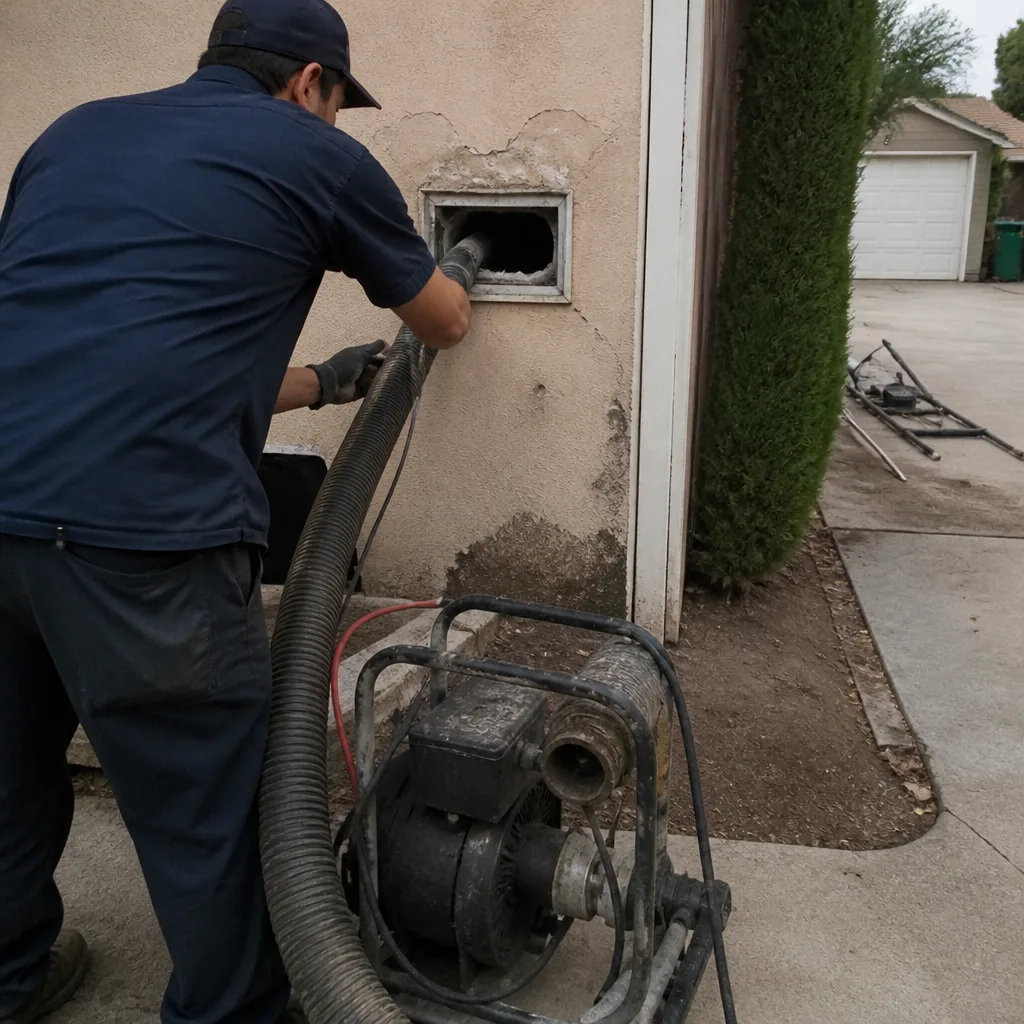 Before
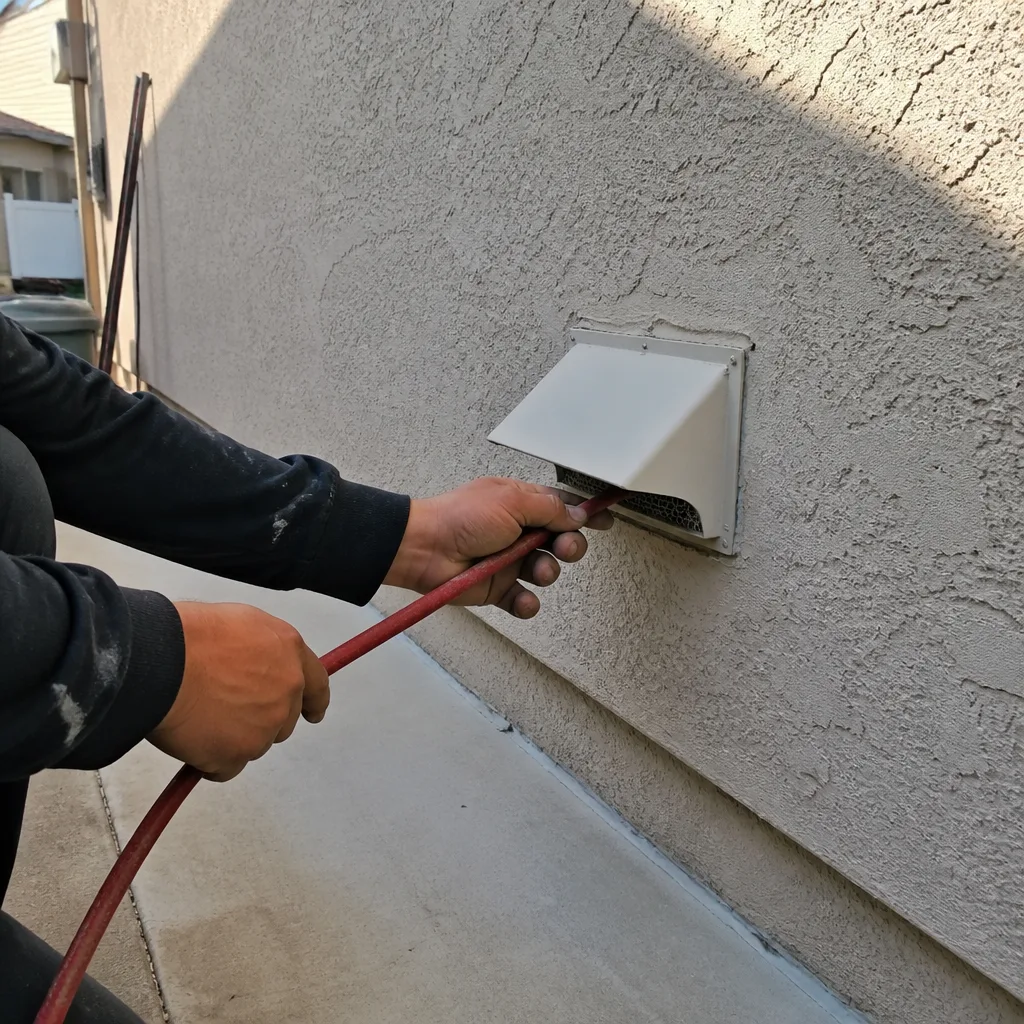 After
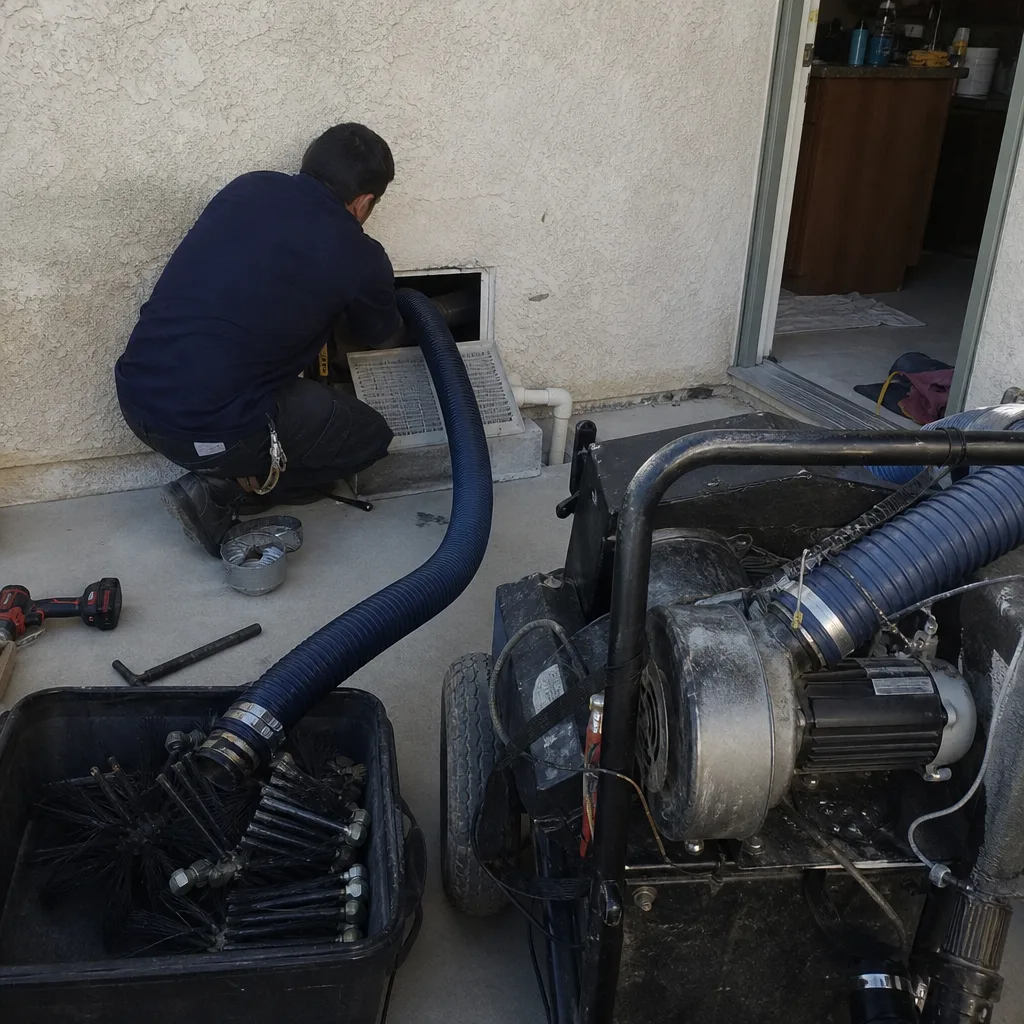 Before
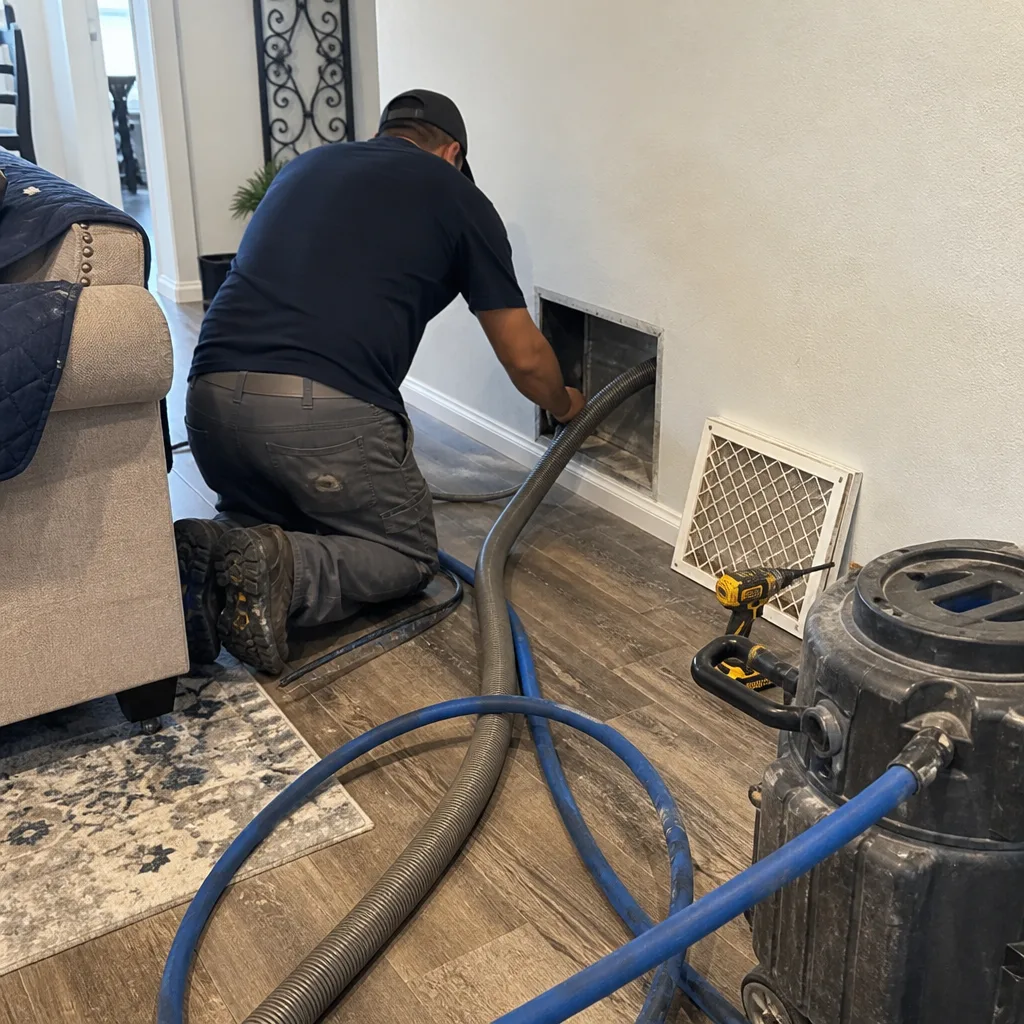 After
 Before
 After