
Last updated November 2, 2026
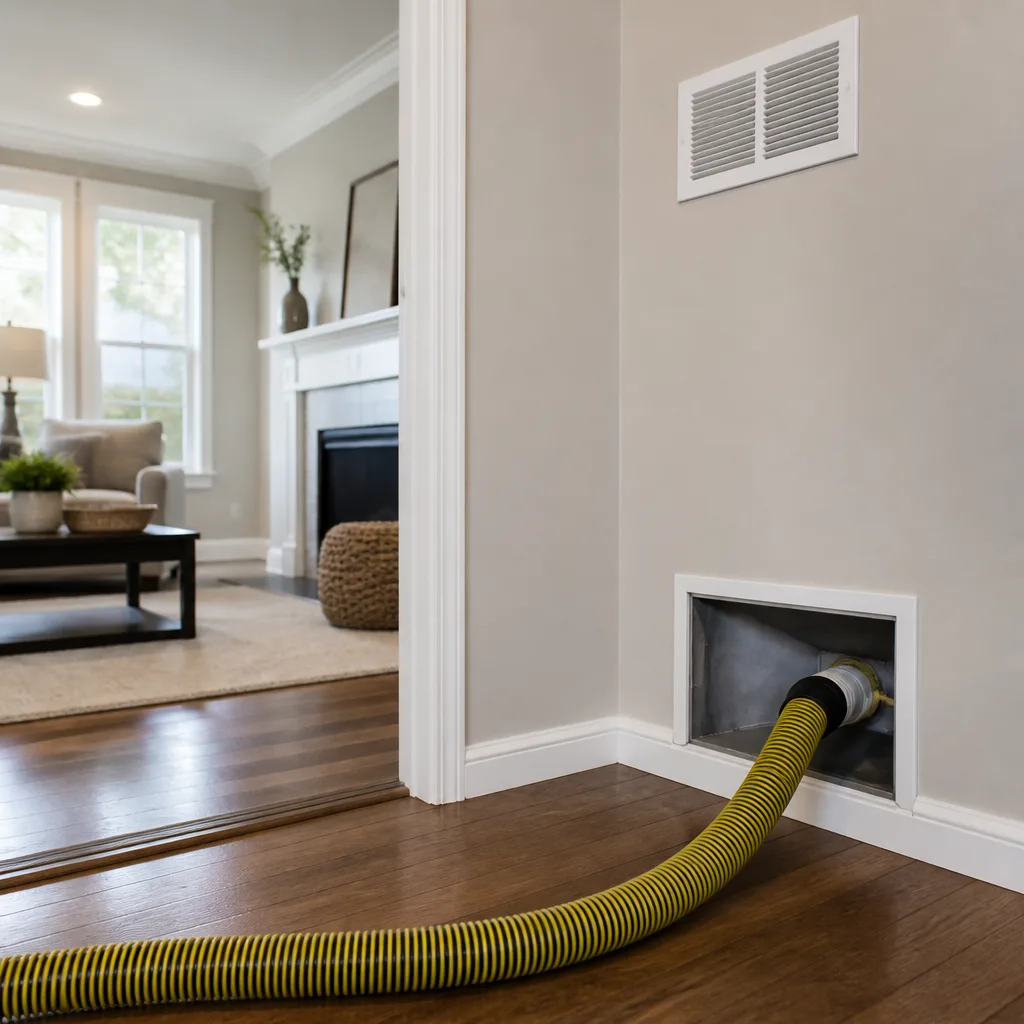 Whole-home duct cleaning
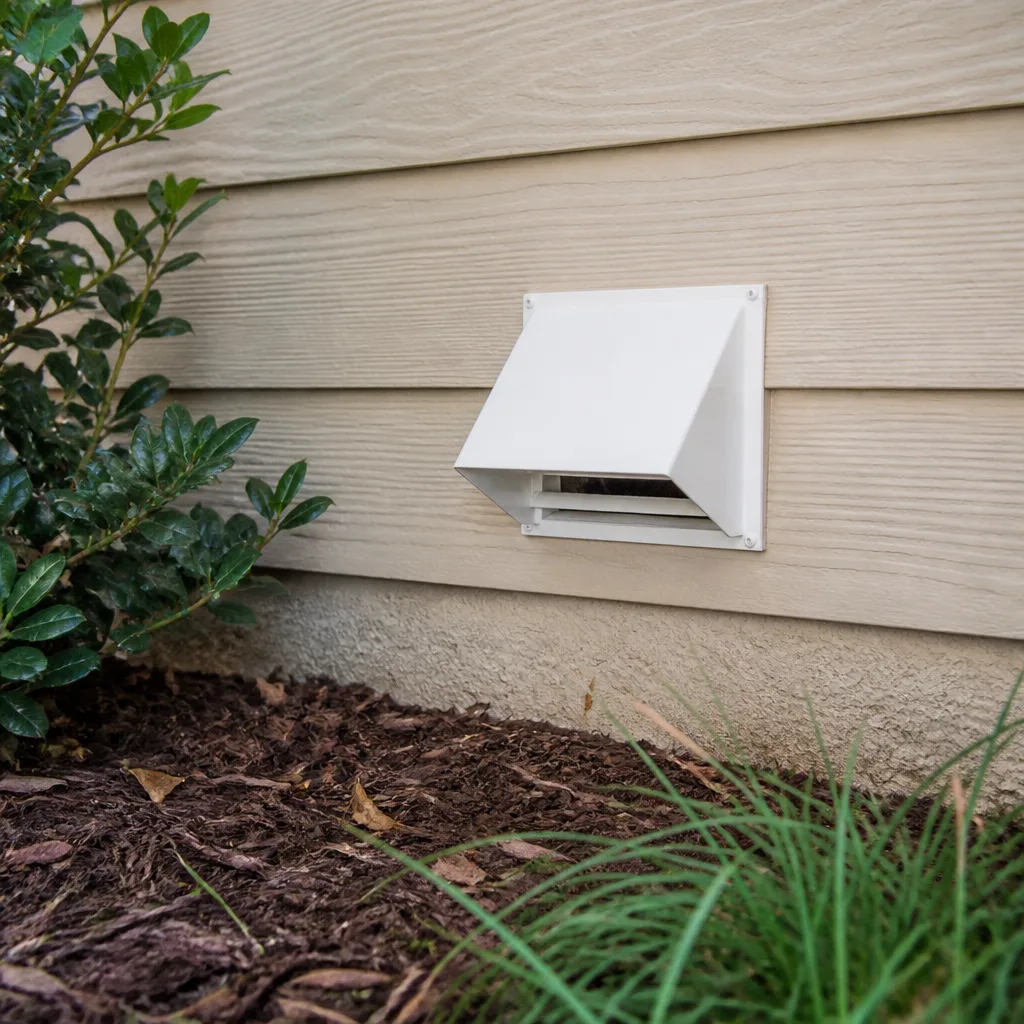 Dryer vent cleaning
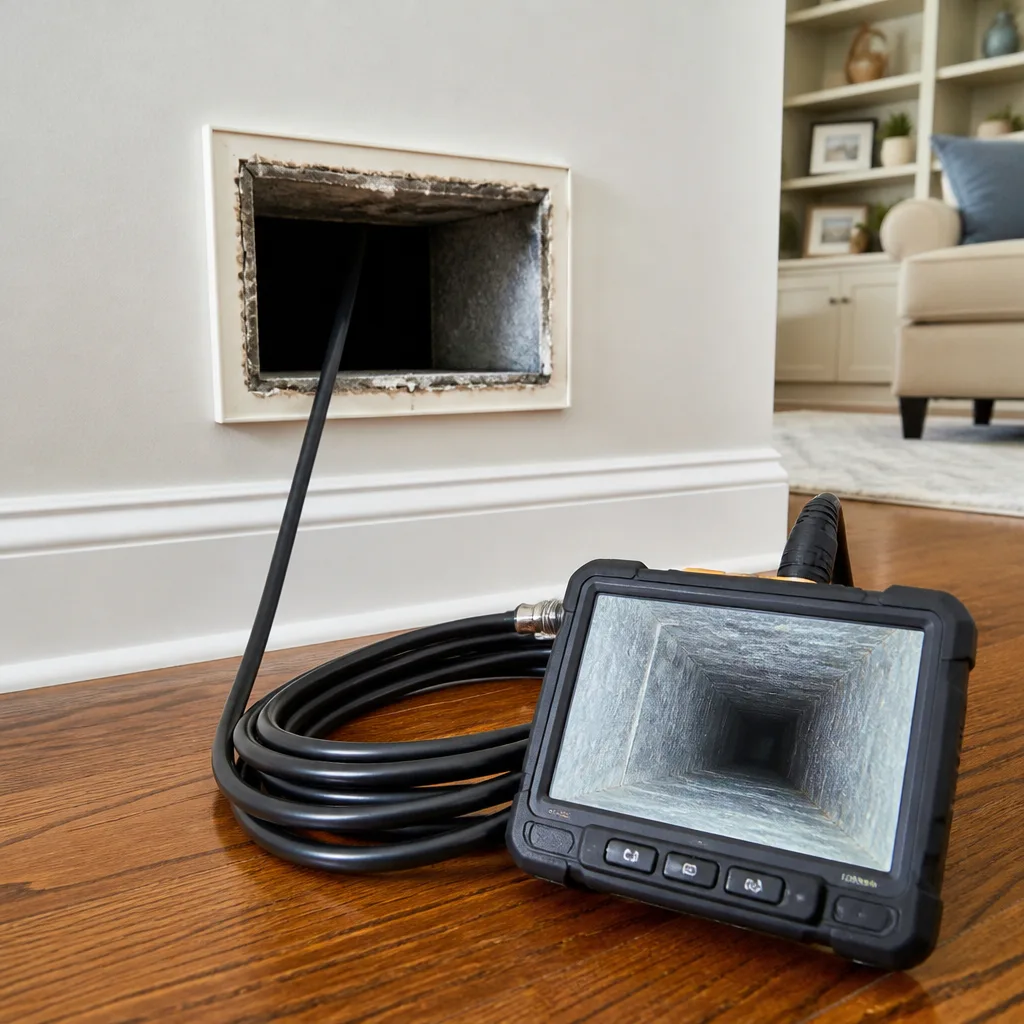 Camera inspection
 Sanitizing & deodorizing
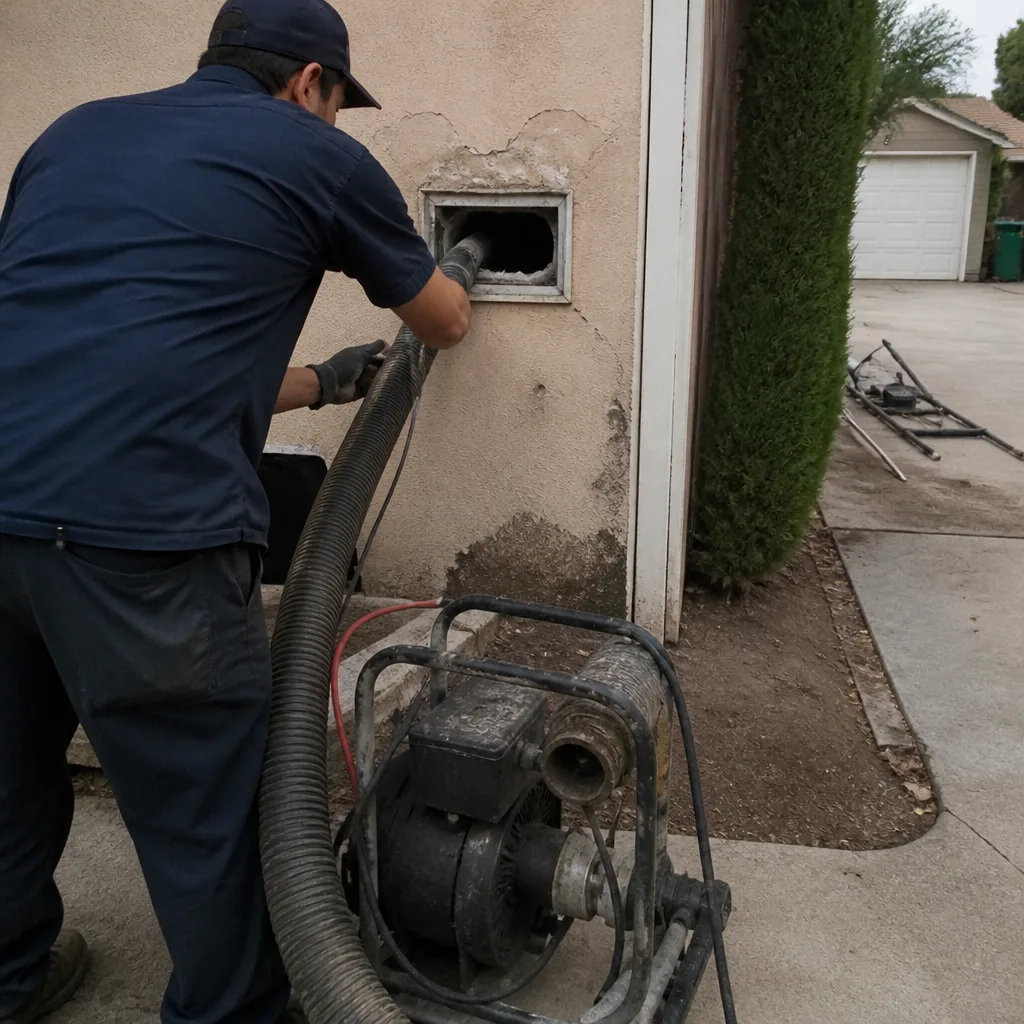
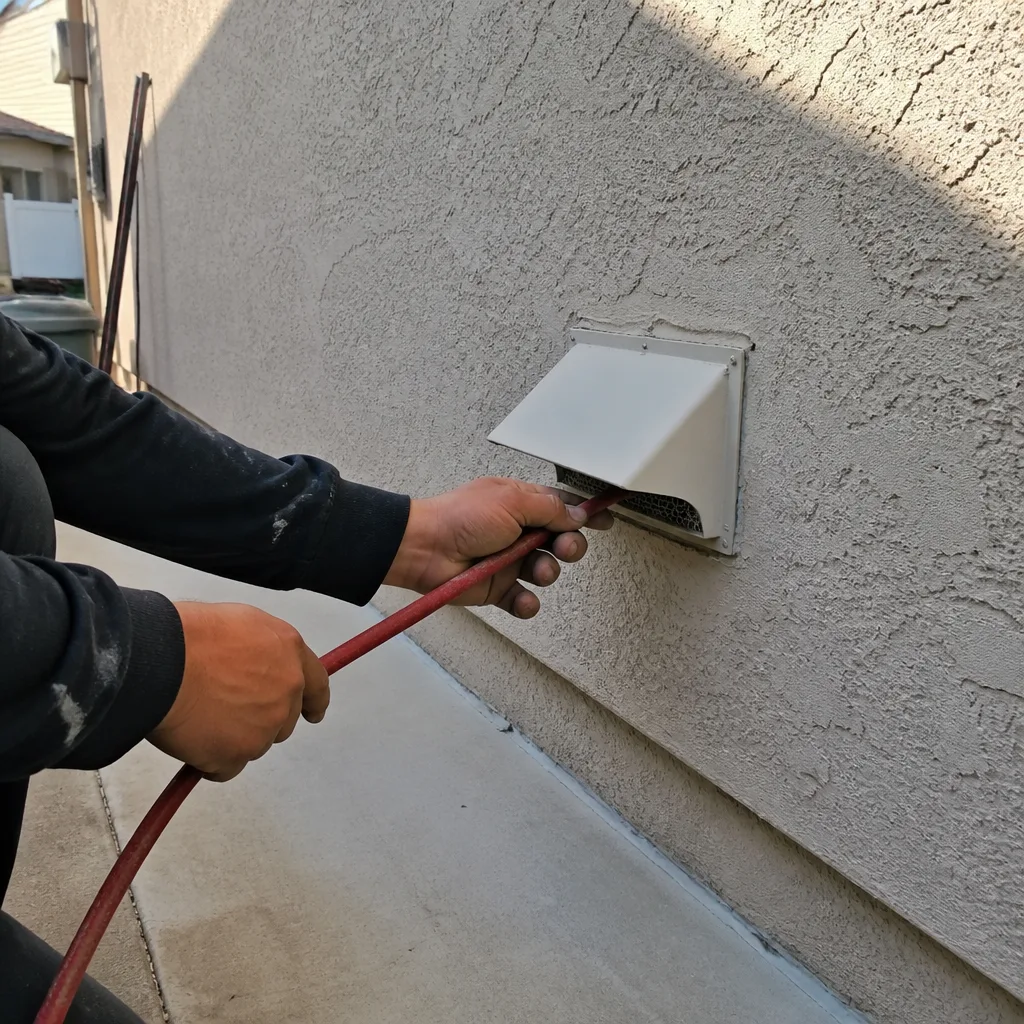
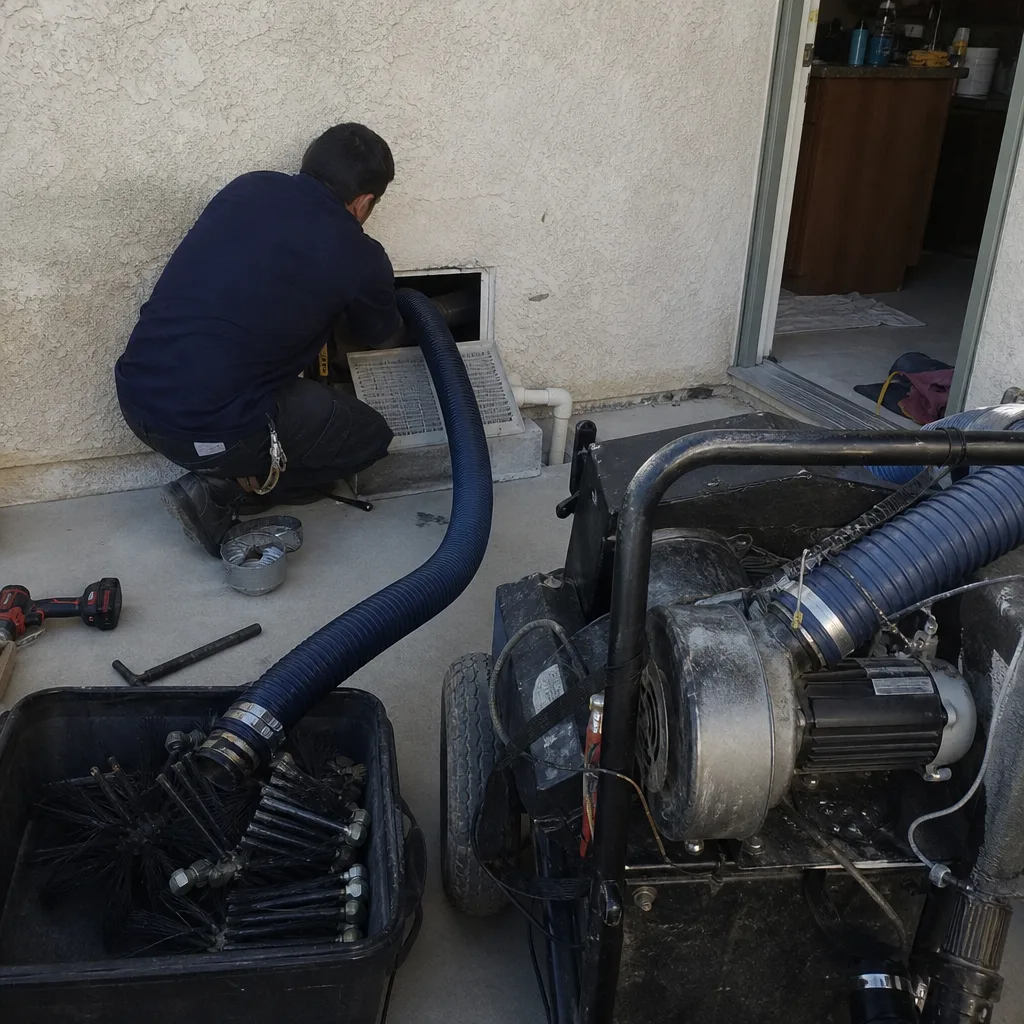
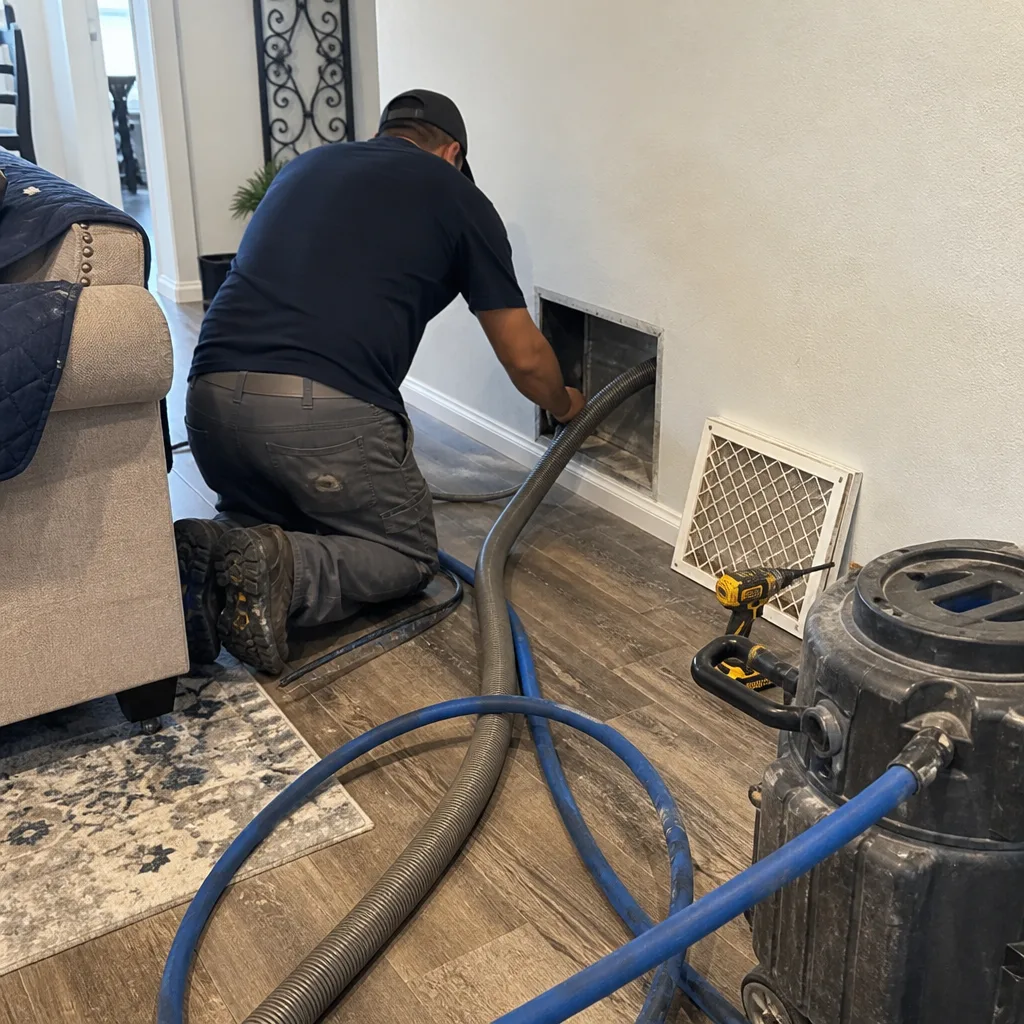
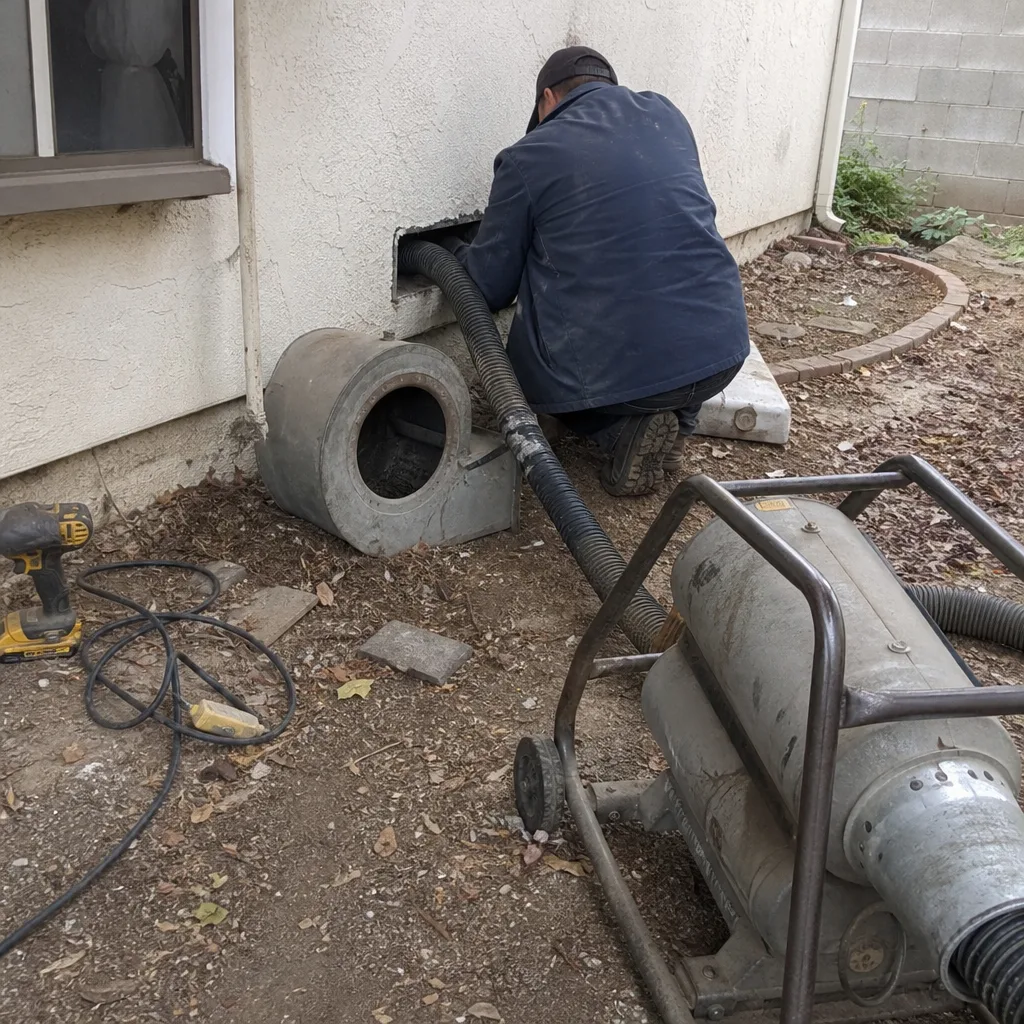
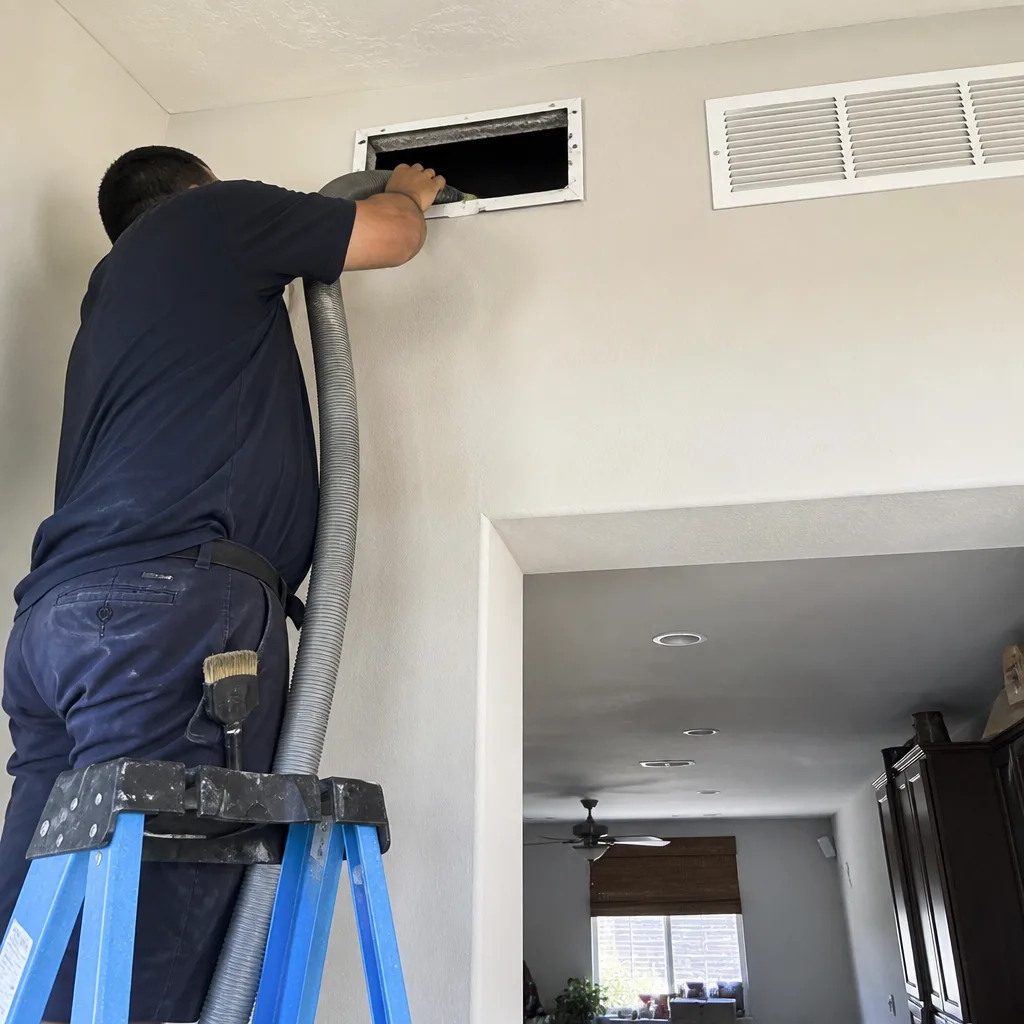
Whole-system duct and dryer vent check with before-and-after photos - you see exactly what came out of your vents
That "$99 whole-house special" is a bait ad - the real number appears once they are in your hallway, or the "clean" is a shop-vac at the register. We photograph the inside of your ducts before and after instead.
Seasonal Air Duct Cleaning Care for Jurupa Valley: Year-Round Homeowner’s Guide
Most homeowners in Jurupa Valley think of air duct cleaning as a once-every-few-years chore with no particular timing. That assumption costs them. The reality is that Jurupa Valley doesn’t operate on a traditional four-season calendar. It operates on a wildfire smoke window, a Santa Ana wind season, a peak cooling-load summer, and a short wet period that pushes humidity into homes with leaky duct boots. Each of these phases deposits something different inside your ductwork, and knowing when each one hits changes when you should schedule service. This guide walks through all four seasonal pressure points, what they do to your system, and how to structure an Air Duct Cleaning services schedule that actually matches the way air moves through a Jurupa Valley home.
Quick Answer
The highest-value time to schedule air duct cleaning in Jurupa Valley is between late October and early November, after wildfire smoke season ends and before you switch on the heat for the first time. A secondary inspection window lands in January or February, when winter rain raises indoor humidity and exposes leaks or moisture problems in ductwork. Most Jurupa Valley homes do well on a two-year cleaning cycle, with the actual timing set by seasonal events rather than an arbitrary calendar. For more guides & resources, see our blog.
Styles & brands we work with
- Whole-home duct cleaning
- Dryer vent cleaning
- Camera inspection
- Sanitizing & deodorizing
Table of Contents
- The Wildfire Smoke Window: August Through November
- The First Heat Cycle: What September and October Do to Your Ducts
- Santa Ana Winds: How They Force Particulates Into Return Pathways
- Peak Summer Load: What Cooling Season Does to Flexible Ductwork
- Winter Rain and Humidity: The Mold-Risk Window
- Building a Two-Year Cleaning Cycle Around Jurupa Valley’s Actual Risks
- Common Mistakes to Avoid
- When to Call a Professional
- Frequently Asked Questions
The Wildfire Smoke Window: August Through November
Jurupa Valley sits in the path of smoke from fires in the San Bernardino National Forest, the San Gabriel Mountains, and sometimes the Inland Empire’s eastern foothills. When smoke settles over the valley, it doesn’t just linger outside. Your HVAC system pulls outdoor air through return vents, and that smoke carries fine particulate matter, ash, and combustion byproducts directly into the duct system. Even homes that keep windows closed during smoke events will draw contaminated air through exterior wall penetrations and attic ventilation gaps that connect to return plenums.
The particles that matter most are the ones you can’t see. Wildfire smoke contains PM2.5, particulate matter under 2.5 microns, which is small enough to remain suspended in ductwork indefinitely. A standard fiberglass filter catches some of it. The rest settles inside supply ducts and gets blown into living spaces every time the blower runs. In our experience cleaning ducts across Jurupa Valley, smoke-season residue shows up as a fine gray film coating the interior surfaces of supply runs, especially in homes near the Santa Ana River bottom where smoke tends to pool overnight.
The key insight is timing. Smoke events in Jurupa Valley typically cluster between August and November, with the worst weeks landing in September and October. If you clean your ducts before the season ends, you’ll simply refill them during the next smoke event. The window that matters is after the last significant smoke event and before the first time you switch the thermostat to heat. That’s when a cleaning removes everything deposited during fire season and sets you up for clean indoor air all winter.
For homes with Mainstreet Air Duct Cleaning home service history, we recommend tracking local air quality reports during the fall. Once the valley sees two consecutive weeks with AQI readings under 50 and no new fire activity in the region, the smoke window has closed and a cleaning will actually stick.
The First Heat Cycle: What September and October Do to Your Ducts
Here’s the counterintuitive part about fall in Jurupa Valley: the first time you run the heat after a long cooling season is when you’ll notice the most dust entering your living spaces. It isn’t that the furnace creates dust. It’s that months of accumulated debris inside the ductwork has been sitting undisturbed, and the first blast of warm air loosens it and pushes it through every register in the house.
Think about what happens during a typical Jurupa Valley summer. Your AC runs constantly from June through September. The blower moves air across the evaporator coil, through the supply plenum, and out into every room. During those months, dust, pet dander, skin cells, and outdoor particulates that bypass the filter settle into the ductwork in layers. The system stays cool and dry, so those layers stay in place. Then October arrives, nighttime temperatures drop into the 50s, and you switch the thermostat. Warm air hits those settled layers, dries them further, and breaks them loose. The result is a dust plume through the living room that no amount of surface cleaning will stop, because the source is inside the walls.
This is why the late-October to early-November window matters so much for Jurupa Valley homeowners. It sits after the seasonal dust accumulation of summer and after the heaviest wildfire smoke, but before the sustained furnace use that circulates everything through the home. A cleaning in this window means the first weeks of heat push clean air, not a season’s worth of accumulated particulate.
We’ve also seen something specific to Jurupa Valley’s housing stock. Many homes in the Mission Boulevard corridor and the older neighborhoods near Limonite Avenue were built before current duct-sealing standards. Those systems have more gaps at boot connections and plenum joints, which means they pull more unconditioned attic air during the heat cycle. That unconditioned air carries whatever is in the attic, including fiberglass insulation particles and dust from roof penetrations, directly into the supply stream. A fall cleaning addresses what’s already in the ducts, but those homes also benefit from an inspection that identifies where the system is pulling from outside the conditioned envelope.
Santa Ana Winds: How They Force Particulates Into Return Pathways
Santa Ana wind events hit Jurupa Valley differently than they hit the coastal plain. By the time those northeast winds reach the valley, they’ve already picked up dust from the Cajon Pass and the dry washes along the foothills. The winds don’t just move leaves around. They push fine silt and exterior particulates against exterior walls, through attic vents, and into any gap in the building envelope. The pressure difference created by sustained high winds actively drives outdoor air into the home through every available opening, and the return side of a central HVAC system is one of the largest openings a house has.
Here’s the mechanism. Your HVAC system’s return side operates under negative pressure when the blower runs. The return grilles pull air from the home into the ductwork and back to the air handler. During a Santa Ana event, outdoor wind pressure adds to that negative pressure differential, especially in rooms where return grilles sit on exterior walls or near door undercuts that connect to garages or laundry rooms. The result is that exterior dust gets pulled into the return ducts at a higher rate than during calm weather. That dust then passes through the filter, which catches some of it, while the finer fraction continues into the supply side and living spaces.
After a significant Santa Ana event in Jurupa Valley, there are two things worth inspecting. First, check the return grille in the main living area. If it shows visible dust streaking around the edges or accumulating on the grille face faster than normal, the system pulled more exterior air than it should. Second, listen for a change in blower noise. Dust loading on the blower wheel can change its balance and create a low hum or rattle that wasn’t there before. If either signal shows up, the return side of the system needs attention.
Cleaning the return side of the ductwork is different from cleaning the supply side. Return ducts carry unfiltered air, which means they collect heavier debris, including fine sand and silt from the washes east of the valley. A proper cleaning uses a vacuum system that captures what’s removed rather than blowing it back through the system, and that distinction matters. Blow-and-go equipment that agitates without adequate negative pressure simply pushes that material from the return side into the supply side, which makes the situation worse. The right approach is a contact-cleaning method on all interior duct surfaces plus a HEPA-rated vacuum pulling negative pressure at the air handler. That combination extracts what the Santa Anas deposited instead of rearranging it.
If you want a deeper understanding of how the full cleaning process works in this area, see our guide on Air Duct Cleaning in Jurupa Valley.
Peak Summer Load: What Cooling Season Does to Flexible Ductwork
Jurupa Valley summers routinely push attic temperatures past 140 degrees. Your ductwork lives in that environment, and the material it’s made of responds to that heat. Most homes in the valley built since the 1980s use flexible ductwork for at least part of the supply runs. That flex duct has a thin inner liner, a layer of fiberglass insulation, and an outer vapor barrier. All three layers degrade under sustained high heat.
The failure sequence is predictable. First, the vapor barrier becomes brittle, which allows attic air and humidity to reach the insulation layer. Then the insulation compresses, especially at bends and sags where the duct’s own weight works against it in the heat. Finally, the inner liner develops small tears at connection points where tape has dried and lost adhesion. Each of these failures opens a pathway for attic air, insulation fibers, and whatever else is up there to enter the conditioned air stream.
This isn’t a problem that resolves when summer ends. Once a tear exists, it stays. Every subsequent season pushes some attic air through the system, and the contamination compounds. This is also why a cleaning alone doesn’t always solve a summer-driven problem. If flex duct has failed, cleaning the inside of the system addresses the symptom but not the source. The fix is repair or replacement of the damaged sections, which is where Air Duct Repair in Jurupa Valley enters the picture. A repair technician can identify failed sections, replace damaged runs, and seal connection points so the system stops pulling from the attic.
One more summer-specific note: the repeated expansion and contraction of metal components at the air handler and plenum connections loosens mechanical fasteners over time. Screws back out slightly, tape peels, and gaps open. Those gaps create whistling sounds during peak blower operation, but more importantly they create pressure leaks that reduce system efficiency. A seasonal cleaning that includes a plenum inspection can identify these gaps while they’re still minor. Left unaddressed, they grow, and the system loses more conditioned air to the attic with every degree of summer heat.
Winter Rain and Humidity: The Mold-Risk Window
Jurupa Valley doesn’t get much rain, but when it comes, it comes in concentrated bursts. January and February are the valley’s wettest months, and even a few days of rain shifts indoor humidity enough to create conditions where mold can begin growing inside ductwork. The risk isn’t the rain itself. It’s what the rain does to existing dust, debris, and organic matter already sitting in the ducts.
The critical factor is a leaky duct boot. In Jurupa Valley homes with floor registers, the boot is the metal or plastic transition piece that connects the duct riser to the register opening in the floor. Over time, the seal between the boot and the subfloor degrades. During a rain event, moisture from the crawlspace or slab rises into that gap, and the boot becomes a humid micro-environment. If the duct interior already contains a layer of dust, skin cells, or pet dander, that organic material now has moisture and moderate temperatures. Mold spores, which are always present in outdoor air, have everything they need to colonize.
The indicators in January and February are specific. First, a musty or earthy smell from the registers when the system first starts up, especially in the morning before the furnace has run for a while. Second, visible staining or darkening around the register opening at the floor. Third, increased dust on surfaces near one particular register but not others, which indicates one localized section of duct has a problem. Fourth, a change in the smell of the air when the AC runs versus when the heat runs, since cooling introduces condensation and activates dormant mold.
Homes with premium filtration systems often mask these problems longer than they should. A Honeywell or Aprilaire media filter catches more airborne particles, which is good, but it doesn’t address what’s growing inside the duct system at the boot level. The filter works downstream of the source. If you run one of these systems, you may not notice musty air until the problem is further along, because the filter is scrubbing the symptom before it reaches you. That makes an annual visual inspection of accessible boots and registers even more important in this home type.
When moisture intrusion is suspected, the appropriate response is a cleaning combined with a boot-level inspection and sealing. Cleaning removes the organic material that mold feeds on. Sealing prevents the moisture pathway. Skipping either step means the problem returns. And if visible mold is confirmed inside the ducts, the situation calls for professional attention rather than a DIY attempt, because disturbing mold without proper containment spreads spores through the entire home. Review our Air Duct Cleaning Emergency Preparedness Guide for Jurupa Valley Homes to plan ahead.
Building a Two-Year Cleaning Cycle Around Jurupa Valley’s Actual Risks
Most generic advice says to clean ducts every three to five years. That is a national average built for markets with mild climates and relatively clean outdoor air. Jurupa Valley is not that market. The valley deals with wildfire smoke, Santa Ana dust events, extended high-heat summers, and periodic wet winters. Each of those stressors adds load to the duct system, and the combined effect compresses the appropriate cleaning interval.
For most Jurupa Valley homes, a two-year cycle is the right baseline. But the timing within that cycle should follow the seasonal risks, not a calendar date. Here’s a recommended structure:
- Year 1, late October to early November: Full system cleaning with contact-cleaning equipment and HEPA-rated extraction. This removes summer dust loading, wildfire smoke residue, and any Santa Ana-deposited material. Timing it after the last smoke event and before sustained heat use is what makes it stick.
- Year 1, January or February: A visual inspection of registers, boots, and accessible duct sections. Look for condensation staining, musty odor on startup, or any localized dust patterns that indicate a boot leak. If moisture indicators appear, schedule a targeted boot sealing rather than a full clean.
- Year 2, spring: No full cleaning. Instead, check filter condition monthly during the transition from heat to cooling. If you have a Honeywell or Aprilaire media cabinet, verify the filter is seated correctly and that the cabinet door seals properly. A poorly sealed media cabinet pulls unfiltered air around the filter and sends it straight into the supply side.
- Year 2, late October: Return to the full cleaning cycle. Two years of accumulated particulate is enough to justify the service, and the late-October window remains the highest-value placement.
Some homes will deviate from this schedule. Homes with multiple pets, homes where occupants smoke indoors, homes near the river bottom where dust generation from vacant lots is constant, and homes with ongoing construction nearby all accumulate debris faster. Those homes may need annual cleaning. The reverse is also true. A single-occupant home with no pets, medium-quality filtration, and limited outdoor dust exposure may stretch the cycle to three years. The point is to base the decision on what is actually being deposited into the system, not on a generic industry number.
For homes that also run a dryer on a regular basis, the seasonal inspection should extend to the dryer vent. Lint accumulation follows a similar seasonal pattern to duct dust, but with a different risk profile. A blocked dryer vent is a fire hazard, and in Jurupa Valley’s dry fall months, lint ignites more readily. The Dryer Vent Cleaning in Jurupa Valley service addresses this separately, and pairing it with a duct inspection during the fall window makes practical sense for homes where the laundry room is adjacent to the return air pathway.
Common Mistakes to Avoid
- Cleaning during peak smoke season. A duct cleaning done in September will undo itself within weeks if a new wildfire breaks out upwind. Wait for the smoke window to close, then clean. Otherwise you’re paying for a service that won’t hold.
- Assuming the filter handles everything. Filters only catch what passes through them. Material already settled inside supply ducts, damage at boot connections, and leaks in return plenums all bypass the filter entirely. Filter maintenance is necessary, but it is not a substitute for duct cleaning.
- Ignoring a musty smell because it fades after startup. Mold inside a duct boot often only releases odor when the system first turns on and air movement disturbs the growth. The smell fades as the system runs. That doesn’t mean the problem went away; it means you’ve stopped noticing it.
- Treating all duct cleaning as equivalent. A blow-and-go service that uses compressed air without proper negative pressure and HEPA extraction pushes debris from the return side to the supply side. The system looks cleaner at the registers, but the contaminant load actually moved deeper into the home. Equipment is the difference.
- Delaying repair on damaged flex duct. A torn duct connector in the attic doesn’t self-heal. Every month it remains open is another month of attic air entering the conditioned space. Cleaning around a known repair issue is wasted money until the repair is handled.
- Relying on national cleaning-frequency averages. Jurupa Valley’s combination of wildfire smoke, Santa Ana dust, and extreme attic heat creates a faster accumulation rate than most climate guides assume. A five-year cycle here is closer to a ten-year cycle in a coastal market. Adjust accordingly.
When to Call a Professional
If you’ve noticed dust plumes from registers when the heat first runs each fall, if a musty odor persists during winter startups, if you can see dust streaking around return grilles after Santa Ana events, or if you know your flex duct has tears but haven’t addressed them, the situation has moved past what filter changes and vacuuming can resolve. A professional assessment identifies what is actually inside the system and what is causing it to be there. The assessment should include a visual interior inspection, not just a surface-level register check.
Mainstreet Air Duct Cleaning offers free estimates in Jurupa Valley. Our process uses Nikro HEPA-rated vacuum extraction and Rotobrush contact-cleaning equipment so that what’s removed from the ducts is captured, not redistributed. We also inspect for repair issues during the same visit, which means a boot leak or failed flex section gets identified and can be addressed rather than discovered later. Call (877) 358-3053 to schedule a look at your system, whether it’s a seasonal cleaning or an inspection after a specific event.
Frequently Asked Questions
The best time is late October to early November, after the wildfire smoke window closes and before the first sustained heat use of the season. This placement removes summer dust loading and smoke residue without having the work undone by a new smoke event, and it means the first weeks of furnace operation push clean air through your home. Call (877) 358-3053 for an exact quote on seasonal timing for your home.
Most Jurupa Valley homes fall into a whole-system range of roughly $450 to $900 depending on home size, number of systems, and duct accessibility. See our Air Duct Cleaning Cost Breakdown: The Jurupa Valley Homeowner’s Reference for 2026 for detailed pricing factors. A typical single-system home of 1,500 to 2,500 square feet lands in the middle of that range. We quote one flat price for the entire system before work begins, so there are no per-vent charges or surprise additions. Call (877) 358-3053 for a free estimate based on your actual floor plan.
Lower quotes typically reflect lighter equipment and less thorough process. Some operators use a single vacuum hose and compressed air without HEPA-rated extraction, which means they can’t capture what they dislodge. Others only clean visible register sections and skip the main trunk lines. The work takes less time and uses less equipment, but the actual cleaning is incomplete. If a price seems too low, ask what specific equipment is being used and whether HEPA extraction is part of the job.
Ask for before-and-after photos of the interior duct surfaces. A legitimate cleaning service will show you the interior of a supply duct before work begins and the same duct after cleaning is complete. The difference should be visible. If a company can’t produce photos or refuses to show you the inside of the ducts before work starts, that’s a signal the process may not be verifiable. Call (877) 358-3053 to ask about our documentation process.
For most homes in Jurupa Valley, every two years is the appropriate interval, with the clean placed in the late-October window. Homes with multiple pets, indoor smokers, or proximity to dirt lots and active construction may need annual service. A two-year cycle matches the valley’s actual accumulation rate from smoke, dust, and attic debris, rather than national averages that assume a milder climate. We can assess your home’s specific accumulation rate and recommend a schedule.
Yes. Wildfire smoke particles are small enough to pass through most residential filters, and the HVAC system pulls them in through return air pathways during every smoke event. The fine particulate settles inside supply ducts and gets blown into living spaces when the blower runs. Cleaning after the smoke window closes removes this residue, but cleaning during the season simply means recontamination within weeks. For homes in Jurupa Valley, this is the single strongest argument for seasonal timing on duct cleaning.
Yes. Sustained wind creates positive pressure on the exterior of the home, which drives outside air through gaps in the building envelope and into the return side of the HVAC system. The negative pressure created by the blower compounds this effect. After a Santa Ana event, inspect return grilles for dust streaking and listen for changes in blower noise. If either appears, exterior particulates have entered the system. Call (877) 358-3053 if you suspect accumulation after a wind event.
The Bottom Line
Jurupa Valley’s seasonal rhythm is unusual: smoke in the fall, wind-driven dust in the fall and winter, extreme attic heat in the summer, and brief but meaningful humidity in January and February. Each of those conditions deposits a specific type of material inside the duct system, and each requires a different response. The highest-value action you can take as a homeowner is to clean late in the year after the smoke subsides and before sustained heating begins, then to stay alert for moisture indicators during the winter wet period. A two-year cycle built around these realities will outperform any generic schedule, and pairing that cycle with real equipment, not a blow-and-go process, is what makes the result last.
Written by the team at Mainstreet Air Duct Cleaning, serving Jurupa Valley since 2011.
See the difference
 Before
 After
 Before
 After
 Before
 After