
Last updated November 2, 2026
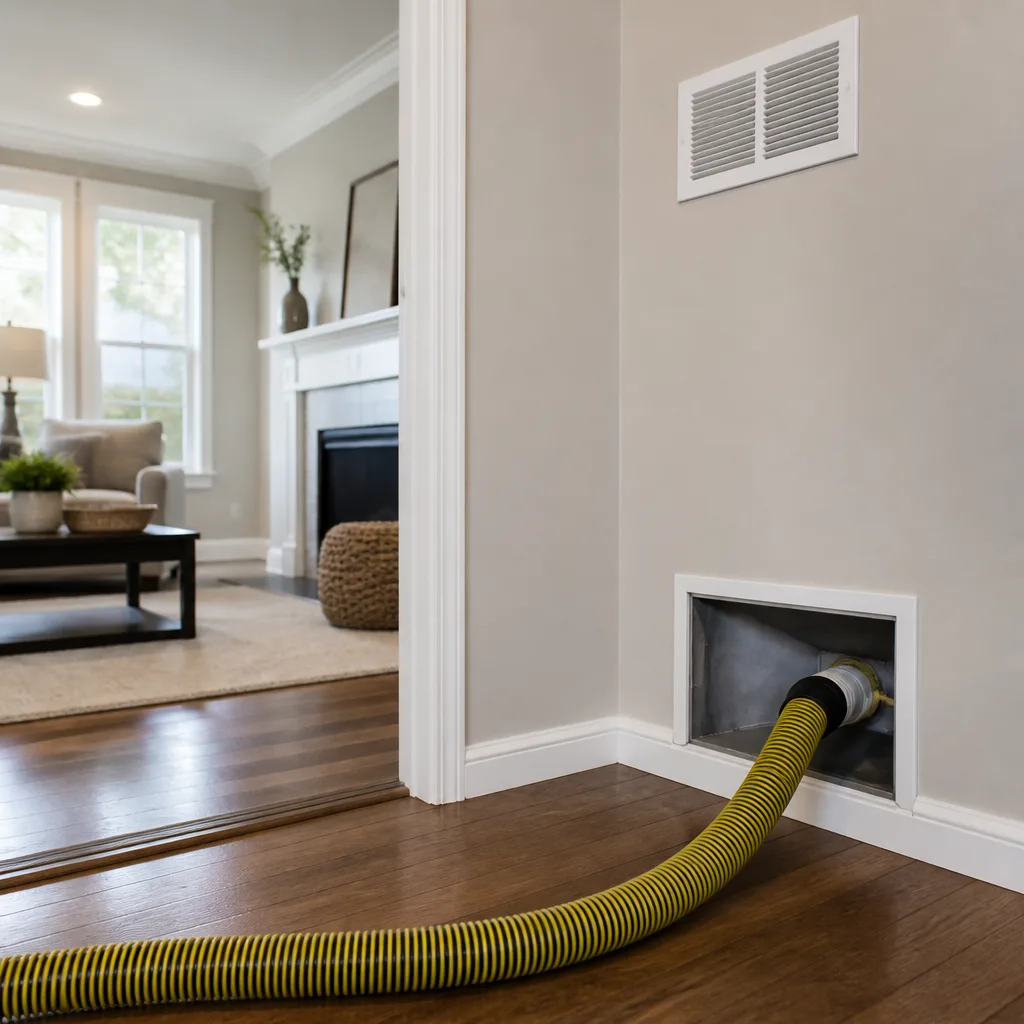 Whole-home duct cleaning
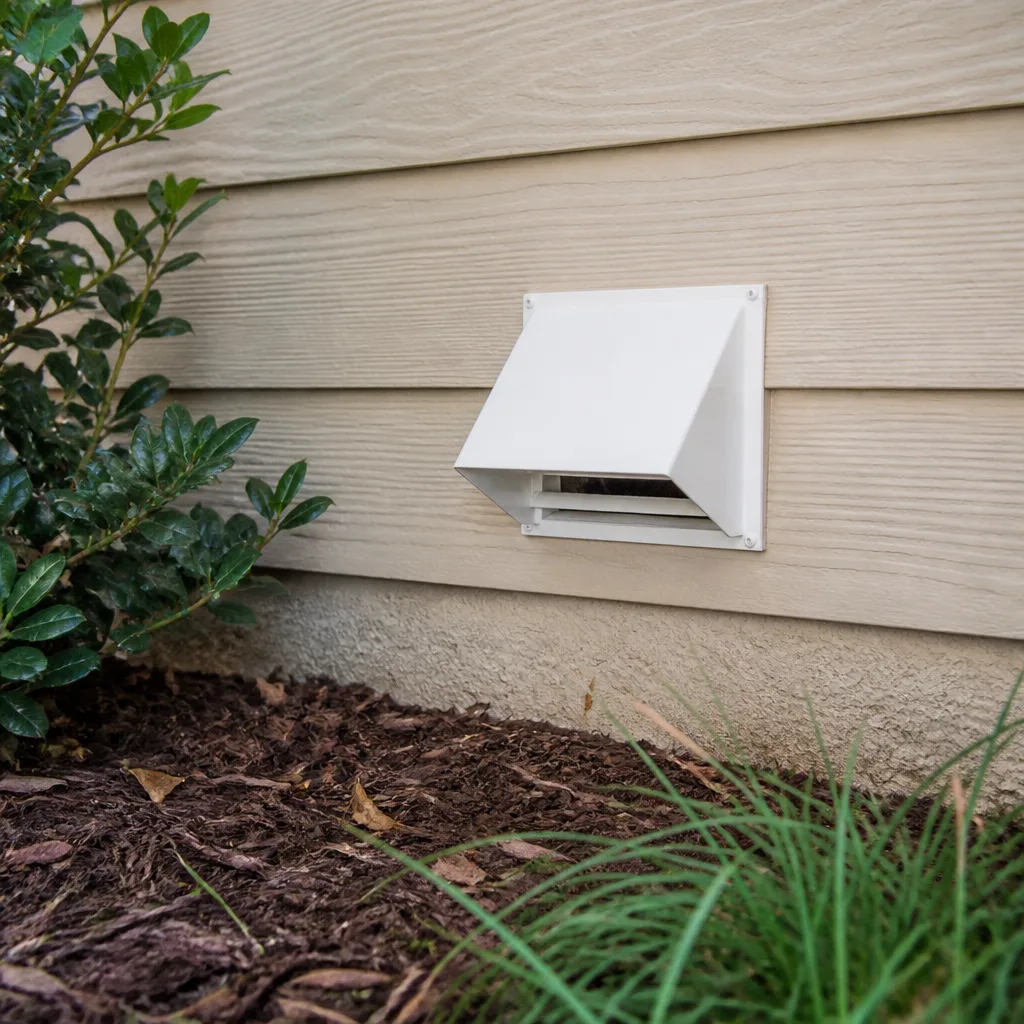 Dryer vent cleaning
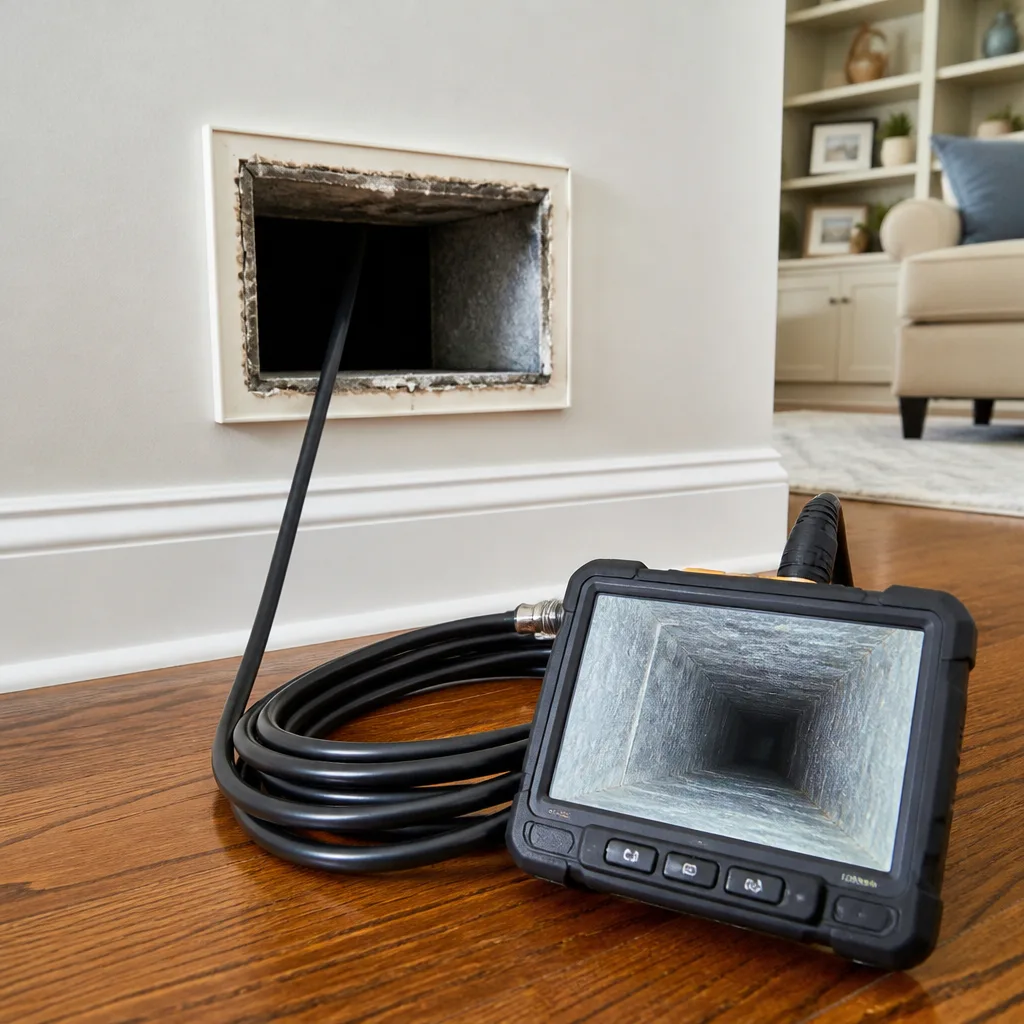 Camera inspection
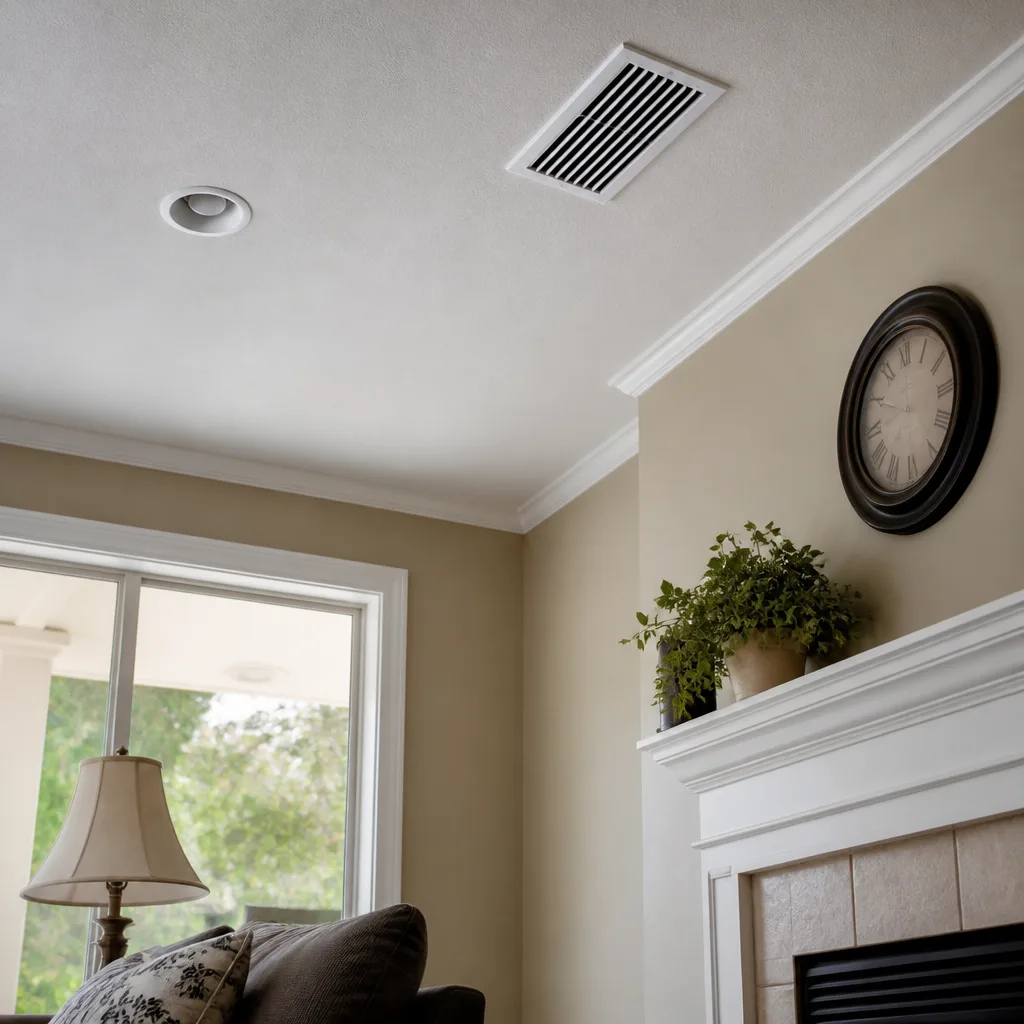 Sanitizing & deodorizing
Whole-system duct and dryer vent check with before-and-after photos - you see exactly what came out of your vents
That "$99 whole-house special" is a bait ad - the real number appears once they are in your hallway, or the "clean" is a shop-vac at the register. We photograph the inside of your ducts before and after instead.
DIY vs Professional Air Duct Cleaning: The Jurupa Valley Homeowner’s Decision Guide
Here’s a number most Jurupa Valley homeowners don’t expect: the air moving through your home cycles through your ductwork 5 to 7 times every day, and every cycle carries whatever is sitting in those ducts past the register and into the rooms where you sleep, cook, and watch TV. The DIY-versus-professional debate usually gets framed as a question of effort, but that misses the point entirely. The real question is whether the method you choose removes contamination from your home or just rearranges it. By the end of this guide, you’ll know exactly which tasks belong in your hands, which conditions demand professional extraction equipment, and how to avoid the single most common mistake we see in Jurupa Valley homes: a well-intentioned DIY attempt that makes the eventual our Air Duct Cleaning services harder and more expensive.
Quick Answer
DIY duct maintenance in Jurupa Valley is legitimate but limited: you can clean registers, upgrade filters, and inspect visible duct openings safely and effectively. Professional cleaning becomes non-negotiable when dust has accumulated beyond the first few inches of the duct run, when renovation debris or rodent activity is present, or when anyone in the home has respiratory sensitivities. The gap between these two isn’t a matter of effort; it’s a matter of equipment physics. No consumer tool on the market generates the negative pressure or reach required to extract contaminants from the full duct system.
Styles & brands we work with
- Whole-home duct cleaning
- Dryer vent cleaning
- Camera inspection
- Sanitizing & deodorizing
Table of Contents
- What You Can Legitimately Do Yourself: The Registers, Returns, and Filters
- Why Consumer Tools Physically Can’t Replicate Professional Extraction
- Jurupa Valley-Specific Conditions That Make Professional Cleaning Non-Optional
- The Hidden Cost of “Doing It Yourself First”
- What Professional Equipment Actually Does: Rotobrush, Nikro, and the Extraction Difference
- DIY Maintenance Between Professional Cleanings: Extending the Interval, Not Replacing the Service
- Common Mistakes to Avoid
- When to Call a Professional
What You Can Legitimately Do Yourself: The Registers, Returns, and Filters
Let’s be honest about what’s within a homeowner’s reach, because there’s real value in it. The first 12 to 18 inches of ductwork visible at each register opening is the only section you can access with standard household tools, and maintaining that section well does genuinely reduce the frequency with which the deeper system needs professional attention. Here’s the full list of what we tell Jurupa Valley homeowners is squarely in their lane, and you can find more guides & resources on our blog to help:
- Register and grille cleaning: Unscrew the register covers throughout the house, wash them in warm soapy water, and dry them completely before reinstalling. Do this twice a year and you’ll prevent the visible dust crust that accumulates around the edges of every register opening in the Inland Empire’s dry climate.
- Return grille maintenance: The return air grille, usually located in a hallway or central wall, is the system’s intake point. It collects more material than any supply register because it’s pulling air constantly. Remove it monthly during peak cooling season and vacuum the face of it from both sides.
- Visible duct boot inspection: Shine a flashlight into the duct boot (the metal collar where the register sits) and look for visible debris, insect activity, or moisture staining. If you see surface dust within arm’s reach and can wipe it safely with a damp cloth, do so. If you see material beyond that reach or any sign of mold or rodent droppings, stop and take a photo for reference.
- Filter upgrades: This is the single highest-impact DIY action. If you’re running basic fiberglass filters, move to MERV 8 or MERV 11 pleated filters, change them every 60 to 90 days during Jurupa Valley’s long cooling season, and make sure the filter is seated snugly in its slot so unfiltered air can’t bypass around the edges.
- Visual inspection of accessible duct sections: In homes with exposed ductwork in the garage or attic, walk the visible runs and look for disconnected joints, crushed flex duct, or gaps at connection points. Mark anything suspicious with masking tape and note it for yourself or for a professional to evaluate.
None of these tasks replace professional cleaning. What they do is extend the interval between professional visits, and when done consistently, they make the whole system work better. A home with clean registers and a properly seated MERV 11 filter is doing the low-hanging work; the deep extraction still belongs to equipment built for that purpose. For a full walkthrough of what a professional service entails in this area, see our guide to Air Duct Cleaning in Jurupa Valley.
Why Consumer Tools Physically Can’t Replicate Professional Extraction
The honest physics is this: your household vacuum generates suction measured in inches of water lift, and it’s designed to pull air through a hose that’s 1.5 inches wide. A professional extraction system pulls air through a hose that’s 8 to 12 inches wide, connected to a vacuum unit generating thousands of cubic feet per minute of airflow. The difference isn’t a matter of degree; it’s a difference in kind. Negative-pressure extraction, which is the core of any legitimate professional duct cleaning, requires sealing the system and creating a vacuum that pulls air through the entire duct network at speed, carrying suspended particulates out through a HEPA-filtered exhaust. You can’t fake that with a shop vac and determination.
There are three specific reasons consumer machinery fails at the job:
- Reach limitation: A household vacuum hose extends 6 to 8 feet. Your duct runs extend 30 to 60 feet with turns, branches, and vertical drops. Anything beyond the first bend is physically unreachable with consumer equipment, and that’s where the majority of accumulated material sits.
- No containment mechanism: Professional cleaning seals off each duct run and applies negative pressure so that dislodged material is pulled toward the collection unit rather than blown into living spaces. A household vacuum with a brush attachment dislodges material and disperses it, typically deeper into the system where you can’t see it. The material hasn’t left your home; it’s just moved to a spot that’s harder to reach.
- Filtration escape: Standard vacuum filters are not rated to capture fine particulate. Particles smaller than the filter’s micron rating pass right through the vacuum’s exhaust and re-enter your indoor air in a concentrated stream. You can end up with more airborne particulate after a DIY attempt than before it.
This last point matters more in Jurupa Valley than in coastal California, because our air already carries elevated particulate loads from inland dust, agricultural activity upwind, and the persistent fine dust that settles in every Inland Empire home. Adding a do-it-yourself dispersion event on top of that baseline makes indoor air quality actively worse.
Jurupa Valley-Specific Conditions That Make Professional Cleaning Non-Optional
There are four conditions we see on a regular basis in Jurupa Valley homes that push duct cleaning from recommended to mandatory, and none of them can be resolved with household tools. For a detailed walkthrough on selecting qualified help, see How to Hire an Air Duct Cleaning Contractor in Jurupa Valley: A Step-by-Step Guide. Recognizing them early saves money and prevents the kind of contamination spread that turns a maintenance issue into a health and repair issue.
1. Post-Renovation Dust
Jurupa Valley has one of the highest rates of home renovation activity in western Riverside County, driven by older housing stock from the 1950s through 1980s getting modernized. Drywall dust from wall removal, texture sanding, or flooring demo gets pulled into return ducts and settles in the entire trunk line. This type of dust is fine enough to pass through standard vacuum filters and stays suspended in duct airflows for weeks after the renovation ends. Professional extraction with HEPA filtration is the only method that removes it fully.
2. Rodent Activity
Our location against the Santa Ana River corridor and the open fields around the Mira Loma area means rodent pressure is a year-round reality, not a seasonal nuisance. Evidence of droppings, nesting material, or scratching sounds in the walls means contaminated material is already in the duct system. You can’t sanitize ducts with a household vacuum, and disturbing contaminated material without containment spreads pathogens into living air. This is a hard stop: professional service only.
3. Visible Mold
If you can see mold growth around register openings, on the visible duct boot, or on the return grille, the problem is almost certainly more extensive inside the duct system where you can’t see. Running a household vacuum through mold-contaminated ducts releases spores into the home without any capture mechanism. We always tell homeowners: if you see mold in a visible location, treat the system as contaminated until professional inspection confirms otherwise.
4. Post-Wildfire Smoke Infiltration
The 2019 and 2020 fire seasons brought smoke into Riverside County homes at levels no one had prepared for, and that smoke infiltrates duct systems through the return air path and the pressure differential created by the HVAC blower. Smoke particulates settle into the duct lining and re-release gradually over weeks after the smoke has cleared. If your home experienced noticeable smoke penetration during any recent fire season, and you haven’t had your ducts cleaned since, the system likely carries accumulated carbon and fine particulate that requires professional extraction.
The Hidden Cost of “Doing It Yourself First”
Here’s the scenario we see repeatedly in Jurupa Valley, and it’s almost always described the same way: “I figured I’d try cleaning them myself first, and if it didn’t work, I’d call you.” That instinct makes sense on its face. The problem is that a failed DIY attempt doesn’t leave the system unchanged. It leaves the system worse than before the attempt, and then the professional visit has to fix what the DIY effort broke loose.
When you run a household vacuum with a brush attachment through a register opening, you dislodge compacted dust that was sitting in a stable, localized spot. That dust gets pushed down the duct run into the sections between the accessible opening and the first turn, which is exactly the zone that’s hardest to reach with consumer tools but trivially easy to reach with a professional whip-line and negative-pressure setup. The material that would have been removed in a standard professional visit now requires a deeper, more thorough treatment to extract from the more remote sections where it settled after being disturbed.
In practical terms, a failed DIY attempt can add anywhere from 30 to 60 percent to the cost and time of the subsequent professional cleaning. It’s the equivalent of trying to save a few dollars by clearing leaves from your rain gutters with a rake, only to find the leaves jammed into the downspouts where the plumber’s scope now has to chase them. The equation for homeowners is simple: if you’re only going to reach the visible surfaces, stick to the register and grille maintenance described above. Don’t probe deeper than you can see, because anything you dislodge beyond your reach becomes someone else’s problem at a higher service level.
What Professional Equipment Actually Does: Rotobrush, Nikro, and the Extraction Difference
When we talk about professional-grade equipment versus a shop-vac and a coupon, we’re talking about specific machines built for specific jobs, and the difference they make is measurable. The Mainstreet Air Duct Cleaning home page goes into our service approach in more depth; here’s what the equipment actually does inside your ducts.
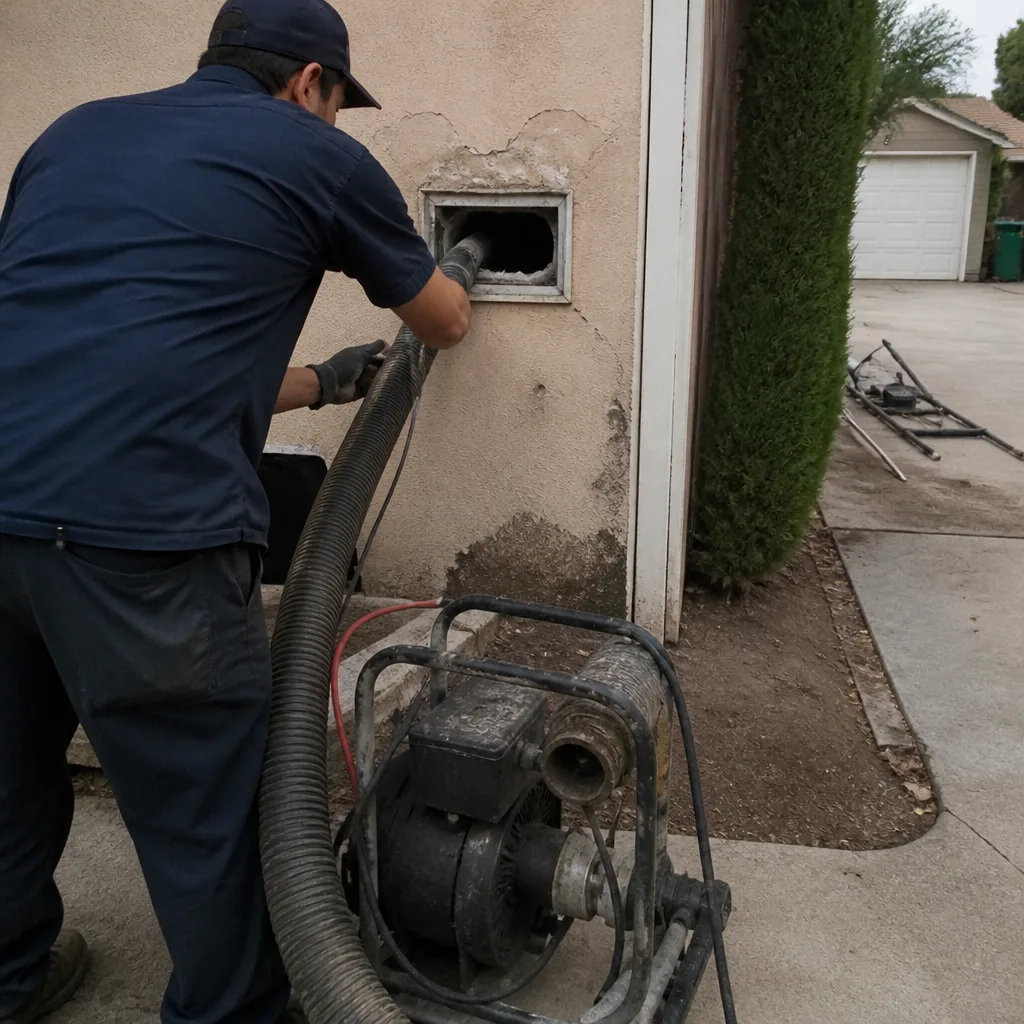
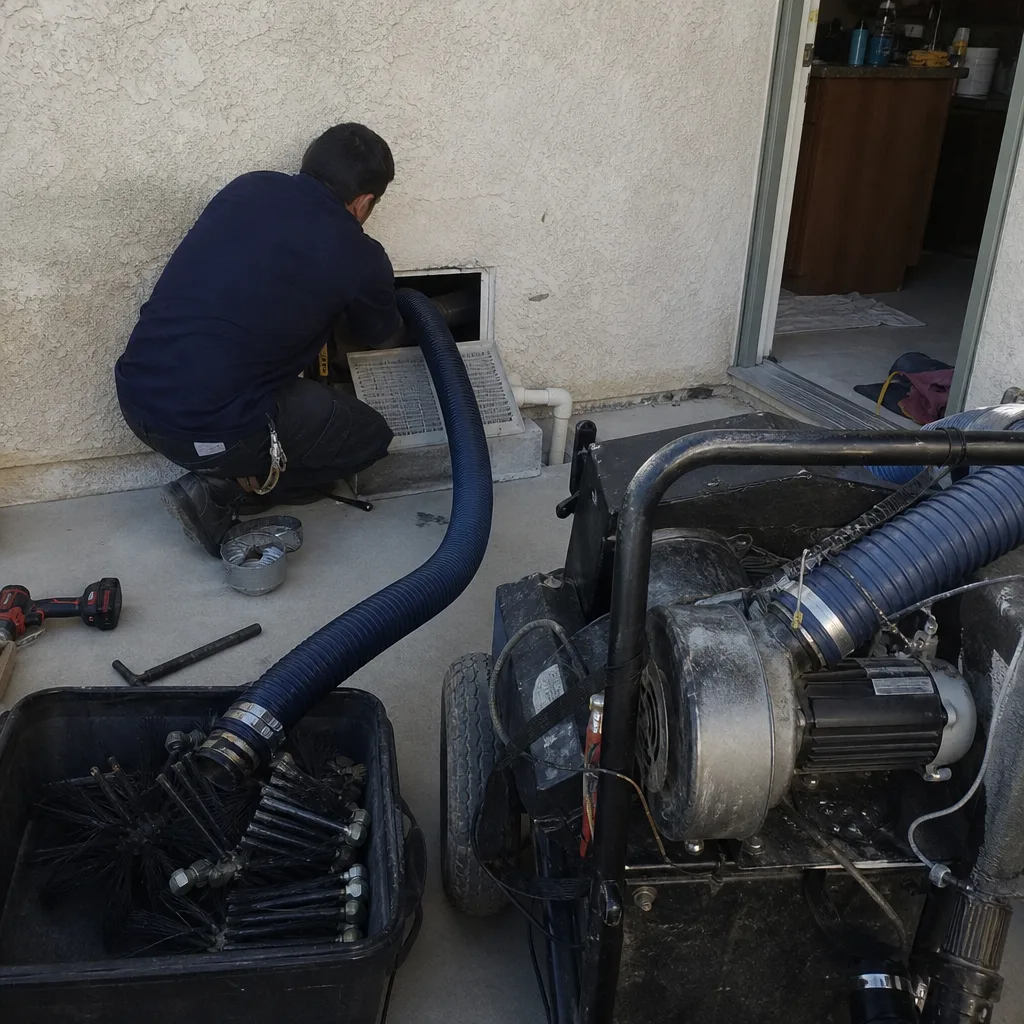
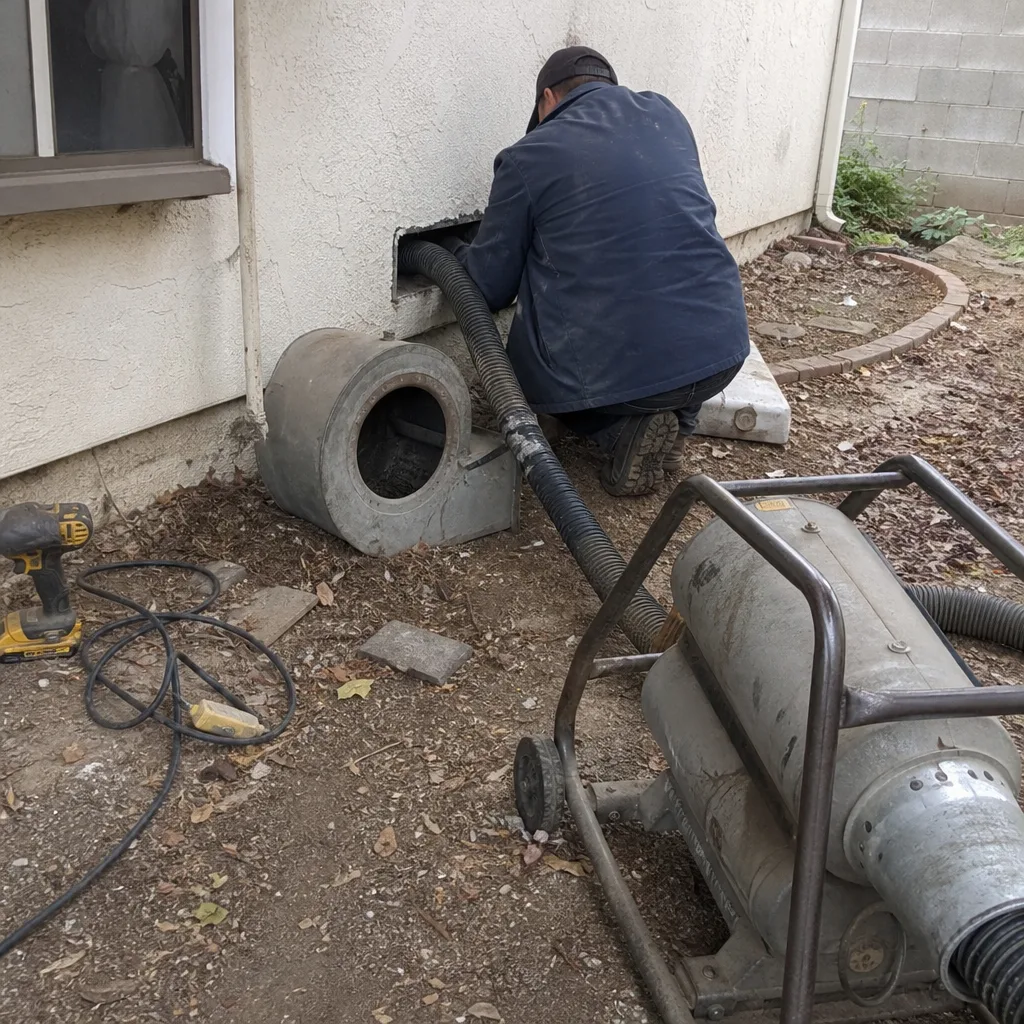
A Rotobrush system sends a rotating brush head down each duct run, agitating the interior surfaces to break the bond between accumulated debris and the duct wall. The brush physically contacts the interior surface and scrubs it, which is the function a household vacuum can’t perform beyond the first foot of reach. This contact cleaning matters in Jurupa Valley because our dry climate produces a fine, tightly adherent dust layer that needs mechanical agitation to release; airflow alone won’t do it.
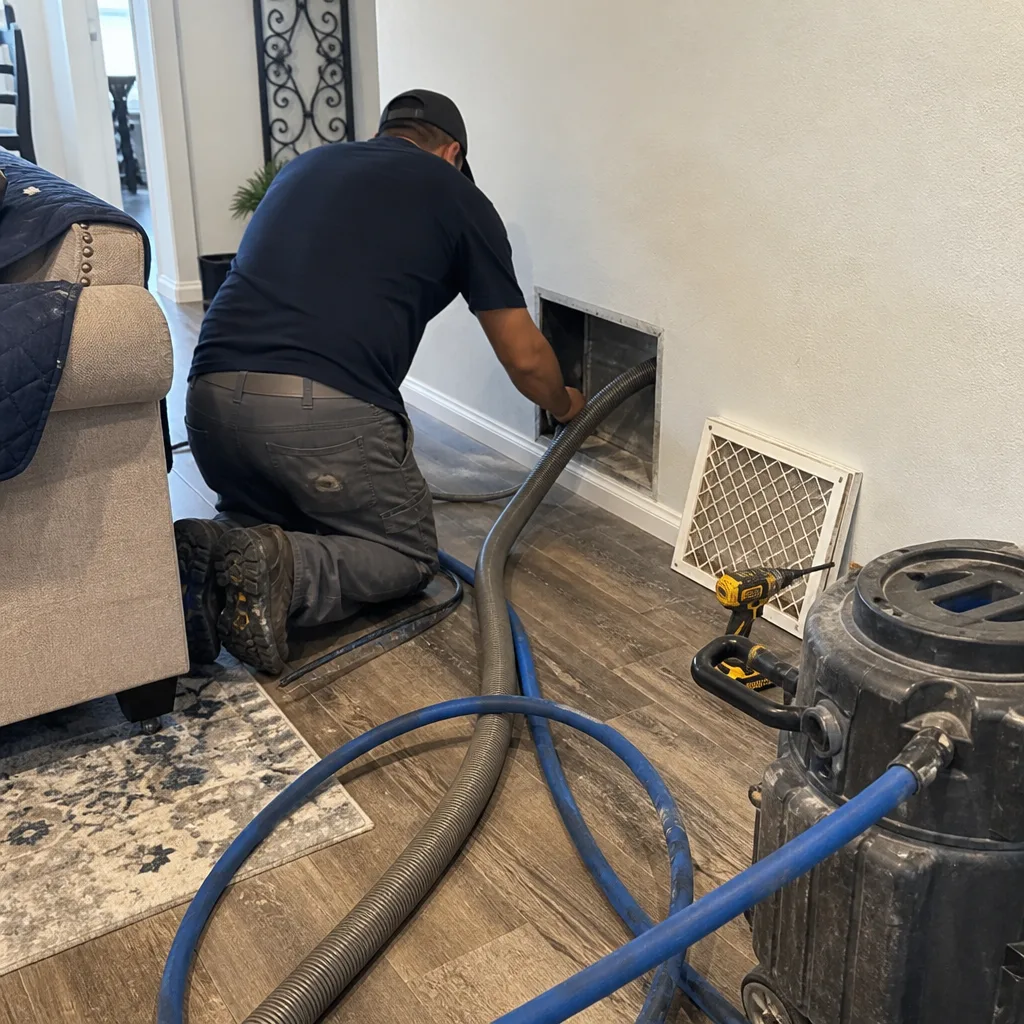
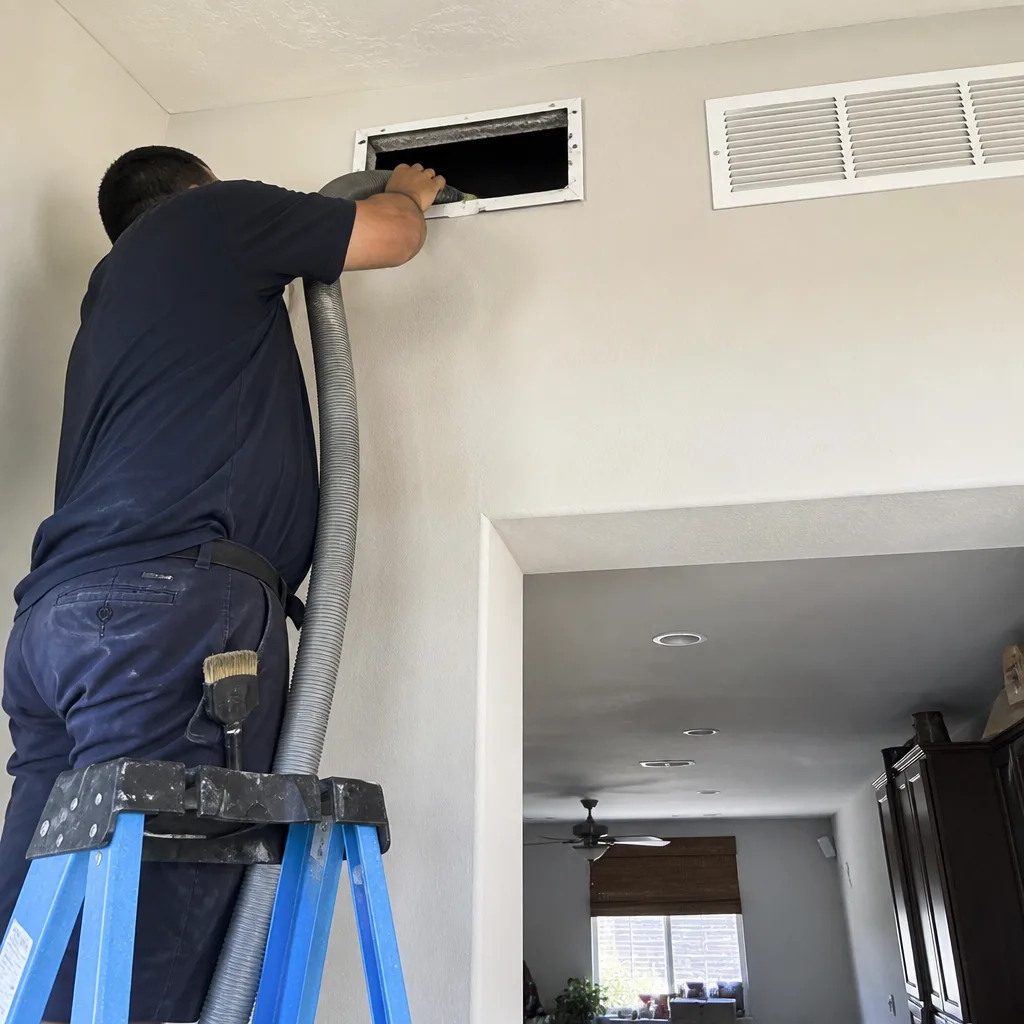
While the brush agitates, a Nikro HEPA-rated vacuum system applies negative pressure to the duct run, pulling the dislodged material backward through the collection hose into a sealed filtration unit. The key word is HEPA. The exhaust from a professional vacuum passes through HEPA filtration rated to capture particulate down to 0.3 microns, meaning what goes into the unit stays in the unit. Nothing is redistributed through your home. This is the fundamental difference between extraction and dispersion.
The third piece is containment. Professional crews seal each duct run during service so the negative pressure is directed and controlled, not applied loosely to the entire system at once. Without containment, the vacuum pulls air through the path of least resistance, which means some duct branches get fully treated while others get none. Sealing each run individually ensures uniform treatment across the entire system.
If any of this surfaces actual damage (a disconnected joint, a crushed flex section, a leak at a plenum connection), that’s a repair issue, not a cleaning issue, and we address it in the same visit. Our Air Duct Repair in Jurupa Valley service page covers what that looks like in detail.
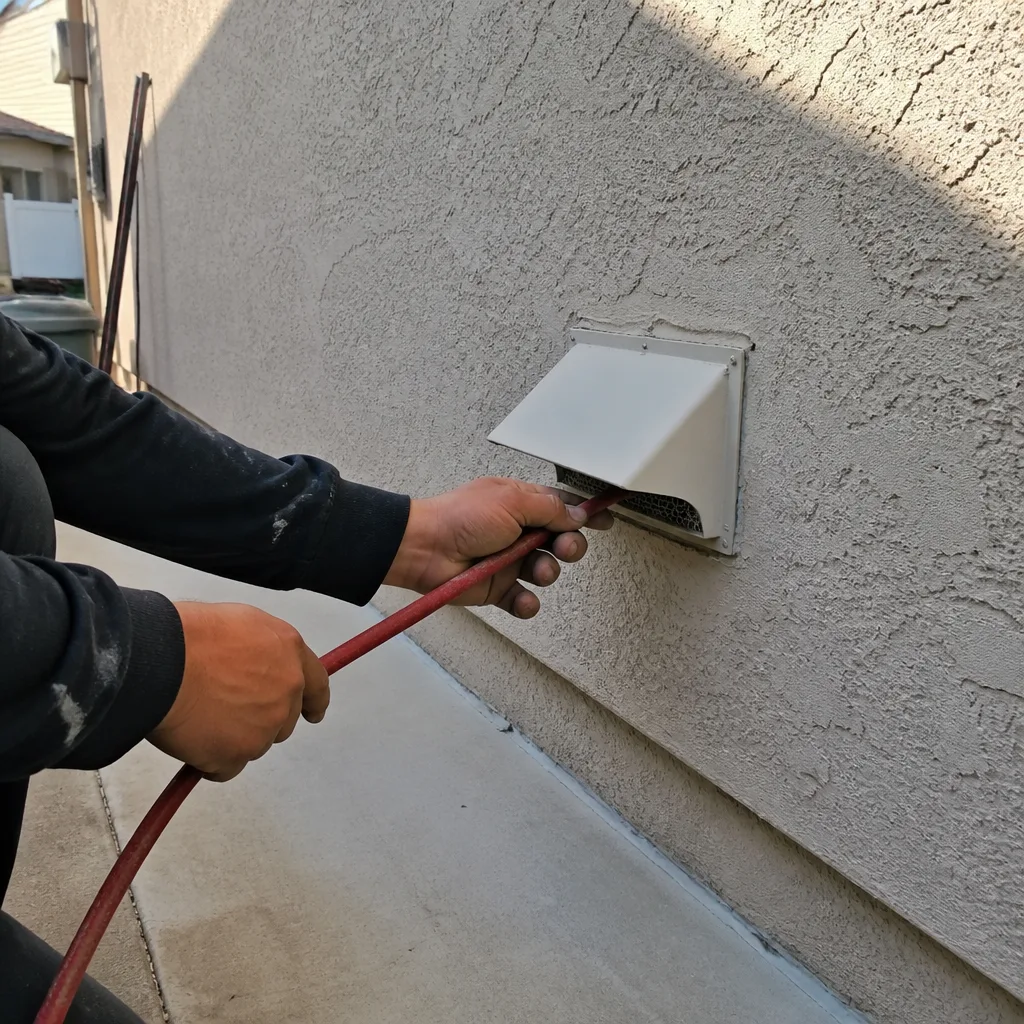
While the duct cleaning is underway, the dryer vent deserves the same attention. Lint accumulation in dryer exhaust lines is the leading cause of household appliance fires, and it builds up regardless of how clean the main duct system is. We offer Dryer Vent Cleaning in Jurupa Valley as part of the same visit so the whole air-handling picture is addressed at once.
DIY Maintenance Between Professional Cleanings: Extending the Interval, Not Replacing the Service
The right way to think about DIY work is interval extension. Good homeowner maintenance should push a professional cleaning from every 2 years to every 3 or 4 years in a typical Jurupa Valley home, and the math works out well: the maintenance is cheap, quick, and makes the eventual professional visit shorter and less expensive. Here’s the sequence that produces the best results:
- Monthly during cooling season: Replace or wash the return grille cover. Vacuum the register covers in place with a soft brush attachment, then remove and wash them twice a year.
- Every 60 to 90 days: Check the filter. Jurupa Valley’s cooling season runs from May through October, which means six to seven months of continuous HVAC operation, and the filter is doing the heavy lifting during that entire span. A MERV 8 filter should be changed every 90 days; a MERV 11 every 60. It’s fine to switch back to a less restrictive MERV 8 in the cooler months when the system runs less frequently, but keep up with replacement on schedule.
- Seasonally: Inspect all visible duct runs in the garage and attic, if accessible, for separation, crushing, or gaps. Take photos so you can track changes over time.
- Annually: Shine a flashlight into every duct boot and note what you see. Surface-level dust in the boot is normal and cleanable by hand. Dust past the first bend, debris, moisture staining, or any sign of insect or rodent activity goes on the call list.
- Every 3 to 4 years: Schedule a professional cleaning. This cadence works for most Jurupa Valley homes without pets, without smokers, and without renovation activity. Homes with multiple pets, allergy-sensitive occupants, or the conditions described above should move to a 2 to 3 year interval.
If you’re running premium filtration equipment from brands like Honeywell or Aprilaire, keep the manufacturer’s maintenance schedule for the unit itself current. A clean HVAC system feeding a clogged filtration unit is still a problem, and a properly maintained whole-home filtration system extends the professional interval further by reducing what reaches the ducts in the first place.
Common Mistakes to Avoid
- Running a household vacuum through register openings with a brush attachment. This dislodges surface material and pushes it deeper into the system, where extraction becomes harder and more expensive. If you can’t remove it with a damp cloth on a visible surface, leave it for professional equipment.
- Using a shop vac with a standard filter to “blow out” the ducts. The exhaust from a standard shop vac redistributes fine particulate directly into the room air. You’re moving dust from the ducts to the sofa.
- Skipping the filter change because it “doesn’t look dirty.” A filter that looks clean has already captured what it’s going to capture. Jurupa Valley’s fine dust fills filter media evenly and invisibly, so the 90-day rule holds whether the filter looks soiled or not.
- Using duct tape to seal visible duct gaps. Duct tape adhesive fails within a year of drying out, and the tape itself becomes a contaminant in the system. Use mastic sealant or foil tape rated for HVAC use, or call someone who will.
- Ignoring the dryer vent while focusing on the main ducts. The dryer vent is the most dangerous air-handling component in the home. Lint fires are fully preventable and fully invisible until they aren’t.
- Assuming a newer home and a clean filter mean clean ducts. Construction debris, drywall dust, and insulation material from the original build often remain in duct systems for years after move-in. Newer isn’t a guarantee.
- Using scented sprays or “duct fresheners” to address odors. These mask the symptom while adding chemical residue to the duct lining. Odor needs to be traced to its source, not covered up.
When to Call a Professional
Here’s the decision framework in plain terms. Call a professional if any of these apply: you’ve completed a renovation that produced drywall dust or flooring debris; you see evidence of rodent activity in the duct system or around registers; you see mold on any visible duct surface; your home experienced smoke infiltration during a recent fire season; you’ve lived in the home two or more years without a cleaning and the registers show accumulated dust beyond the visible boot; or anyone in the home has asthma, allergies, or other respiratory sensitivities that make airborne particulate a health concern. These are not judgment calls; they’re trigger conditions for professional extraction. Mainstreet Air Duct Cleaning offers free estimates in Jurupa Valley. Call (877) 358-3053 to schedule a walkthrough and get an exact quote before any work begins.
See the difference
 Before
 After
 Before
 After
 Before
 After
Frequently Asked Questions
Professional air duct cleaning for a typical 1,500 to 2,500 square foot single-family home in Jurupa Valley runs $350 to $650, depending on the number of duct runs, accessibility of the system, and the condition of the existing ductwork. Homes with extensive renovation debris or rodent contamination trend toward the higher end. The price should be quoted as one flat amount per system, agreed before work starts, with no per-vent add-ons. Call (877) 358-3053 for an exact quote on your home.
You’ll see visible dust accumulation beyond the first few inches of the duct boot, notice uneven airflow between rooms, find unexplained dust settling on surfaces within days of cleaning, or see worsening allergy symptoms that track with HVAC operation. Any of these is a good indicator. If you can see dust only on the visible register surfaces and nowhere past the boot, your DIY maintenance may be sufficient for now.
Rental machines approach the power of professional equipment but lack the containment and HEPA filtration that define professional extraction. The risk is comparable to the shop-vac problem at a larger scale: you’re generating high airflow without proper filtration, which can distribute fine particulate through the home. We don’t recommend it, particularly for homes with respiratory-sensitive occupants.
Most Jurupa Valley homes do well with professional cleaning every 3 to 4 years when the homeowner maintains registers, filters, and visible surfaces consistently between visits. For a complete maintenance calendar, see Seasonal Air Duct Cleaning Care for Jurupa Valley: Year-Round Homeowner’s Guide. Homes with pets shedding year-round, renovation activity, or occupants with respiratory conditions benefit from a 2 to 3 year cadence. The Inland Empire’s extended cooling season means the system runs longer than in coastal climates, and that runtime accelerates accumulation.
Professional extraction removes the material that causes most duct-borne odors: accumulated dust, pet dander that has settled into the duct lining, and organic matter that breaks down over time. If the odor source is physical contamination inside the ducts, cleaning addresses it directly. If the odor originates elsewhere (mold inside the evaporator coil, moisture in the condensate pan, or a plumbing issue), cleaning will not resolve it, and a proper diagnosis should identify the actual source.
Duct cleaning before a sale is one of the highest-confidence investments you can make in the buyer’s inspection process. A clean duct system with a documented service record neutralizes one of the most common inspection concerns, and in Jurupa Valley’s active resale market, it’s a line item that reads as responsible maintenance rather than deferred care. It’s also a documented improvement you can include in disclosures, which strengthens the sale file.
The Bottom Line
The DIY-versus-professional question for duct cleaning isn’t a tie. Your household vacuum and your free weekend are fine for the surfaces you can see: registers, returns, boots, and filters. They’re not fine for the 90 percent of the duct system you can’t see, and attempting to reach it with consumer tools makes the eventual professional job harder, not cheaper. In Jurupa Valley, where six-month cooling seasons and the Inland Empire’s fine dust load put continuous strain on HVAC systems, the practical path is regular DIY surface maintenance paired with professional extraction every 3 to 4 years, with the interval shortened when renovation dust, smoke, rodents, or respiratory health come into play. The equipment exists for a reason. Use the right tool for the section of the system you’re actually reaching.
Written by the team at Mainstreet Air Duct Cleaning, serving Jurupa Valley since 2011.