
Last updated November 2, 2026
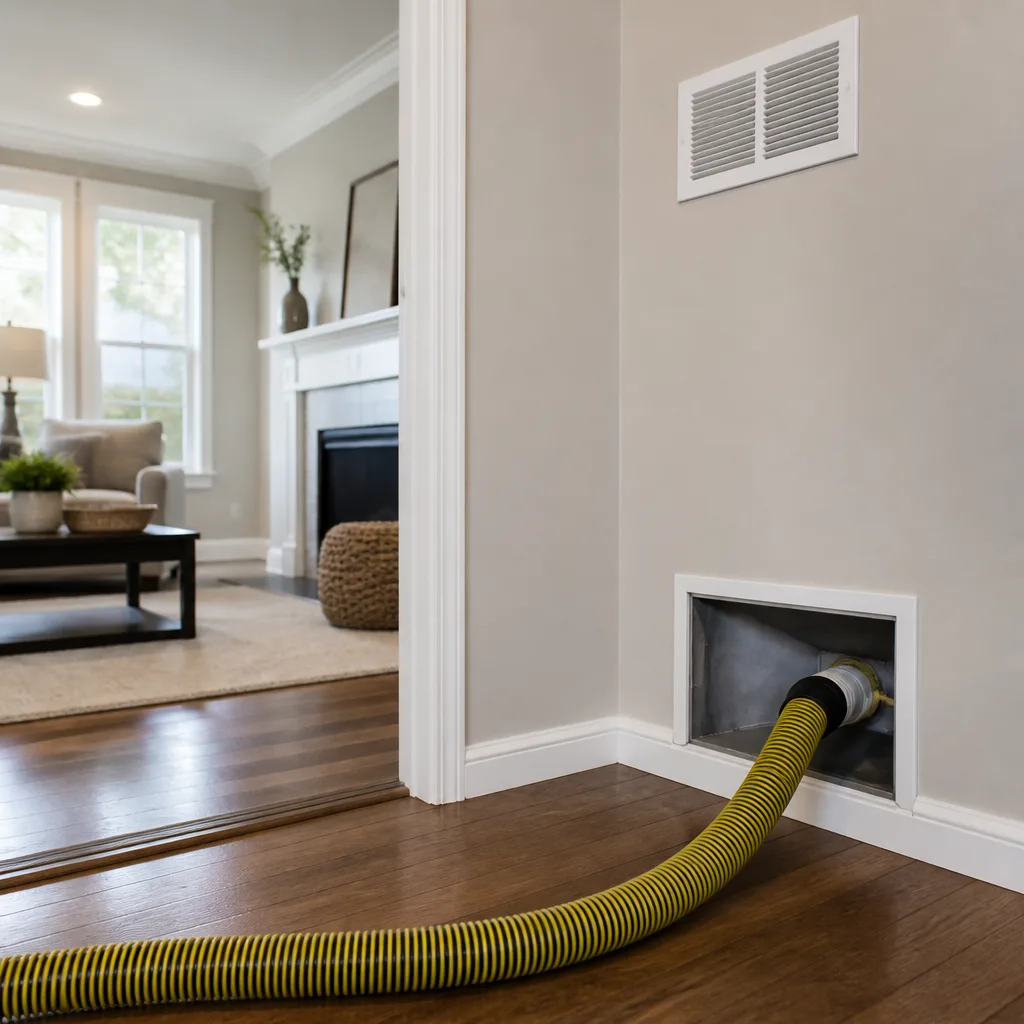 Whole-home duct cleaning
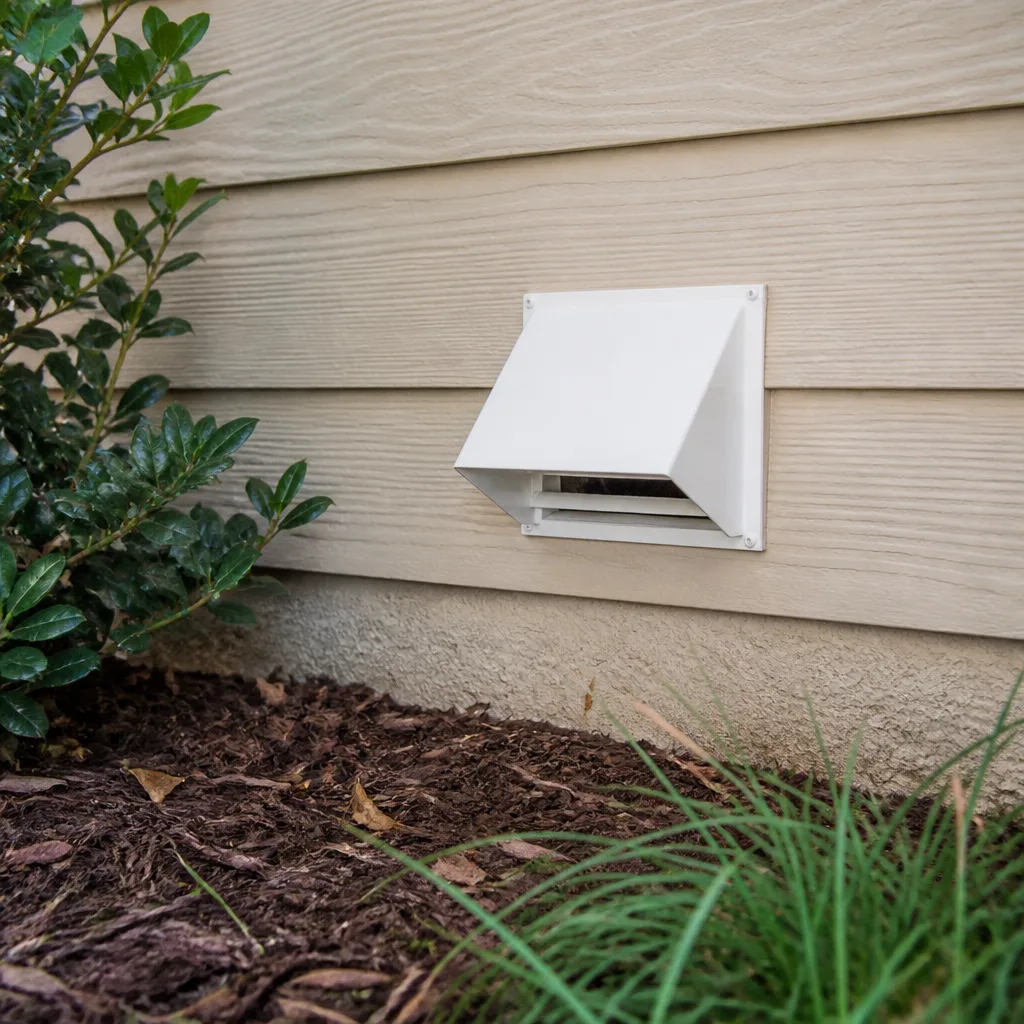 Dryer vent cleaning
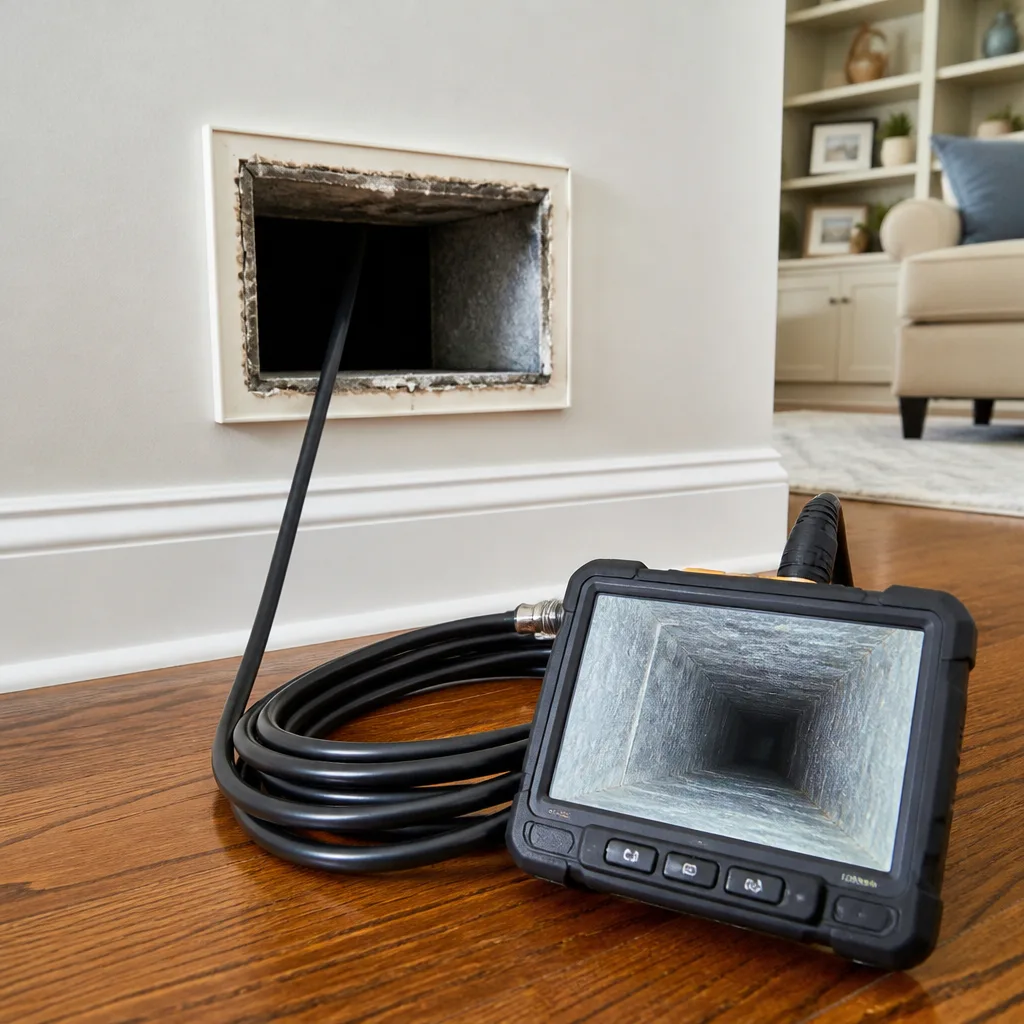 Camera inspection
 Sanitizing & deodorizing
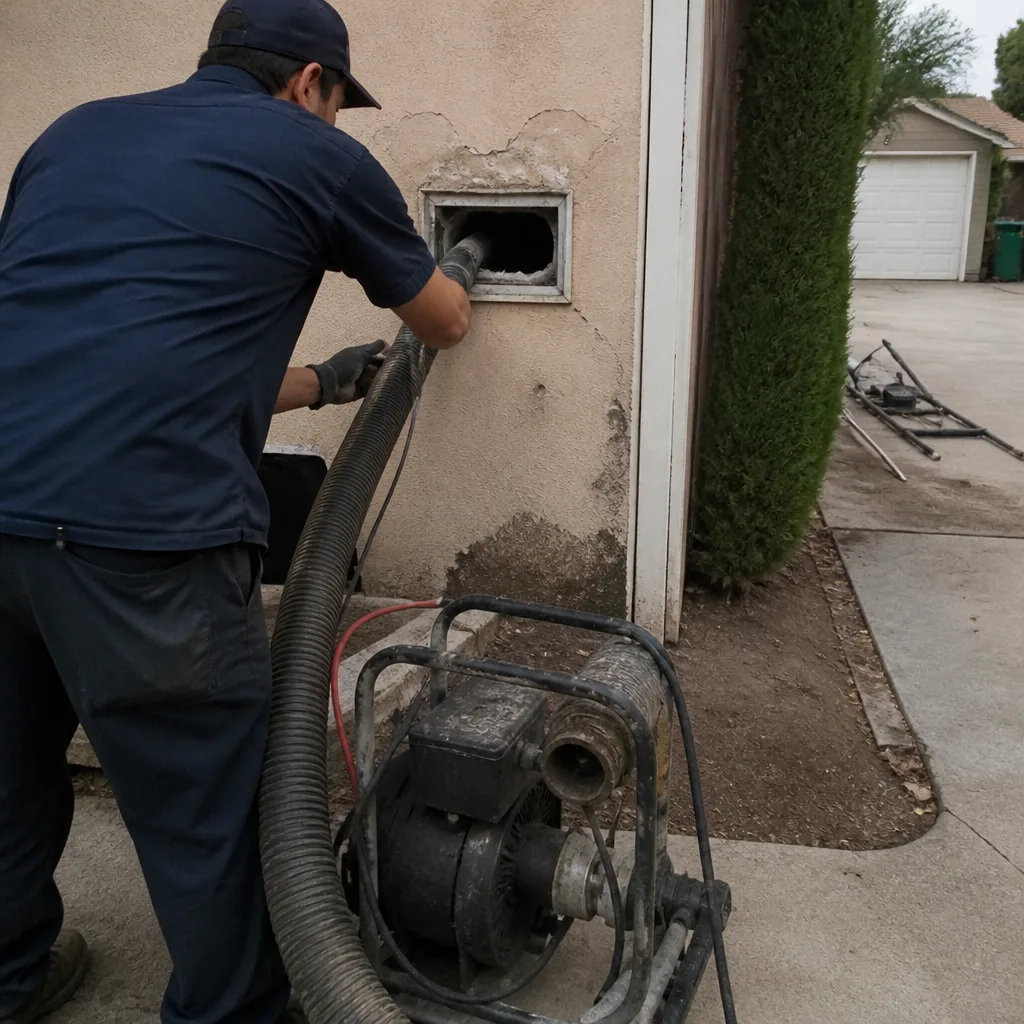
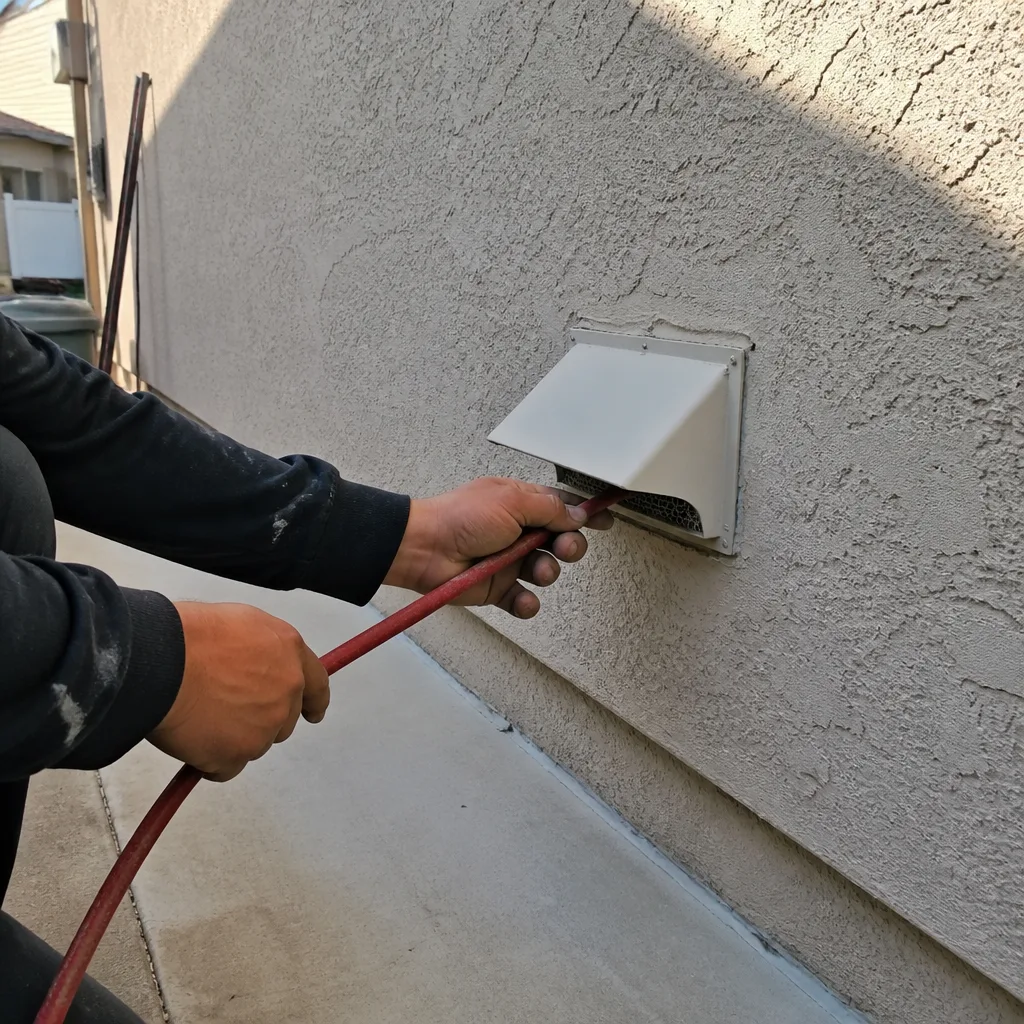
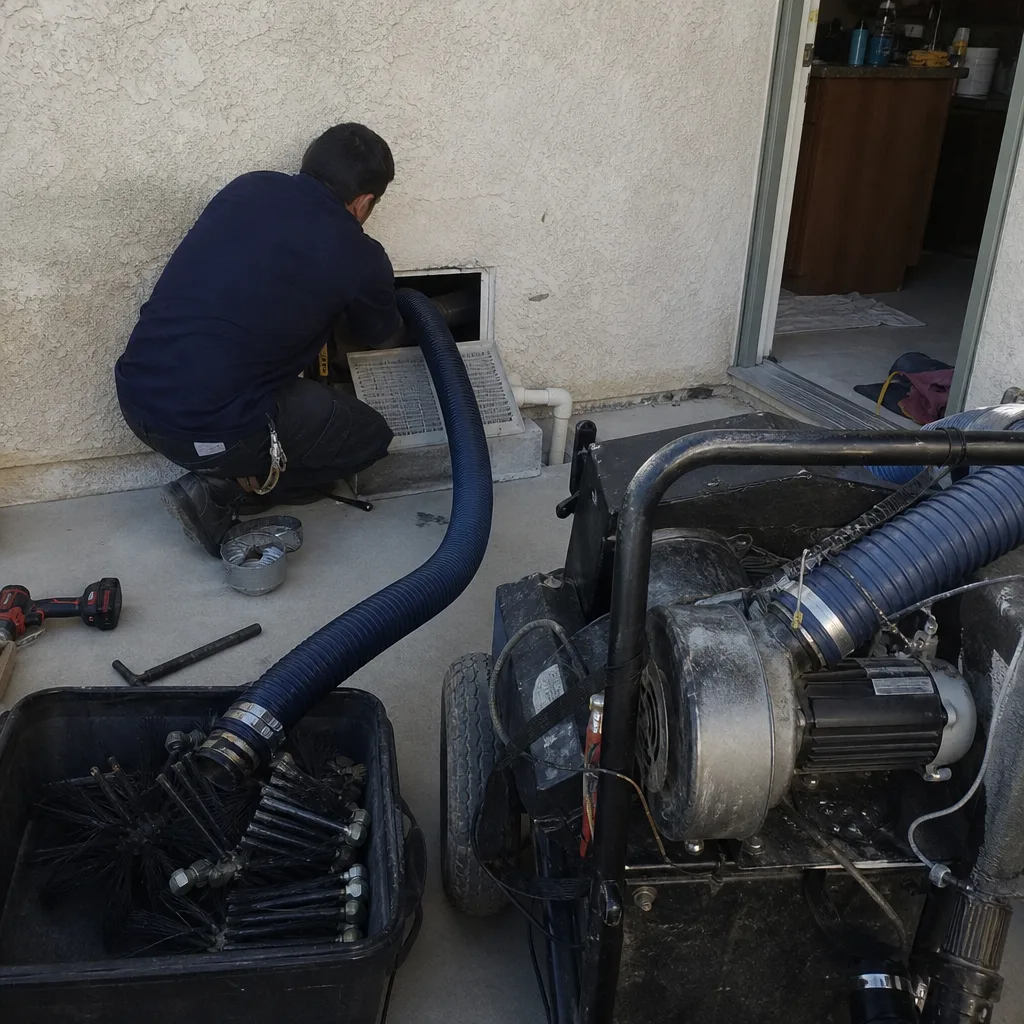
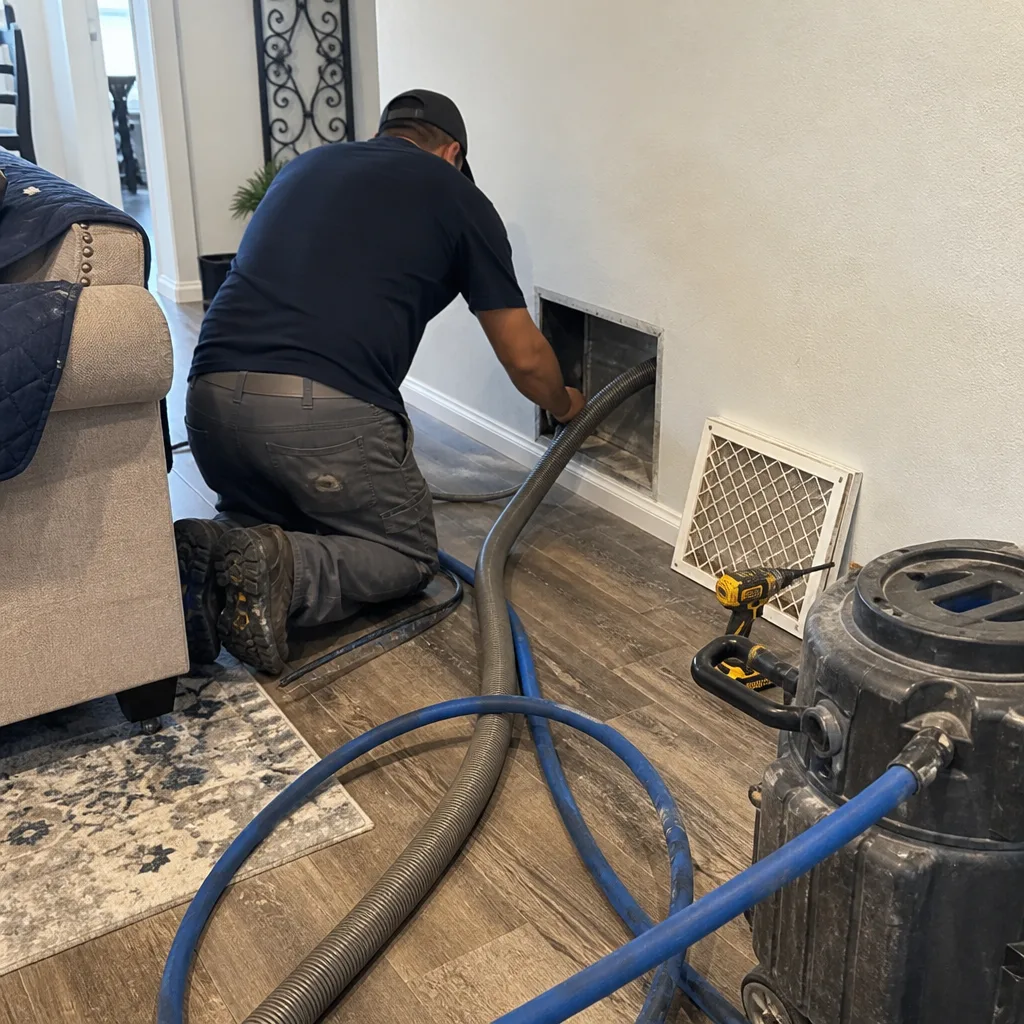
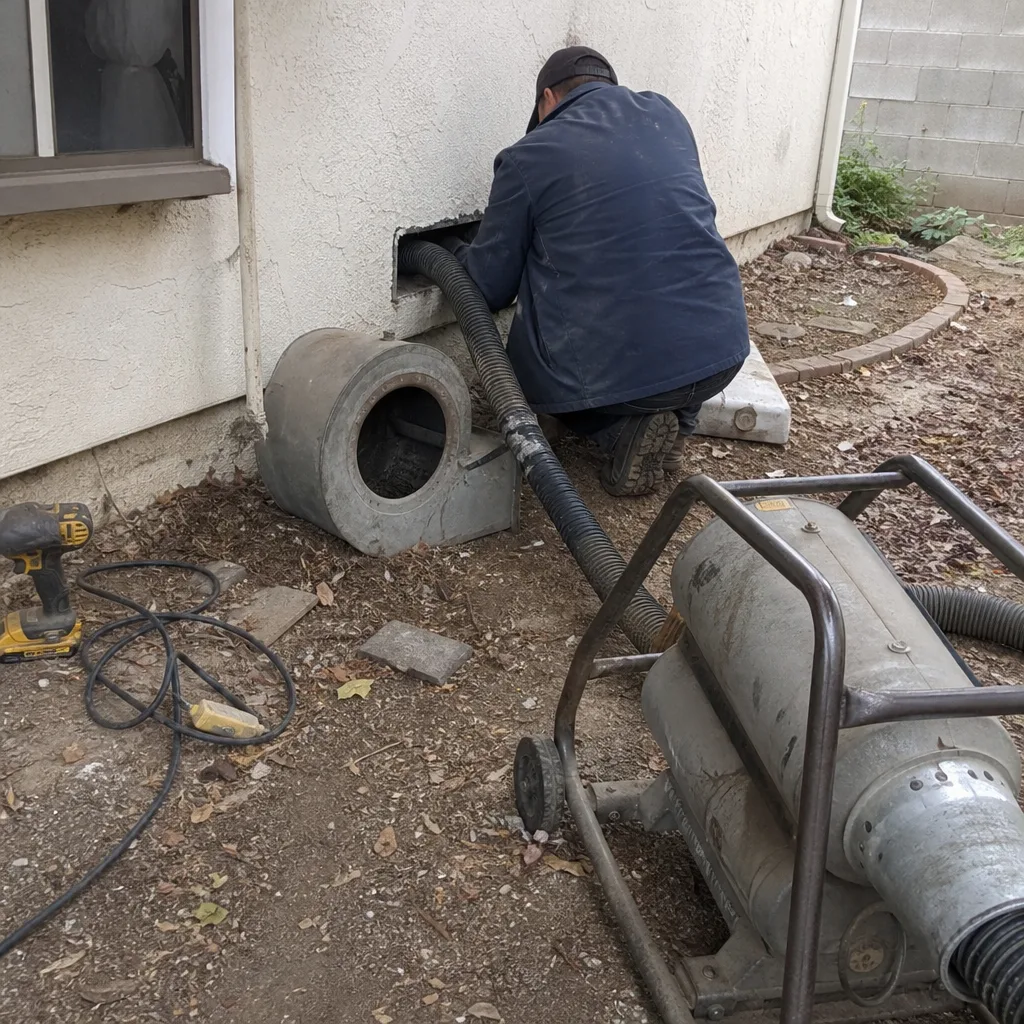
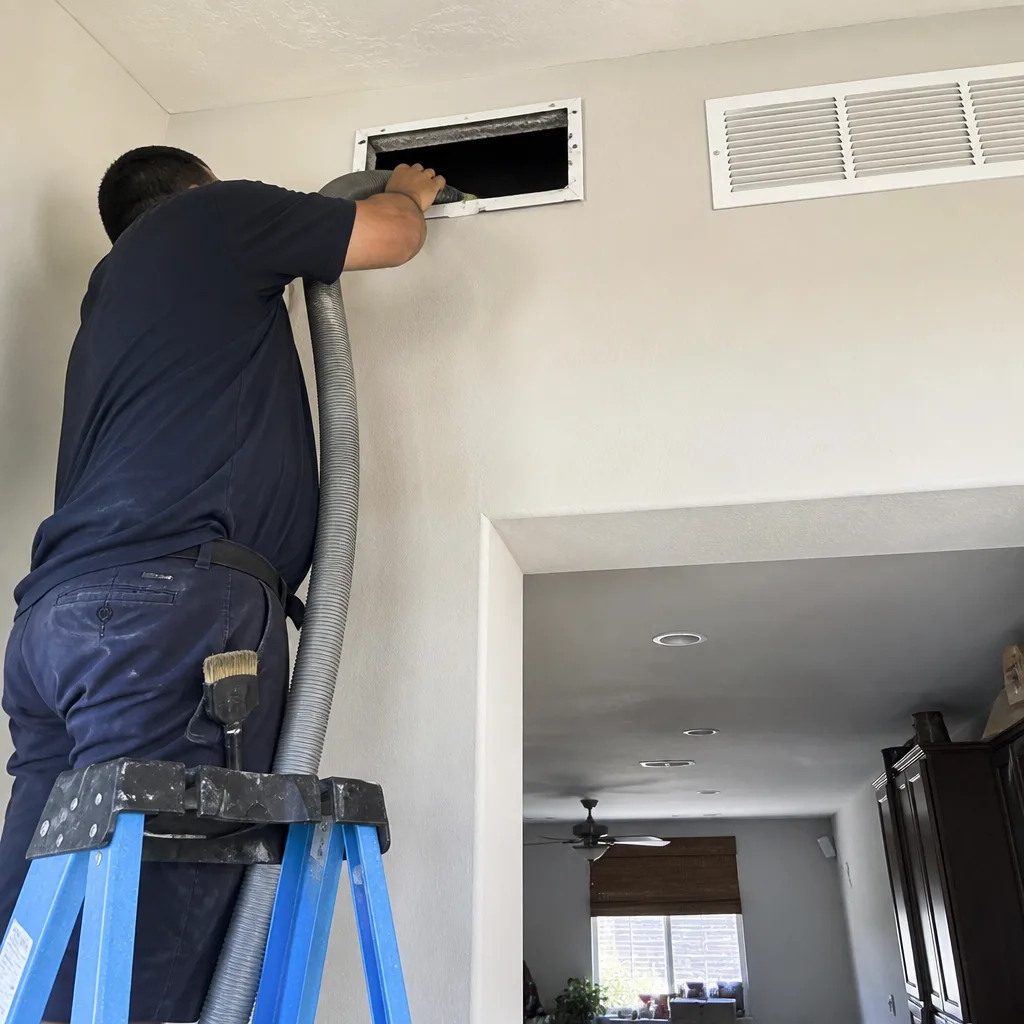
Whole-system duct and dryer vent check with before-and-after photos - you see exactly what came out of your vents
That "$99 whole-house special" is a bait ad - the real number appears once they are in your hallway, or the "clean" is a shop-vac at the register. We photograph the inside of your ducts before and after instead.
Air Duct Cleaning Maintenance Checklist for Jurupa Valley Homeowners
A clogged return duct register doesn’t just restrict airflow. It forces your blower motor to work harder, and in Jurupa Valley’s summer heat, where daytime highs regularly push past 100°F for weeks at a stretch, that extra strain can shorten equipment life by years. Most homeowners find out too late because the failure happens quietly, inside walls and above ceilings, long before any smell or visible dust appears. This checklist is different from the generic “change your filter” advice you’ll find elsewhere. It’s built around observable indicators that tell you whether your duct system is actively degrading between professional cleanings. By the end of this guide, you’ll know exactly what to look at, when to look, and what your findings actually mean.
Styles & brands we work with
- Whole-home duct cleaning
- Dryer vent cleaning
- Camera inspection
- Sanitizing & deodorizing
Quick Answer
A proper air duct maintenance routine for Jurupa Valley homeowners involves monthly filter checks, a seasonal walkthrough of every visible register and grille, twice-yearly inspection of the air handler and visible duct sections in the attic or crawlspace, and Air Duct Cleaning services every 3-5 years depending on household conditions. Homes near the 60 Freeway, within a mile of dirt lots or orchards, or with pets should shorten that interval to 2-3 years. Document what you see each season so a technician can immediately understand your system’s history on the first visit.
Table of Contents
- The Monthly Filter Routine That Actually Works in Jurupa Valley
- The Seasonal Register and Grille Walkthrough
- What to Look for Around the Air Handler and Coil
- The Attic and Crawlspace Visible Duct Check
- Filter Upgrade Thresholds for Jurupa Valley’s Dust Zones
- How to Document Your System So a Technician Gets Up to Speed in Minutes
- A Seasonal Maintenance Calendar for Jurupa Valley
- Common Mistakes to Avoid
- When to Call a Professional
- Frequently Asked Questions
- The Bottom Line
The Monthly Filter Routine That Actually Works in Jurupa Valley
Every maintenance guide starts with filter changes, and for good reason. The filter is the first line of defense between your ducts and the air moving through them. But the standard “change it every 90 days” advice falls apart in Jurupa Valley, where the summer cooling season runs from late April through October and Santa Ana winds in the fall push dry, particulate-laden air through every gap in a home’s envelope.
Here’s the routine we recommend to homeowners throughout the area, from the older neighborhoods near Rubidoux to newer developments east of the 15:
- Check the filter on the first day of every month. Set a recurring calendar reminder. This is non-negotiable during cooling season.
- Hold the filter up to a light source. If you cannot see light through the filter material, it’s past time to change it, regardless of how many days it’s been in service.
- Expect to change filters every 30-45 days from May through October. Jurupa Valley’s combination of triple-digit heat (long runtimes), agricultural dust from surrounding areas, and dry airborne soil means filters load faster than in coastal communities.
- From November through April, 60-90 day intervals are typically sufficient unless you have pets, recent construction, or live adjacent to an orchard or dirt lot.
- Write the install date on the filter frame with a permanent marker. This simple habit eliminates guesswork and gives any technician who visits an accurate picture of your maintenance discipline.
The filter’s job is to protect the equipment, not to clean your air. That distinction matters. A filter that’s too restrictive can cause the same blower motor strain as a clogged duct, while a filter that’s too porous lets fine particulate settle into your ductwork. Homes with upgraded filtration systems from Honeywell or Aprilaire often have different filter-change requirements, and those systems deserve specific attention. If you’ve inherited a house with one of these installed and don’t know the maintenance schedule, note the model number when you document your system. We regularly help homeowners in Jurupa Valley figure out what filter setup they actually have and what it needs.
The Seasonal Register and Grille Walkthrough
Supply registers and return grilles are the only parts of your duct system you can see without going into the attic or crawlspace. That makes them your best early-warning indicators. The walkthrough takes ten minutes and should happen four times a year, at the start of each season. If you only do it twice, make it spring and fall, before the two peak HVAC seasons begin.
This is observational maintenance, not a cleaning job. You’re looking for patterns, not perfection. Here’s the process:
- Walk every room, including hallways, bathrooms, and the laundry room. Count your registers as you go. Most homes have 8-14 supply registers and 1-2 return grilles somewhere central.
- Remove each supply register cover. Look inside the register opening with a flashlight. Wipe the inside surface of the metal boot with a white paper towel. Gray or brown residue that comes off easily is normal dust. A dark, greasy film suggests buildup that has been accumulating for years and may indicate ductwork that’s pulling air from a dirty attic or crawlspace.
- Examine the register cover itself. Are the fins coated with dust that’s baked on, or does it wipe off clean? Baked-on dust on the face of the register means the air stream has been carrying particulate past the filter for a long time. It’s a sign that whatever is inside the ducts is coming back out.
- Check the return grille. Return grilles are where air leaves your living space and enters the duct system. A return grille that looks clean on the surface but has a visible dust ring around the edges indicates air is bypassing the filter, either through gaps or because the filter isn’t seated properly. This is one of the most common things we find in Jurupa Valley homes, and it’s a direct path for attic air to be pulled into the system.
- Feel for air temperature consistency. With the system running, hold your hand at each supply register. A noticeable difference between rooms (some strong, some weak) suggests airflow imbalance caused by duct leaks, kinks, or disconnections. It’s not something you can diagnose by feel alone, but it’s worth noting.
During the walkthrough, keep a running list in your phone’s notes app. Note which registers showed buildup, which rooms had weak airflow, and any measurements or observations that stand out. This record becomes part of your documentation system, which we’ll cover in more depth below.
One more thing on registers: vacuuming the visible dust off a register cover is fine. But don’t reach into the duct with a household vacuum hose. A shop-vac simply can’t reach far enough to make a difference, and it creates turbulence that kicks dust into your living space. Worse, aggressive DIY duct cleaning can damage the thin metal of the register boot. If you can see buildup inside the boot that’s more than a light dusting, that’s a sign to schedule a professional assessment – see our Air Duct Cleaning Troubleshooting: Common Problems and How to Fix Them for guidance, not a reason to start improvising.
What to Look for Around the Air Handler and Coil
The air handler is the box that contains your blower motor and, in most Jurupa Valley homes, the evaporator coil. It’s usually located in a hallway closet, the attic, or the garage. Everything that’s wrong with your duct system eventually shows up here, because this is where all the air passes through before it’s conditioned and sent back out.
You can perform a meaningful inspection without specialized tools. Here’s what to check:
- The coil surface. If your air handler has an access panel you can open safely (breaker off, panel set aside carefully), take a look at the coil fins. A coil that’s caked with lint, pet hair, or dust means the air reaching the mechanical system is dirty. That contamination didn’t appear from nowhere. It came through your ducts, which means your ducts are likely coated with the same material. A dirty coil reduces efficiency and can cause the system to freeze up during Jurupa Valley’s hottest weeks.
- The condensate pan and drain line. Look for standing water, slime, or rust. A clogged condensate drain is one of the most common HVAC failures in our area, and the material clogging the drain is often the same dust and debris that’s settled in your ducts, washed down by condensation. If the pan shows signs of repeated overflows, you may have a bigger buildup problem than you realize.
- The blower motor housing. If the blower compartment is accessible and you’re comfortable with the breaker off, look at the blower wheel blades. Gray or tan dust caked on the blades indicates years of unfiltered or under-filtered air moving through the system. A heavily loaded blower wheel has to work harder to move the same volume of air, which shows up as higher energy bills and reduced component life.
- The area around the air handler. Is there excessive dust on the floor or platform? Are there rodent droppings? In Jurupa Valley, especially in hillside and orchard-adjacent areas, rodents seeking cool air in summer will nest in and around air handlers. If you see droppings, do not disturb the area. Note it, photograph it, and call a professional who can assess both the rodent issue and the duct contamination that follows.
You’re not expected to fix any of these conditions yourself. For the coil and condensate system especially, proper service requires training and specific tools. But knowing what to look for means you’ll recognize a problem before it becomes a full system failure. In our experience serving Jurupa Valley, we consistently find that the homeowners who catch coil fouling early save themselves a significant repair bill down the line. The ducts are the delivery system. When the delivery system is dirty, the mechanical room shows it.
The Attic and Crawlspace Visible Duct Check
Most homes in Jurupa Valley have flexible ductwork, the insulated round tubes that snake through attics and crawlspaces. Those ducts are the subjects of the professional air duct cleaning in Jurupa Valley process, but between professional visits, a twice-yearly visual inspection tells you a lot.
Safety note: This is a visual inspection only. If you’re uncomfortable in confined spaces, have mobility limitations, or your attic gets dangerously hot in summer (and in Jurupa Valley, it will), don’t go up there. This section can be deferred to a professional visit. Spring and fall are the only seasons where an attic inspection in this climate is even tolerable. Summer attics here can reach 140°F or more.
If you do go up, bring a flashlight, a camera or phone, and a tape measure. Wear a dust mask. Here’s the routine:
- Check the duct connections. Flexible duct is secured with zip ties or metal clamps at each joint. Look for ducts that have pulled away from their connections, sagging sections that should be supported but are hanging by their insulation, or visible gaps where the inner liner has separated from the collar.
- Look for collapsed or crushed sections. Ducts that have been stepped on during past attic visits or crushed by stored boxes restrict airflow. In many Jurupa Valley homes, attic storage and duct routing share the same space. A crushed duct in an inaccessible corner explains why one bedroom never cools properly.
- Examine the insulation jacket. The reflective or vinyl outer layer should be intact. Ripped or missing insulation on duct runs in unconditioned space means the cooled air inside is being warmed by the attic before it reaches your rooms. During summer in Jurupa Valley, that’s a real efficiency loss, not a minor cosmetic issue.
- Look for visible moisture or staining. Any dark staining on duct insulation can indicate condensation, which in a hot attic with 100-degree-plus summer temperatures suggests an airflow or insulation problem. Moisture in ducts is also how microbial growth gets started, and once that happens, cleaning becomes a more involved process.
- Check for rodent or pest activity. The same droppings or nesting material you might find near the air handler could be present along duct runs. Rodents chew through duct insulation and can chew through the duct liner itself, pulling conditioned air into the attic. If you find damage, treat it as an air duct repair in Jurupa Valley issue, not just a cleaning issue.
Take photos of anything unusual. Even a grainy phone photo stored in a folder labeled “attic inspection” gives a technician who visits a year later a baseline. There’s no substitute for seeing the condition of the ductwork with your own eyes, even if you only do it once a year and leave the heavy assessment to a professional.
Filter Upgrade Thresholds for Jurupa Valley’s Dust Zones
Not all Jurupa Valley homes face the same particulate load. A home in a quiet residential pocket with mature landscaping and no adjacent traffic has a different air quality profile than one backing up to a dirt lot, an orchard, or a major roadway.
The single biggest local variable is proximity to the 60 Freeway. Homes within a half-mile of this corridor see significantly more fine particulate, especially brake dust and tire wear material, settling into their homes and their duct systems. The same is true for homes within a mile of active agricultural operations, where tilling, harvesting, and wind events release soil particulate into the air. Even homes near the Santa Ana River corridor experience higher dust loads when dry conditions and wind combine.
If any of those factors apply to your home, here’s what we’d recommend for your filtration:
- Upgrade from a basic fiberglass filter to a pleated filter with a MERV 8 to MERV 11 rating. This is the single highest-impact change most homeowners can make without modifying the HVAC system.
- Be aware of the tradeoff. Higher MERV ratings mean more airflow resistance. A MERV 13 filter in a system designed for MERV 8 could restrict airflow enough to cause the same problems as a dirty filter. If you’re considering higher-MERV filtration, have a professional confirm your system can handle the static pressure increase.
- Consider a media filter cabinet if you have a system from Honeywell or Aprilaire. These larger, deeper filter housings provide better filtration with less airflow restriction than a standard 1-inch filter slot. If your home already has one installed and it’s been ignored, you’re sitting on a filtration asset that needs only a new media filter to perform at a much higher level.
- For homes with allergy-sensitive occupants near agricultural areas, an electronic air cleaner or whole-home filtration system may be worth considering, but that’s a conversation to have with an HVAC professional who can assess your specific home.
- If you’re in a newer-build area of Jurupa Valley where construction is ongoing nearby, understand that your filter load will be elevated for as long as active grading and building continue. Change filters more frequently during those periods and plan for professional cleaning once construction wraps up.
The filter sits between your living space and your ductwork. Get it right and your ducts stay dramatically cleaner between professional cleanings. Get it wrong and you’re continuously depositing whatever is in the outdoor air into every inch of your duct system. In a climate like ours, where the system runs for hundreds of hours each summer, that deposition compounds quickly.
How to Document Your System So a Technician Gets Up to Speed in Minutes
The fastest way to waste money on any home service call is to spend the first 45 minutes explaining context that should have been written down months ago. When a technician arrives to assess your ducts, every observation you’ve already made is diagnostic gold. Here’s the documentation system we recommend to every Jurupa Valley homeowner we work with:
- Create a simple note in your phone or a physical binder with a dedicated section for HVAC. Title it something obvious, like “HVAC Log.”
- Record the install date of every filter change. This seems tedious, but after a year you’ll have a pattern: “Filters loaded up every 5 weeks during summer 2024” tells us more than a single dirty filter ever could.
- Log your seasonal register walkthroughs. Note which rooms showed buildup, which had weak airflow, and which seemed fine. Four entries per year builds a trend line that reveals whether conditions are improving or deteriorating.
- Photograph anything that concerns you during attic or mechanical room inspections. Store those photos with dates. We look at duct systems for a living, and a photo you took in October of a sagging duct section tells us more than your description will.
- Record every service visit, from any company. What was done, what was found, what was recommended. When you eventually schedule a professional duct assessment, that history means the technician isn’t starting from zero.
- Note any changes to your home that affect the system. Window replacements, roofing work, insulation upgrades, new pets, a death in the family (more home time, more system runtime). These contextual changes explain shifts in dust patterns and filter loading.
When you call Mainstreet Air Duct Cleaning for a free estimate in Jurupa Valley, having this log means our techs can immediately understand your home’s history, and it tells them you’re a homeowner who takes the system seriously. It also means we can give you a more accurate assessment of what your ducts actually need, because we’re not guessing based on a ten-minute look. We’re interpreting months of observations you’ve already made.
A Seasonal Maintenance Calendar for Jurupa Valley
Jurupa Valley’s climate doesn’t follow the four-season pattern that generic national checklists assume. Our calendar is really two seasons: a long hot season and a shorter mild season, with brief transition periods in between. Here’s how the maintenance cycle works out in practice:
Spring (March – May)
This is the critical preparation window before the cooling season starts. Do a full register walkthrough, check the filter, and schedule any professional assessment or cleaning. If you’ve been thinking about having your ducts evaluated, spring is the time, before every HVAC company in the Inland Empire is booked solid with no-cooling calls. Consider a dryer vent cleaning in Jurupa Valley during this window too, since the increased laundry from spring activities meets the end of the winter heating season’s lint accumulation.
Summer (June – October)
This is the endurance season. Filter checks are monthly, non-negotiable. Watch for signs of airflow problems: rooms that never reach setpoint, a system that runs constantly, utility bills that spike without explanation. These are duct problems masquerading as equipment problems. If the system is working correctly, you shouldn’t be noticing it.
Fall (November – December)
Santa Ana wind season brings the year’s highest outdoor particulate levels to Jurupa Valley. Dust infiltrates every gap and cracks in the building envelope, and some of it ends up in your return ducts. This is the season to do your second annual attic walkthrough and check that return grille filter seating one more time. If you skipped a summer filter change or two (it happens), the accumulation is now in your ducts, and you’ll see the evidence on your return side.
Winter (January – February)
The lightest HVAC season in Jurupa Valley, but not a vacation from awareness. If you use a gas furnace, this is the season when the system’s heating mode circulates the dust that settled during summer. It’s a good time for the annual photo-documentation session, updating your HVAC log, and scheduling any professional work you deferred. Our air duct cleaning calendar in Jurupa Valley is usually more open in these months, and every Mainstreet Air Duct Cleaning home guide we’ve published emphasizes winter as the smart planning season.
Common Mistakes to Avoid
- Assuming a clean filter means clean ducts. The filter catches a portion of what enters the return path. Everything that passes through it, plus everything that enters through gaps and leaks, is what builds up in the ducts. This is the most common misconception we encounter in Jurupa Valley homes.
- Believing that brand-new homes don’t need duct attention. New construction is frequently the worst offender, with drywall dust, sawdust, and construction debris settled into ducts before the first owner ever moves in. Some newer Jurupa Valley developments have this problem consistently.
- Vacuuming reachable ducts with a household vacuum and calling it done. A conventional vacuum can’t reach more than two feet into a duct run. The buildup that matters is deeper in the system, where only professional equipment like our Rotobrush contact-cleaning system and Nikro HEPA vacuums can effectively address it.
- Relying on a visible dust layer on furniture to indicate duct problems. Dust on flat surfaces is caused by a combination of factors, including building envelope gaps, and isn’t a reliable indicator of duct condition. The register and filter observations covered above are better indicators.
- Ignoring dryer vent maintenance because it’s not part of the HVAC system. It’s connected to the same indoor air environment and is one of the leading household fire risks in Riverside County. Jurupa Valley typically sees dryer lint accumulation faster than coastal areas due to our dry, static-prone air.
- Waiting until you smell something to act. By the time odor is detectable from your ducts, whatever is causing it has been building for months or years. Odor is a lagging indicator. The inspection routines in this guide are designed to catch problems before they’re detectable by smell, which is always cheaper.
When to Call a Professional
Some findings during your inspections should trigger a professional call rather than another season of watching. Visible mold growth on any duct component, standing water or repeat condensate overflows, rodent activity in the attic or around the air handler, airflow imbalances that suggest disconnected ductwork, and coil fouling that’s visible to the naked eye are all conditions that a professional assessment should address. If a renovation project has recently concluded and you can see dust in your registers, that’s also a professional-level cleaning job, since construction particulate embeds in duct surfaces and resists casual removal. Mainstreet Air Duct Cleaning offers free estimates in Jurupa Valley for all of these situations. Call (877) 358-3053 and we’ll schedule a walkthrough, assess what we find, and give you a straightforward assessment of what actually needs to be done. No panic pricing, no unnecessary upsells. Just an honest read on your system’s condition.
Frequently Asked Questions
Most homes in Jurupa Valley need professional air duct cleaning every 3-5 years. Homes near the 60 Freeway, adjacent to agriculture or dirt lots, or with multiple pets should plan for every 2-3 years. Your seasonal walkthrough observations will refine this interval for your specific home. If you’re seeing visible buildup or noticing airflow issues, an assessment is warranted regardless of the calendar. Call (877) 358-3053 for a free estimate and we’ll help you determine a realistic schedule.
The difference is Rotobrush contact cleaning, Nikro HEPA vacuum extraction, and Abatement Technologies filtration, used together as a system rather than a single hose-and-blow setup. Contact cleaning physically agitates debris from duct surfaces, the HEPA vacuum removes it from the home rather than redistributing it, and the filtration equipment maintains negative pressure during the entire service. A discount blowout can’t achieve this because it simply doesn’t have the equipment to do so.
No. What a consistent maintenance routine does is extend the interval between professional cleanings and reduce the severity of what’s found when cleaning does happen. Ducts in operating HVAC systems will eventually accumulate material that requires professional equipment to remove. The maintenance described in this guide keeps that accumulation slower and identifies problems earlier, but it’s not a replacement for professional cleaning.
Guardsman is a protective antimicrobial treatment applied to duct surfaces after cleaning. It inhibits future microbial growth on the duct material itself, extending the clean condition for longer. For Jurupa Valley homeowners dealing with moisture issues in attics or crawlspaces, or who want to maximize the interval between pro cleanings, it’s a reasonable investment. We’ll discuss it as an option when we assess your system, but it’s never pushed on a customer who doesn’t need it.
This is probably the most common homeowner objection we hear, and it’s usually rooted in a bad experience with a discount service. The reality is that properly cleaned ducts should stay clean for years when paired with good filtration and a maintained HVAC system. The buildup that returns quickly after cleaning is usually a sign that the cleaning wasn’t actually thorough, or that a filtration or air leakage problem was never addressed. Contact cleaning with the right equipment removes what a surface blowout never touches in the first place.
In most cases, yes. A home purchase is the single biggest opportunity to address duct condition, since you’re starting fresh and won’t have to work around furniture or occupied rooms. We recommend at minimum a duct assessment as part of your due diligence, and a professional cleaning before move-in if the previous owners had pets, the home has been vacant through a Jurupa Valley summer, or the ducts have no documented maintenance history. Our techs can work with your real estate timeline, which makes the process simpler than it seems during a busy closing period.
The Bottom Line
Your duct system is infrastructure, not an appliance. It needs the same kind of periodic observation you’d give a roof or a foundation: regular check-ins, documented conditions, and professional intervention before small problems become big ones. The monthly filter check is the baseline. The seasonal register walkthrough catches what’s coming out of the system. The air handler inspection catches what’s building up where it causes the most damage. The attic check catches mechanical failure before you lose conditioned air to a hot Jurupa Valley summer. Document all of it, call a professional when the evidence says to, and keep your home’s air delivery system working the way it was designed to work. For Air Duct Cleaning Permits, Codes & Inspections in CA: What You Need to Know, check our guide before scheduling. If you’ve been through this checklist and found things you’re not sure about, call (877) 358-3053. We’ll walk through what you saw and tell you honestly whether it needs attention, and what it will cost before anyone shows up at your door.
Written by the team at Mainstreet Air Duct Cleaning, serving Jurupa Valley since 2011. Explore more guides & resources on maintaining your home’s air quality.
See the difference
 Before
 After
 Before
 After
 Before
 After