
Last updated November 2, 2026
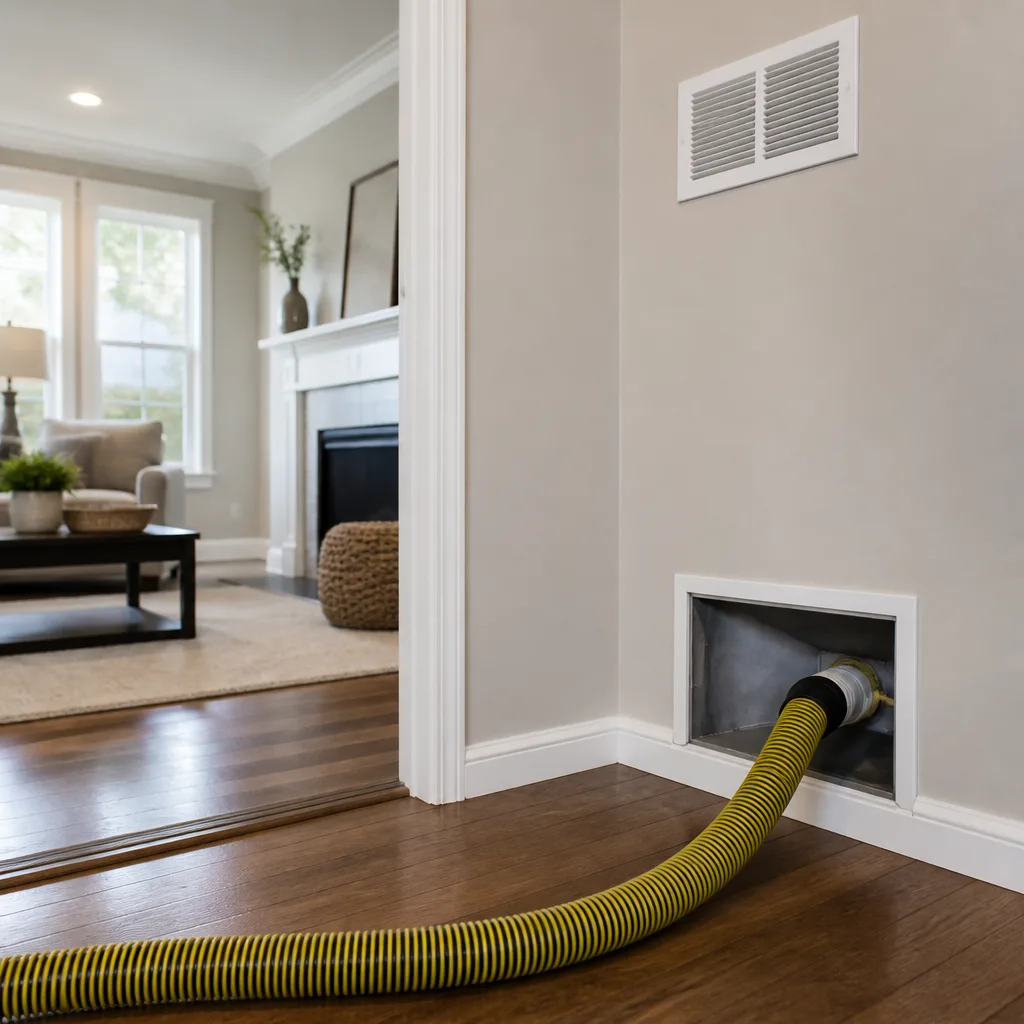 Whole-home duct cleaning
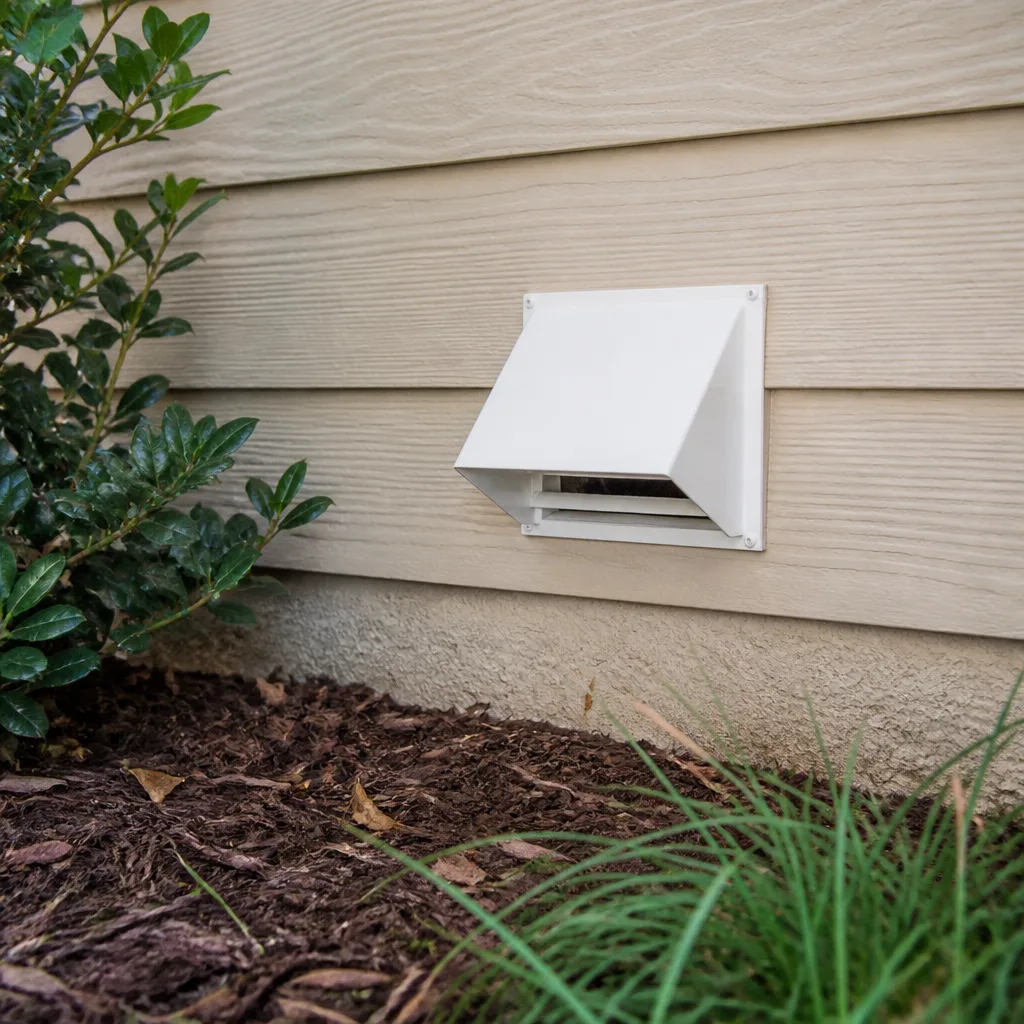 Dryer vent cleaning
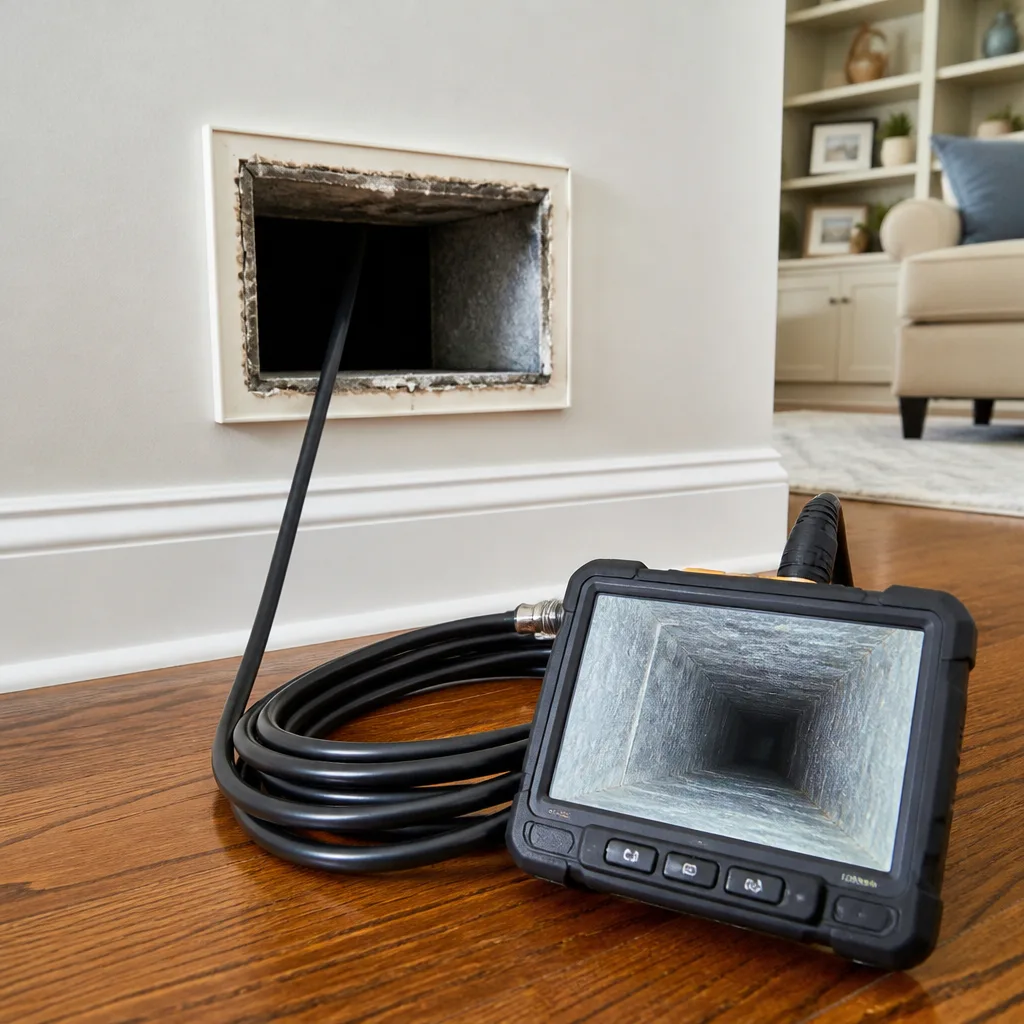 Camera inspection
 Sanitizing & deodorizing
Whole-system duct and dryer vent check with before-and-after photos - you see exactly what came out of your vents
That "$99 whole-house special" is a bait ad - the real number appears once they are in your hallway, or the "clean" is a shop-vac at the register. We photograph the inside of your ducts before and after instead.
Air Duct Cleaning Permits, Codes & Inspections in CA: What You Need to Know
If your duct cleaner installs a sheet metal access panel to reach a section of ductwork – a completely standard practice in homes across Riverside County – and doesn’t pull a permit, you could be on the hook when you sell the house. Most Jurupa Valley homeowners have no idea this situation exists until a home inspector flags it during escrow. The line between routine maintenance and regulated construction is thinner than the galvanized steel in your ductwork, and it matters more than almost anyone realizes. This guide explains exactly where that line sits under California Mechanical Code Section 605, what Riverside County Building and Safety actually requires, and the questions you should ask before hiring any Air Duct Cleaning services contractor.
Styles & brands we work with
- Whole-home duct cleaning
- Dryer vent cleaning
- Camera inspection
- Sanitizing & deodorizing
Quick Answer
Pure air duct cleaning – running brushes, vacuums, and air whips through existing ductwork without cutting into it – does not require a permit in California or Riverside County. The moment a contractor cuts into ductwork, installs an access panel, replaces a section of duct, or seals leaks with mastic, the work crosses from maintenance into modification, and a permit is typically required under the California Mechanical Code.
Table of Contents
- The Legal Line: Cleaning vs. Modification Under California Code
- What California Mechanical Code Section 605 Actually Says
- When Riverside County Building & Safety Requires a Permit
- Why the Line Gets Blurred: Cleaning, Remediation, Sealing, Repair
- How Unpermitted Duct Work Hits Real Estate Transactions
- What to Ask Your Contractor in Writing Before Work Begins
- Jurupa Valley-Specific Considerations: Climate, Codes, and Common Findings
- What a Legitimate Duct Cleaning Crew Should Do (And What It Should Never Do)
- Common Mistakes to Avoid
- When to Call a Professional
- Frequently Asked Questions
- The Bottom Line
The Legal Line: Cleaning vs. Modification Under California Code
Here’s the distinction most people never hear: air duct cleaning is a service performed inside existing ductwork. Air duct modification is a construction activity performed on the ductwork itself. California treats these two things completely differently, and so does Riverside County. A cleaning crew that runs a rotating brush through your supply and return ducts, connects a HEPA-filtered negative air machine, and vacuums out the registers is doing maintenance – similar to what’s covered in our Air Duct Cleaning Troubleshooting: Common Problems and How to Fix Them resource. No permit. No inspection. No problem. A crew that cuts an opening in your duct to insert a camera, installs an access panel with sheet metal screws, patches a disconnected section, or seals joints with mastic is doing modification. That’s regulated work.
In practice, these activities often happen during the same visit, which is precisely why the confusion exists. We’ve seen Jurupa Valley homeowners assume that everything happening in their attic or crawlspace is just part of “the cleaning.” Then a home inspector finds a patched duct with no permit record, and the sale stalls while everyone tries to figure out who did what and when. The rule of thumb: if metal is being cut, removed, replaced, or structurally altered, it’s not cleaning anymore.
The City of Jurupa Valley operates under Riverside County’s building jurisdiction for most unincorporated areas and follows the California Mechanical Code, which adopts the Uniform Mechanical Code with state amendments. That means when a permit is triggered, it’s triggered by the same code that governs new construction and major remodels, not some lighter “maintenance permit” category. A homeowner who doesn’t verify this distinction before work begins is carrying liability they didn’t know they signed up for.
What California Mechanical Code Section 605 Actually Says
Section 605 of the California Mechanical Code governs duct systems, and it’s remarkably unromantic reading. The section regulates how ducts are constructed, installed, supported, insulated, and sealed. Crucially, it applies to “the installation, alteration, repair, and replacement of duct systems” in residential and commercial buildings. The word “alteration” is doing a lot of work here. Any change to the physical structure of a duct system – adding an access panel, splicing in a new section, relocating a register boot – falls under alteration. And alteration requires a permit.
What Section 605 does not regulate is the act of cleaning inside a duct system that remains physically unchanged. Running an agitation device through a duct, sweeping debris into a vacuum collection system, and fogging with a protective treatment are service activities. The duct system is the same before and after. No construction has occurred.
Here’s the practical breakdown:
- No permit needed: Brush cleaning of accessible duct interiors, HEPA vacuum collection through existing registers, blower fan cleaning, dryer vent brush cleaning through existing openings, fogging or spraying Guardsman treatments into existing ductwork.
- Permit typically needed: Cutting a hole in ductwork to insert a camera or cleaning tool, installing a permanent access panel, replacing a crushed or disconnected duct section, rerouting ductwork around an obstruction, sealing accessible joints with mastic as a standalone repair, reconnecting a fallen register boot.
The mechanics of why this matters are simple: an inspector from Riverside County Building & Safety can only verify work that leaves a physical record. A permit creates that record. No permit means no official confirmation that whatever was altered meets code for airflow, support, insulation, and fire safety. When you’re talking about ducts – which run through walls, floors, and attics, and which carry air you breathe for 12 to 16 hours a day – that record is the only thing separating “fixed” from “somebody’s guess.”
When Riverside County Building & Safety Requires a Permit
Riverside County Building & Safety enforces the California Mechanical Code under its jurisdiction, which covers Jurupa Valley and the surrounding communities. For ductwork specifically, the county’s permit triggers align with standard code interpretation. A mechanical permit is required when ductwork is newly installed, substantially altered, or replaced. Minor repairs, as defined by the county, may be exempt – but the definition of “minor” is narrower than most homeowners assume.
Here’s what to know if you live in Jurupa Valley:
- Installations of any new duct section trigger a permit. This includes adding a new register, extending a duct run, or adding a return air path.
- Replacing a damaged section of duct with a new section of the same size generally requires a permit. The county’s building officials have consistently interpreted “replacement” as regulated work because it involves the physical disconnection and reconnection of duct segments, which affects system balance and safety.
- Adding an access panel for cleaning access is the grayest zone, and the one that most often bites homeowners. If the panel is cut and installed as a permanent fixture, Riverside County treats it as an alteration. If it’s a temporary opening closed with foil tape and then fully restored to its original condition, some inspectors consider it part of the service. But “temporary” becomes “permanent” awfully fast when a contractor uses sheet metal and screws.
- Verifying with the City of Jurupa Valley is straightforward. The city’s building department routes permit questions through Riverside County’s online system. You can call and ask directly: “Is a permit required for this specific duct modification?” The city’s counter staff handle exactly this question regularly, especially in older neighborhoods where ductwork is more likely to need repair during cleaning.
In our experience, the homeowners who get into trouble are not the ones who ask. They’re the ones who assume the contractor checked. A legitimate contractor can tell you the permit status of the work they’re proposing, in writing, before they start. A less legitimate one will wave a hand and say “we do it all the time” or “nobody pulls permits for this.” In Jurupa Valley, that’s simply not true for modifications.
Why the Line Gets Blurred: Cleaning, Remediation, Sealing, Repair
The word “remediation” is where this gets genuinely murky. Some contractors use “duct remediation” as a fancier word for cleaning. Others use it to mean “we removed mold-like substances, resealed everything, and made the ducts like new.” The second version almost always involves physical repair – cutting out contaminated liner sections, replacing insulation, patching holes – and that work is squarely in permit territory.
The same confusion applies to sealing. If sealing means spraying an aerosolized sealant through the duct system from the inside as part of a maintenance visit, no structural alteration has occurred, and no permit is needed. If sealing means hand-applying mastic to accessible duct joints after a repair, that’s typically part of a repair scope, and the repair itself is what triggers the permit.
Here’s the risk scenario we see play out in Jurupa Valley, and one reason we published our Air Duct Cleaning Warning Signs: A Jurupa Valley Homeowner’s Reference Guide: a homeowner calls for air duct cleaning, the technician finds a disconnected duct under the house, and offers to “reconnect it while I’m down here.” The reconnection involves cutting away the crushed end, sliding on a new coupling, and screwing it in place. The homeowner thinks they got excellent service. What they actually got is an unpermitted duct repair that no inspector has verified. If that repair fails, or if it’s spotted during a sale, the liability sits with the homeowner, not the tech.
Mainstreet Air Duct Cleaning offers air duct repair in Jurupa Valley as a distinct service, and part of the value of treating it as distinct is that we don’t blur the line between cleaning and construction. When a repair scope is identified during a cleaning, we explain the scope, explain whether a permit applies, and let the homeowner decide with complete information. A company that doesn’t do that is making a decision for you that you’ll live with long after the van leaves.
How Unpermitted Duct Work Hits Real Estate Transactions
Jurupa Valley’s housing stock spans decades. Look at the neighborhoods along Limonite Avenue, the older ranches off Mission Boulevard, and the newer developments near the 60, and you’ll find ductwork installed under very different code eras. That history matters in real estate transactions because home inspectors are trained to spot duct modifications – and they’re trained to check permit records.
When a home inspector sees a shiny new section of flex duct in a 1970s crawlspace, the first question is: when was this done, and is there a permit on file with Riverside County? If the answer is no, here’s what happens:
- The buyer’s agent flags it as a potential unpermitted modification and requests disclosure from the seller.
- The seller must now either produce a permit, obtain a retroactive permit (which requires opening walls or attics for inspection), or negotiate a credit.
- Lenders that notice unpermitted work may require resolution before funding. FHA and VA loans are particularly sensitive to this.
- The closing timeline extends, sometimes by weeks, while the issue is resolved.
The brutal irony is that the duct work itself might be perfectly functional. The problem is the absence of a record. In California, permits exist to create a paper trail that verifies construction work met code. No paper trail means no verification, and no verification means the buyer, lender, and insurance company all have reason to pause.
We’ve spoken with Jurupa Valley sellers who had to pay several thousand dollars to retroactively permit duct work that a previous homeowner paid a few hundred dollars for in cash a decade earlier. If the person who did the work had pulled a $150 permit at the time, the problem wouldn’t exist. The cheap choice became the expensive choice. That’s the real reason this distinction matters: it’s not about the quality of the cleaning, it’s about the legal weight of the modification that happened along the way.
What to Ask Your Contractor in Writing Before Work Begins
You can protect yourself from permit liability with about 15 minutes of email correspondence before anyone steps onto your property. The goal isn’t to create confrontation – it’s to create a written record that confirms the work scope and the permit obligations. Here’s the checklist we recommend to every Jurupa Valley homeowner before a duct cleaning or repair job:
- Confirm the specific service being performed. “Will you be cutting into, removing, replacing, or altering any ductwork, or will the work be confined to cleaning and vacuuming inside the existing system?” Get the answer in writing.
- Ask what happens if you find damage during cleaning. “If you find a disconnected duct, a crushed section, or a gap that requires repair, what is your process? Will you stop work and quote the repair separately? Will you tell me if a permit is required?”
- Request a written scope of any repair work before it begins. “Please provide a written description of the repair, the materials you’ll use, and whether you’ll be pulling a Riverside County mechanical permit.”
- Verify who pulls the permit. If a permit is required, the contractor typically pulls it as part of the scope. Some homeowners choose to pull it themselves. Either way, the permit record needs to exist. Confirm the plan in writing.
- Ask for proof of the work after it’s done. “Will you provide photos of the completed repair, the permit number, and the inspection result if an inspection is required?”
If a contractor balks at any of these questions, that’s information. A professional who does legitimate work has no reason to avoid confirming scope in writing. A contractor who insists “you don’t need a permit for that” without being willing to put it in writing is asking you to carry the risk. Don’t.
Jurupa Valley-Specific Considerations: Climate, Codes, and Common Findings
Jurupa Valley’s climate shapes its ductwork problems in specific, predictable ways. The hot, dry summers and the Santa Ana winds fill attics and crawls with fine dust that circulates through duct systems all year. The temperature swings from summer highs above 100°F to winter nights near freezing create expansion and contraction that gradually works duct joints loose. And the older housing stock in neighborhoods like Pedley, Mira Loma, and Glen Avon means many homes have metal duct systems installed before current sealing standards existed.
What we see in Jurupa Valley attics and crawlspaces, repeatedly, is this:
- Disconnected duct runs. In older homes, the nylon zip ties and foil tape used decades ago dry out and fail. Sections of flex duct come apart at the boot or the wye. The system keeps pushing air, but a portion of it is conditioning the attic instead of the bedrooms.
- Rodent damage. Rats and mice chew through flex duct, especially in crawlspaces near the riverbed corridors. Cleaning alone doesn’t fix the hole; the duct section needs replacement. That’s repair, and it’s a permit trigger.
- Crushed returns. In the tight attics of mid-century ranches, duct runs get pinched when someone stores boxes or trades people crawl through. A crushed return starves the system, driving up energy bills in Jurupa Valley’s hot summers.
- Loose register boots. The metal boots that connect registers to ducts work free over decades. Re-seating and securing them is a minor fix, but if the boot itself is replaced or relocated, the scope changes.
These conditions mean that Jurupa Valley duct cleaning jobs are more likely than average to uncover repair needs. The homes are older, the climate is harsher on seals and connections, and the dust loads are significant. A legitimate cleaning process has to be built around the possibility that cleaning will reveal damage requiring a separate scope and, sometimes, a permit. If a company’s business model depends on never finding anything, you should wonder how hard they’re actually looking.
Mainstreet Air Duct Cleaning’s approach is built for exactly this reality. Our process uses Rotobrush contact-cleaning technology paired with Nikro HEPA-rated vacuum systems to capture whatever comes out of the ducts, and Abatement Technologies air filtration to keep the negative pressure environment clean during service. The point of that equipment isn’t just thoroughness – it’s that it verifiably captures what’s removed rather than blowing it through the register grilles and back into the house. And because we also offer air duct repair in Jurupa Valley as a true service line, we don’t have to blur the line between cleaning and modification. If we find damage, we scope it, explain it, and let you decide.
What a Legitimate Duct Cleaning Crew Should Do (And What It Should Never Do)
You can learn a lot about a duct cleaning company by watching how they handle the permit and code dimension of the work. Here’s what a professional crew looks like in action:
They inspect first, then explain, then act. Before any cleaning begins, a legitimate tech will do a visual inspection of the accessible ductwork. If they find damage that requires repair, they’ll stop, show you photos, and explain the scope. They won’t start cutting and patching in the same breath as the cleaning.
They can tell you what equipment they’re using and why. A crew using a shop-vac and a brush from a hardware store is not doing what a crew using a Rotobrush system and a Nikro HEPA collector is doing. The difference is measurable: agitation + containment vs. surface-level movement of dust. In Jurupa Valley’s dusty climate, the difference shows up in what’s left behind in the ducts.
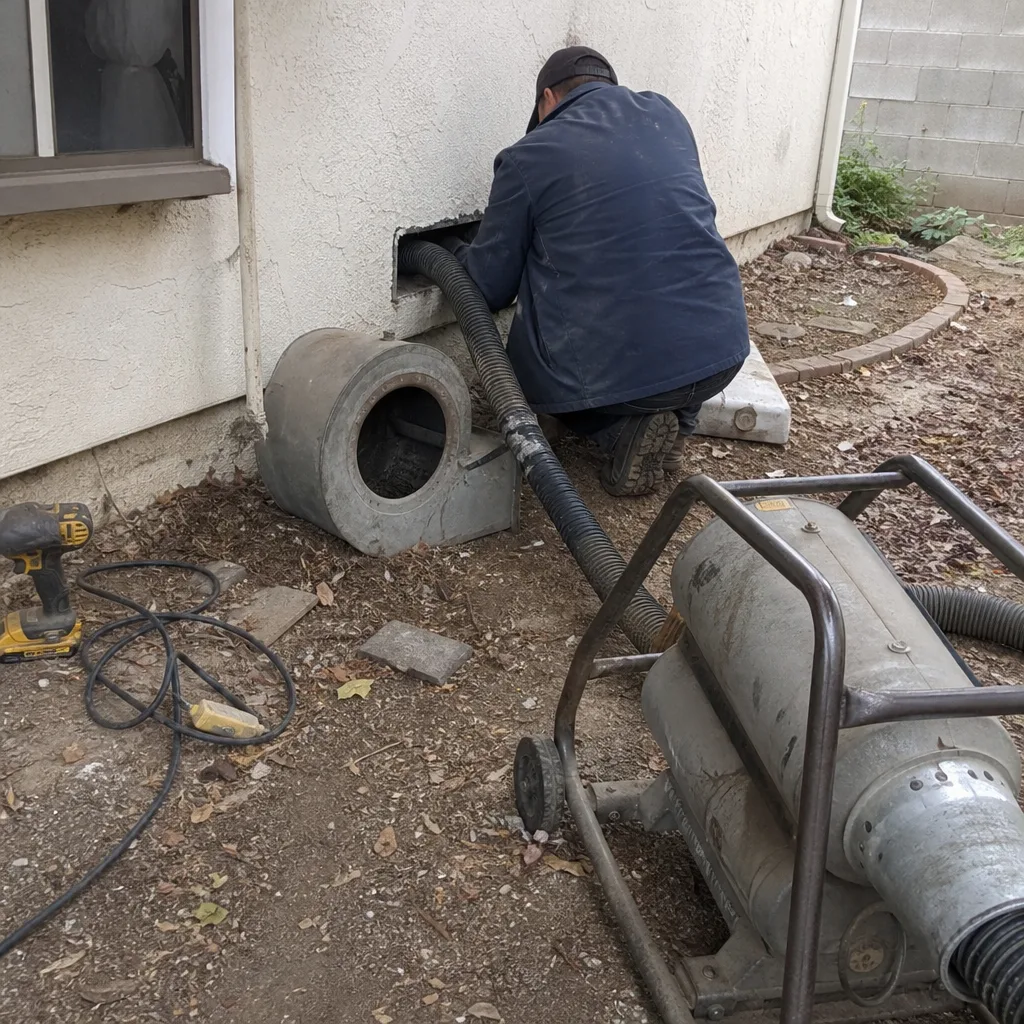
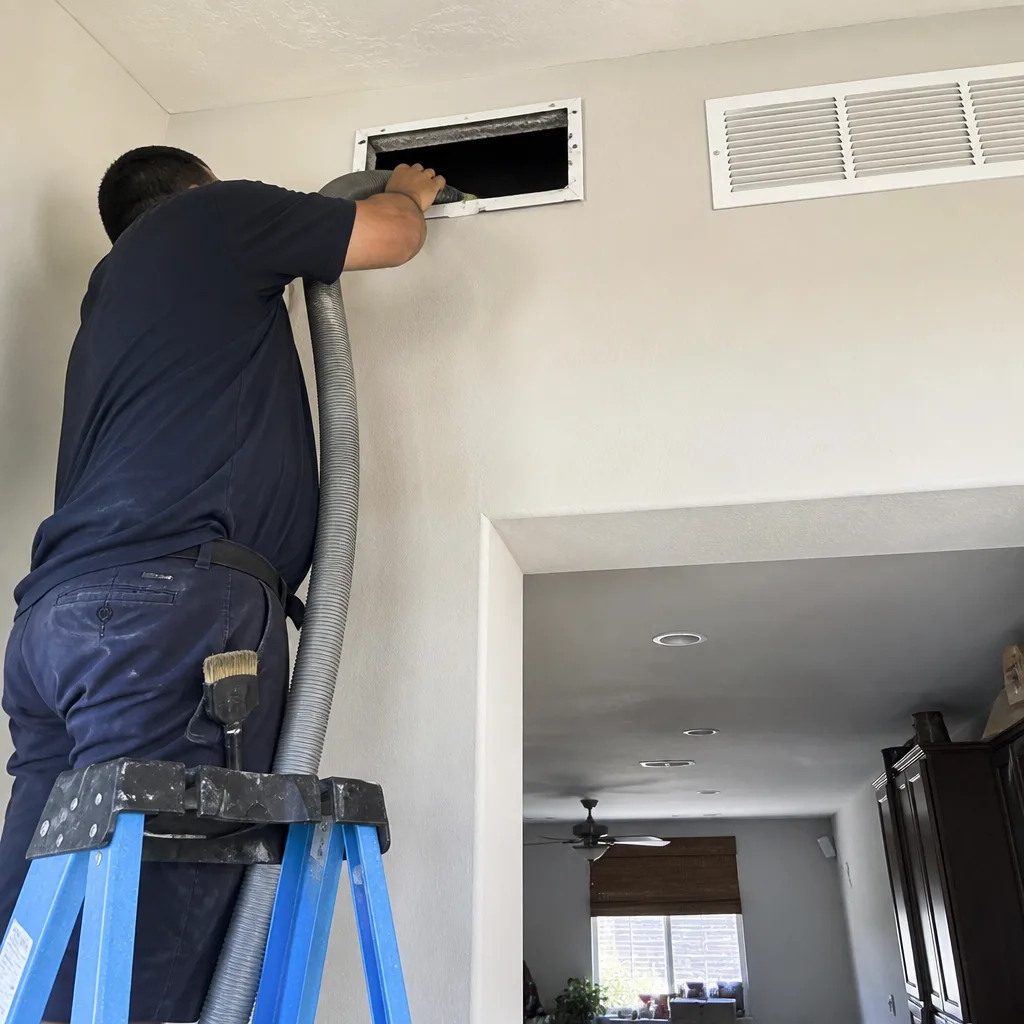
They document everything. Before-and-after photos of the register interiors, photos of any repair scope, a written summary of what was cleaned and what was found. We show our clients what we removed. That’s the standard, and it’s directly relevant to the permit question: documentation creates a record, even when a permit isn’t required.
What a legitimate crew should never do:
- Cut an access panel into your ductwork without explaining that it’s an alteration and discussing permit requirements with you first.
- Offer to “fix” a damaged duct section during a cleaning visit without a written repair scope and a conversation about whether Riverside County requires a permit.
- Claim that all duct work is “maintenance” and permits never apply. That’s factually wrong under California Mechanical Code Section 605.
- Blow air through your system without containment. Negative air at the cleaning point, not positive pressure pushing debris through the registers, is the difference between cleaning and redistribution.
If you already know what’s in your ducts when the service begins, you’ll know what questions to ask when it’s over. And that’s the whole game: the more you know about the code lines and the equipment standards, the harder it is for anyone to hand you a version of the truth that protects them and not you. For more guides & resources on protecting your home and your investment, see our blog.
Common Mistakes to Avoid
- Assuming all duct work is the same category of service. Cleaning and alteration are different legal acts in Riverside County. Treating them as one thing is the single most common error we see, and it’s the one that turns into real estate problems later.
- Not asking about access panels before work begins. If a contractor plans to cut into your ducts to clean deeper, that’s an alteration. In Jurupa Valley, older homes often require this access. The time to learn whether a permit applies is before the cut, not when the home inspector flags it during a sale.
- Believing “nobody pulls permits for that.” People do pull permits for duct modifications in Riverside County. The ones who say nobody does are usually the ones who don’t want to. The county’s records show the permits being issued – that’s easy to verify.
- Failing to get repair work documented. If you have a duct repaired during a cleaning visit, get a written scope, photos, and a receipt that describes the work specifically. “Duct service” on an invoice doesn’t help you when a future buyer asks for proof.
- Skipping the inspection on permitted work. If a permit is pulled, the inspection is the part that verifies the work. Skipping it means the permit is still open, which creates its own set of problems in a transaction. Always close out the permit with the required inspection.
- Choosing the cheapest bid without asking what the bid includes. A $200 duct cleaning that doesn’t include containment equipment, documentation, or a defined repair policy can cost far more than the legitimate bid when unpermitted work surfaces later. In Jurupa Valley, where the housing stock rewards thorough work, the cheap bid is often the most expensive one.
When to Call a Professional
You should call a professional whenever the scope moves beyond what you can see and verify yourself. That means: when your ducts haven’t been inspected in the last several years, when you can see dust accumulating around registers despite regular filter changes, when rooms heat or cool unevenly, when you hear whistling or rattling from the ductwork, or when rodents have been present in the attic or crawl. Any of these signals means the system needs to be inspected by someone who knows what to look for and knows where the code lines are. If you’re in Jurupa Valley, Mainstreet Air Duct Cleaning offers free estimates and we’ll walk you through exactly what’s cleanable, what’s repairable, and what the county rules say about the difference. Call (877) 358-3053 to set up an inspection. We show you what we find, we explain what it means, and we never blur the line between cleaning and construction.
Frequently Asked Questions
No, cleaning inside existing ductwork does not require a permit in California. A permit is triggered only when ductwork is cut into, altered, replaced, or newly installed. Cleaning that uses brushes, vacuums, and air whips through existing registers is a maintenance service, not a construction activity.
Yes, in most cases installing a permanent access panel in ductwork is considered an alteration under the California Mechanical Code and Riverside County typically requires a mechanical permit. The panel changes the physical structure of the duct system, which moves the work from maintenance into regulated construction.
Yes. Unpermitted duct modifications often appear on home inspection reports, which can stall a sale, create lender requirements, or force the seller to pay for retroactive permitting. In Jurupa Valley’s older housing stock, this is a common escrow complication because decades-old duct systems frequently have undocumented repairs.
Ask them to confirm in writing whether the work includes cutting into, replacing, or altering any ductwork, and whether a Riverside County permit applies to that scope. Also ask what happens if they find damage during cleaning, and whether they will pull the permit if repairs are needed. A professional will answer directly.
Duct cleaning is maintenance performed inside existing ductwork and never requires a permit. Duct repair, including replacing damaged sections, reconnecting disconnected runs, or sealing joints, is modification work that may require a permit depending on the specific scope. A legitimate contractor will explain which category your job falls into.
Ask them what equipment they’ll bring. Professional crews use agitation systems like Rotobrush combined with HEPA-filtered collection like Nikro, and may use Abatement Technologies air filtration for containment. A shop-vac and a hardware-store brush won’t produce the same result, and in Jurupa Valley’s dusty climate, the difference is measurable.
For help with any of these questions, call Mainstreet Air Duct Cleaning at (877) 358-3053 for a free estimate. We’ll walk you through the permit picture for your specific job before any work begins.
The Bottom Line
Air duct cleaning in California doesn’t require a permit, and a legitimate cleaning company will tell you that plainly. What requires a permit is modification: cutting, replacing, sealing, or altering ductwork in any structural way. In Jurupa Valley, where older homes and a punishing climate make duct damage common, the chance that a cleaning job uncovers repair needs is higher than average, and the line between cleaning and modification matters more. Ask the right questions in writing before work starts, demand documentation of any repair scope, and choose a contractor who treats cleaning and repair as different services with different rules. The five minutes you spend confirming the scope is the cheapest insurance you’ll ever buy against a stalled escrow or a retroactive permit bill. Learn more about Mainstreet Air Duct Cleaning or see how we handle air duct cleaning in Jurupa Valley and dryer vent cleaning in Jurupa Valley.
Written by the team at Mainstreet Air Duct Cleaning, serving Jurupa Valley since 2011.
See the difference
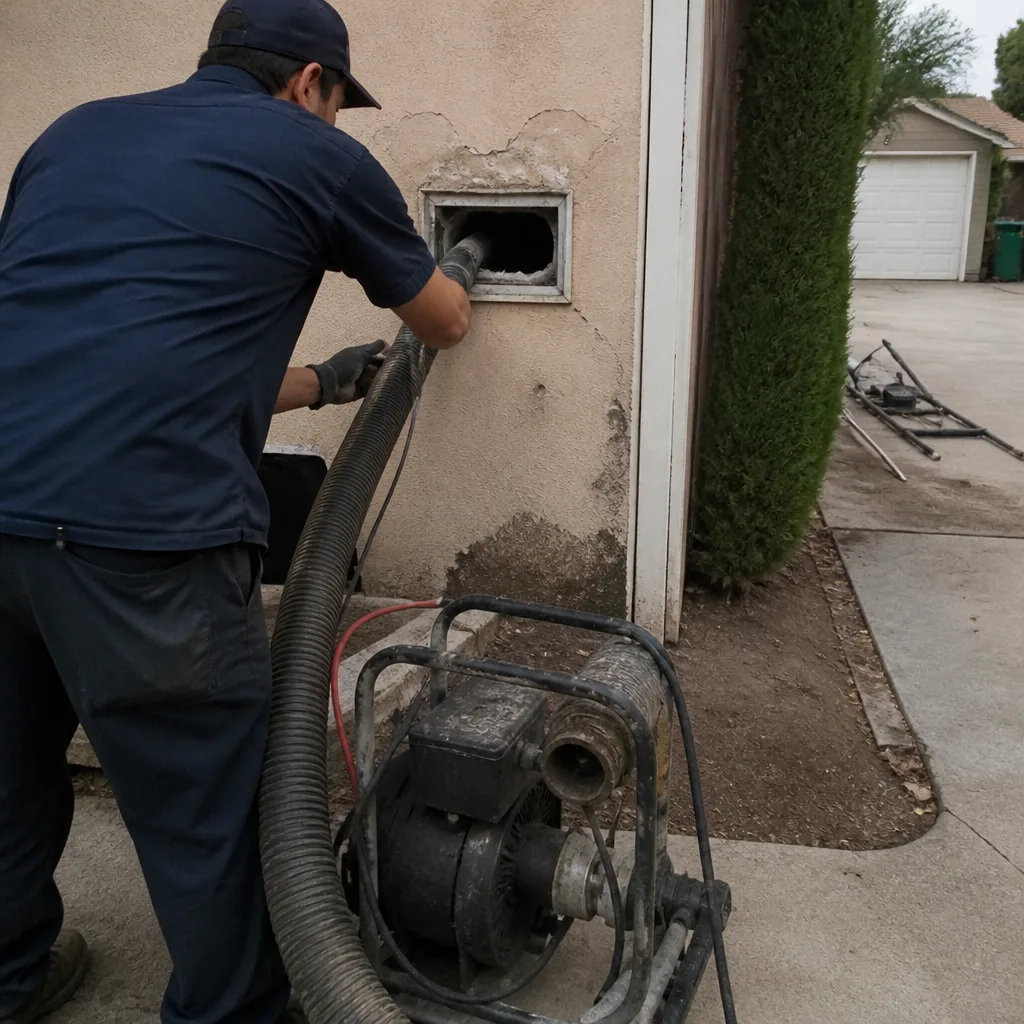 Before
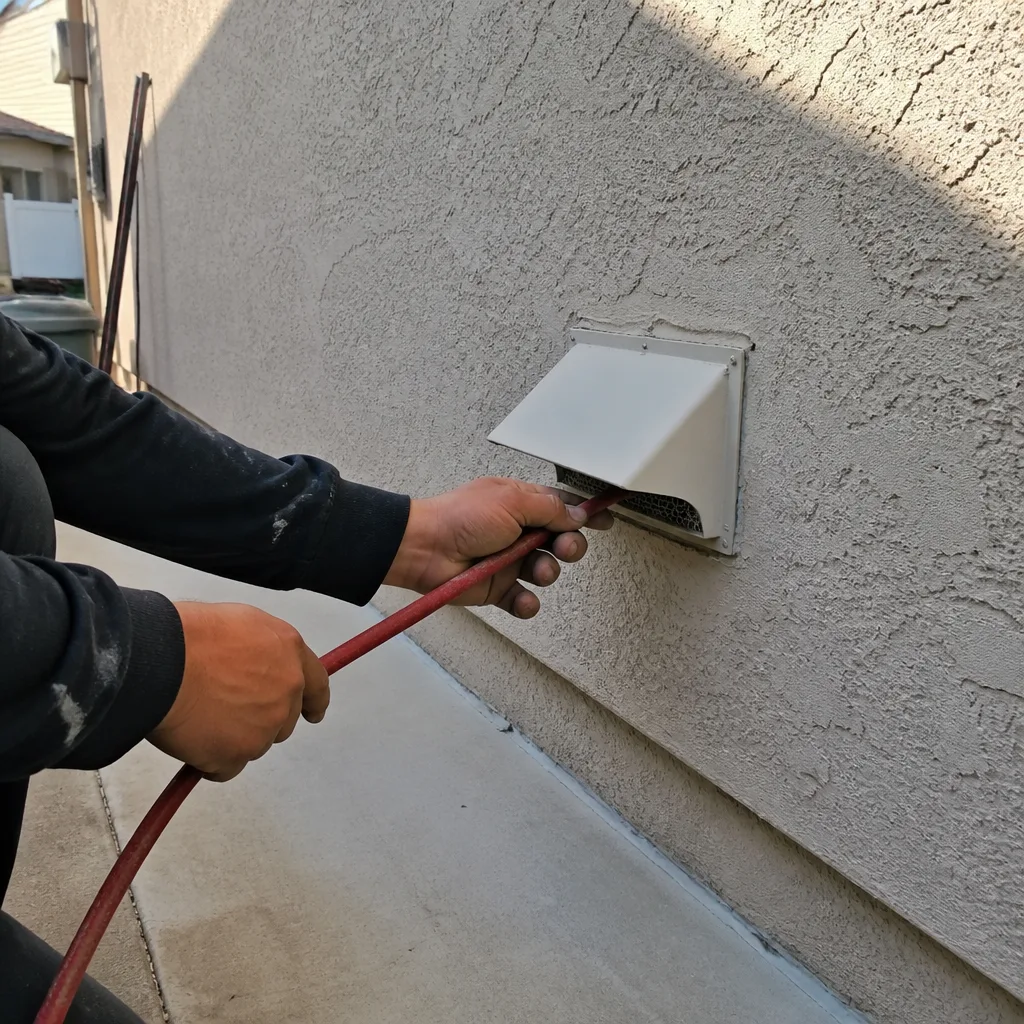 After
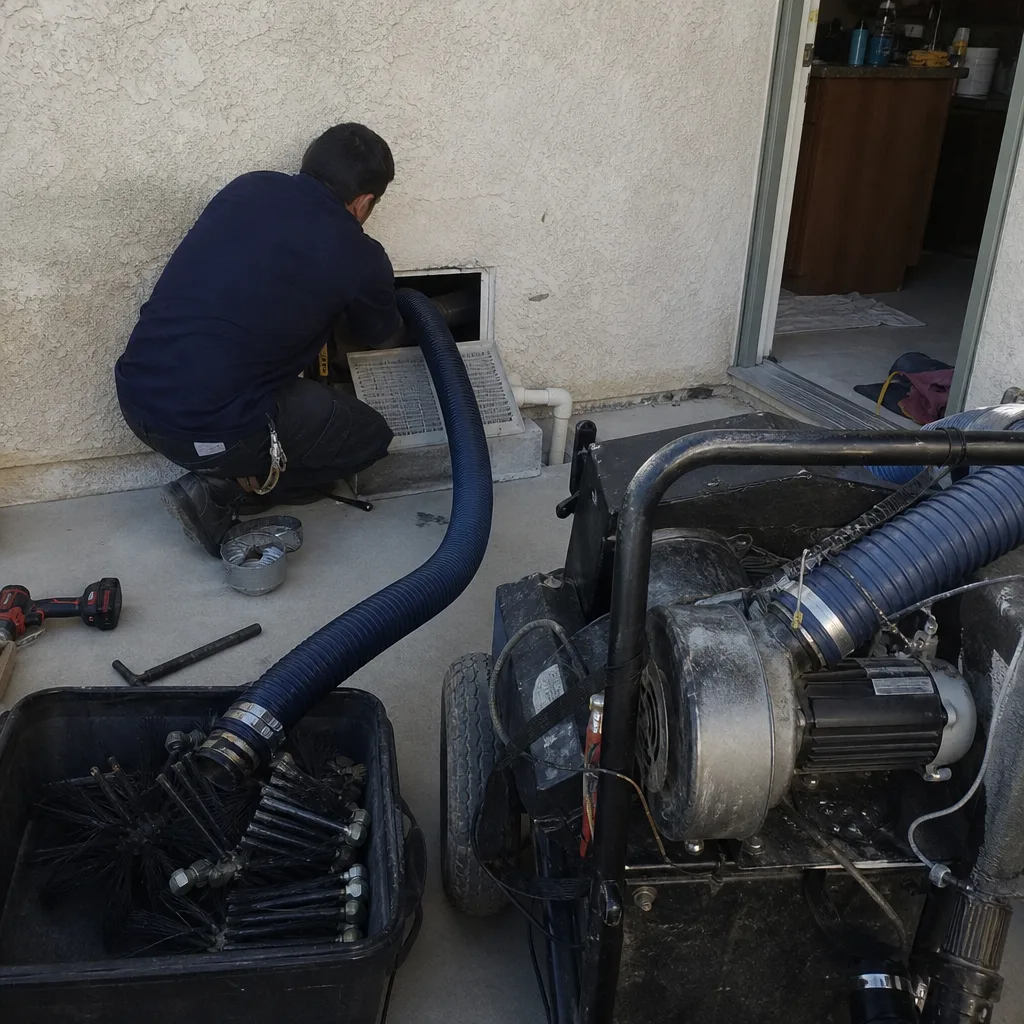 Before
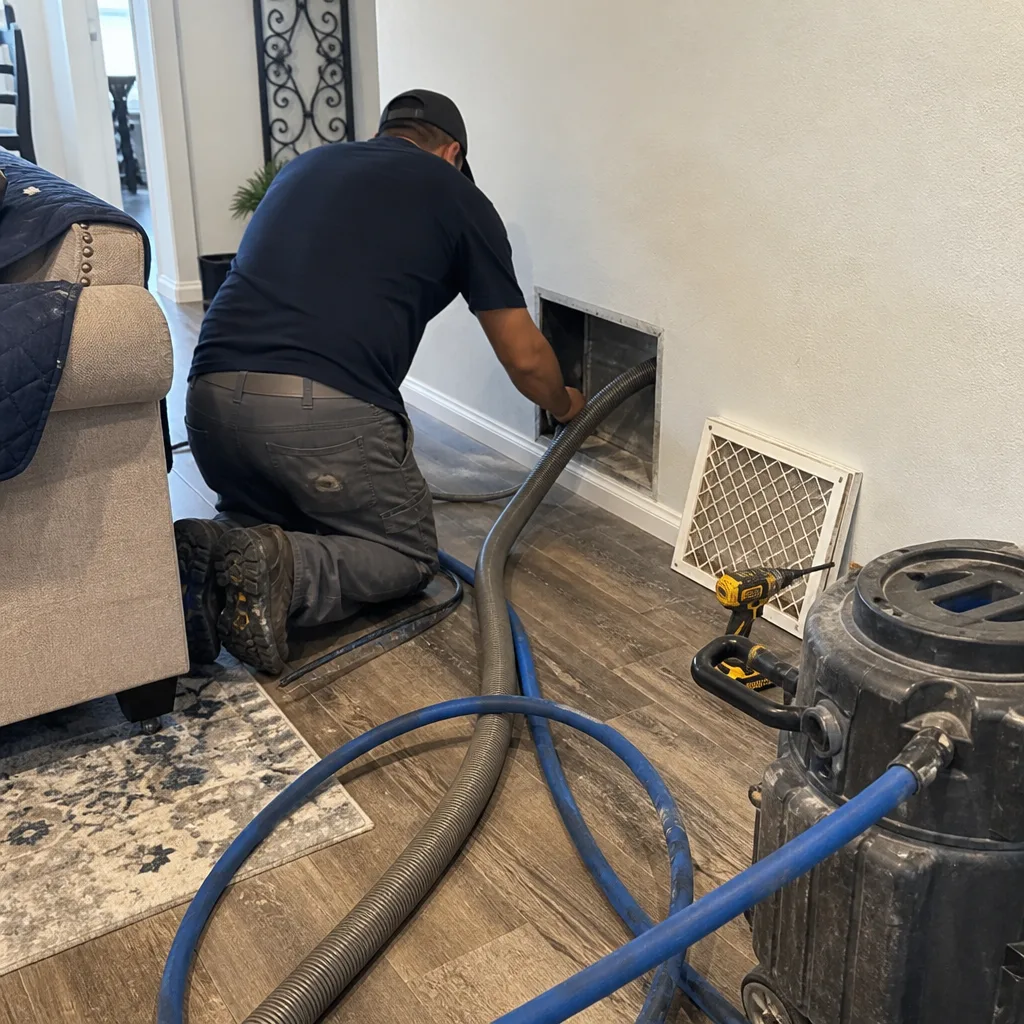 After
 Before
 After