
Last updated November 2, 2026
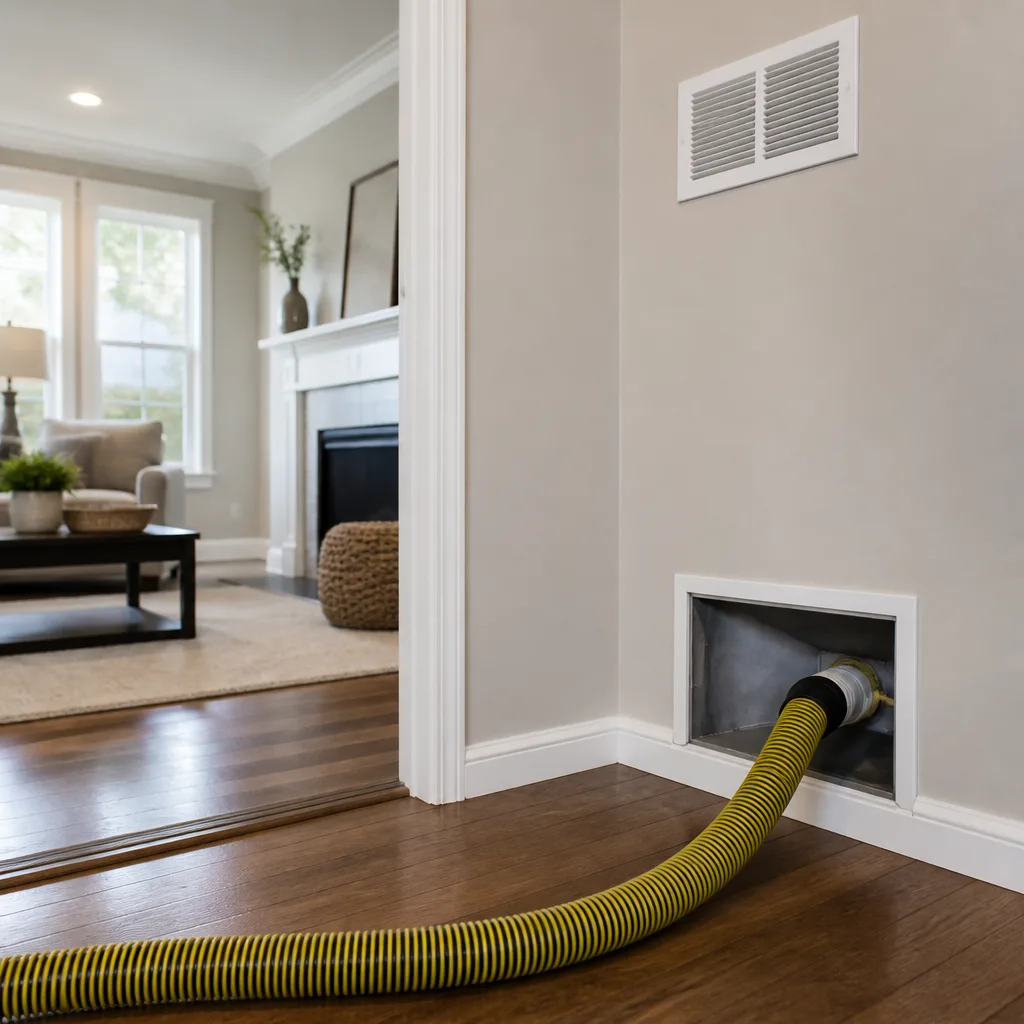 Whole-home duct cleaning
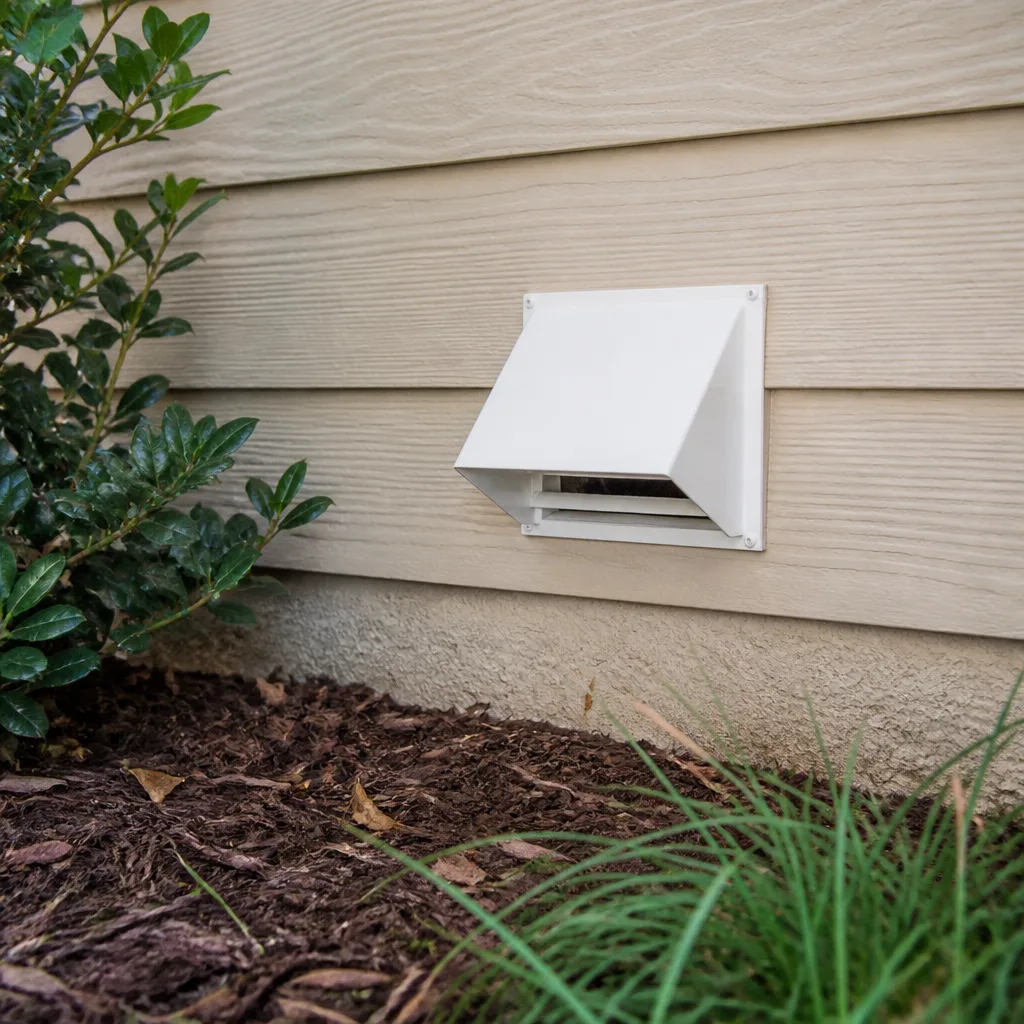 Dryer vent cleaning
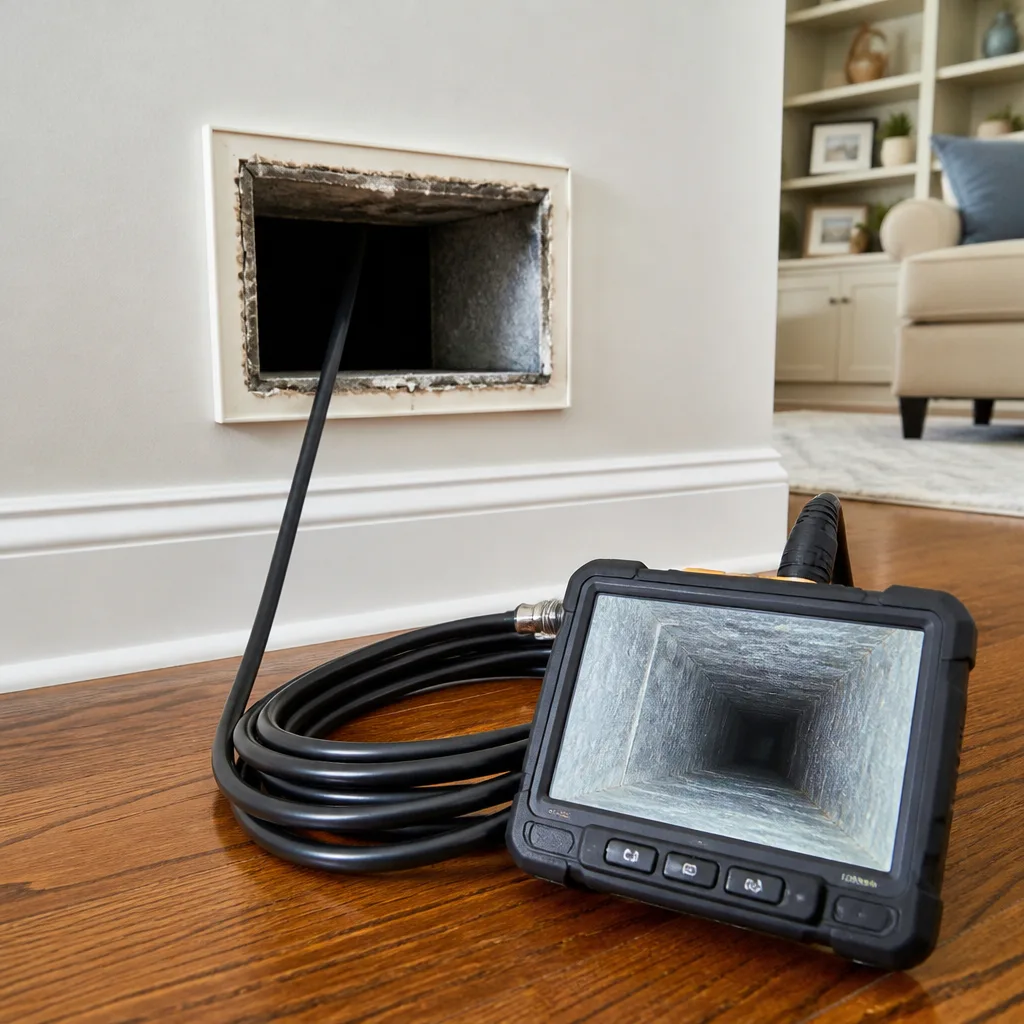 Camera inspection
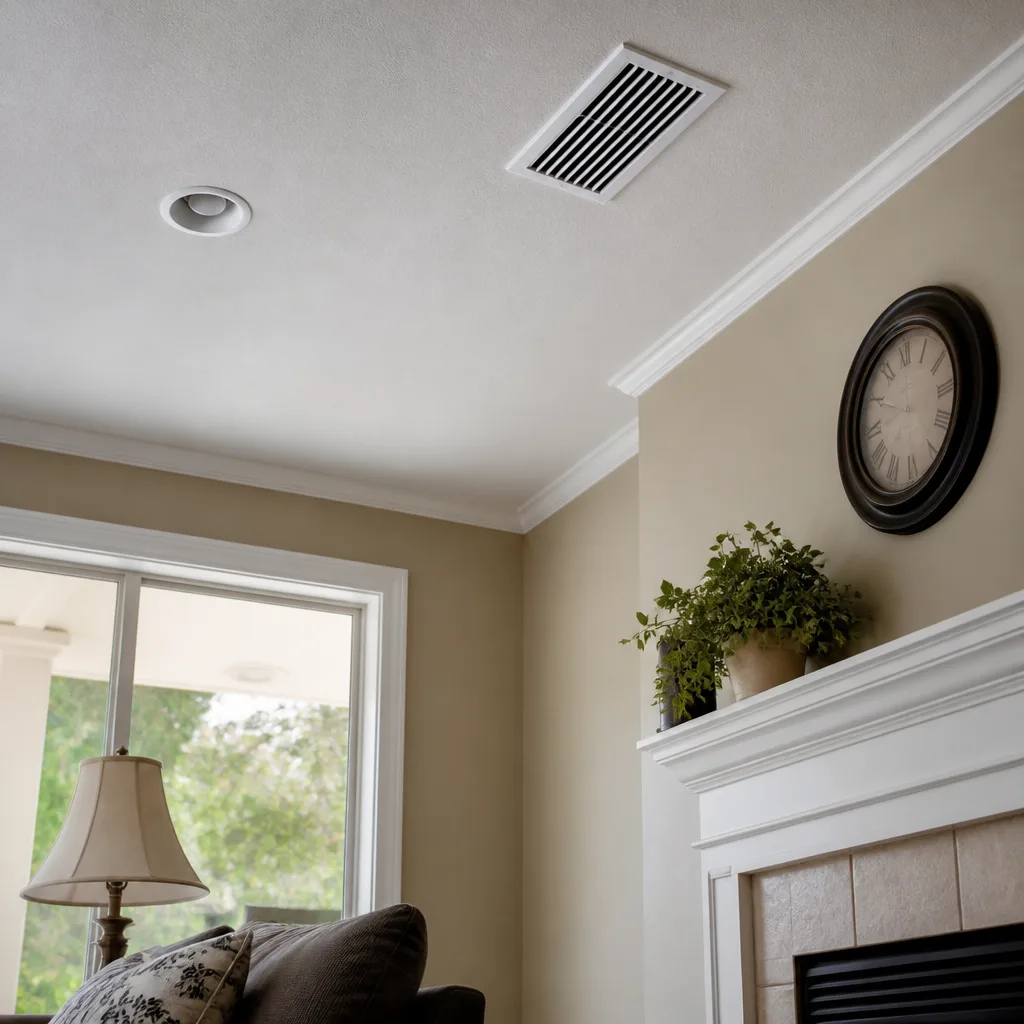 Sanitizing & deodorizing
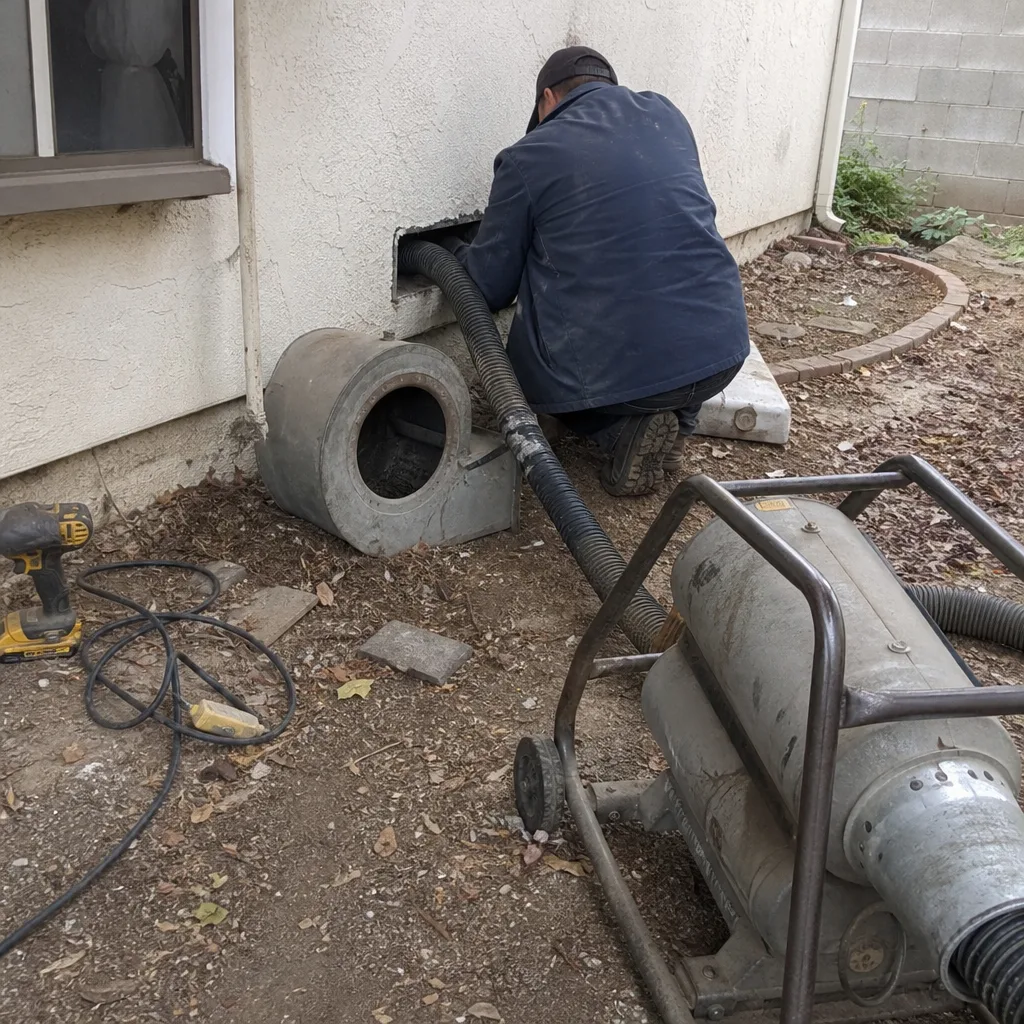
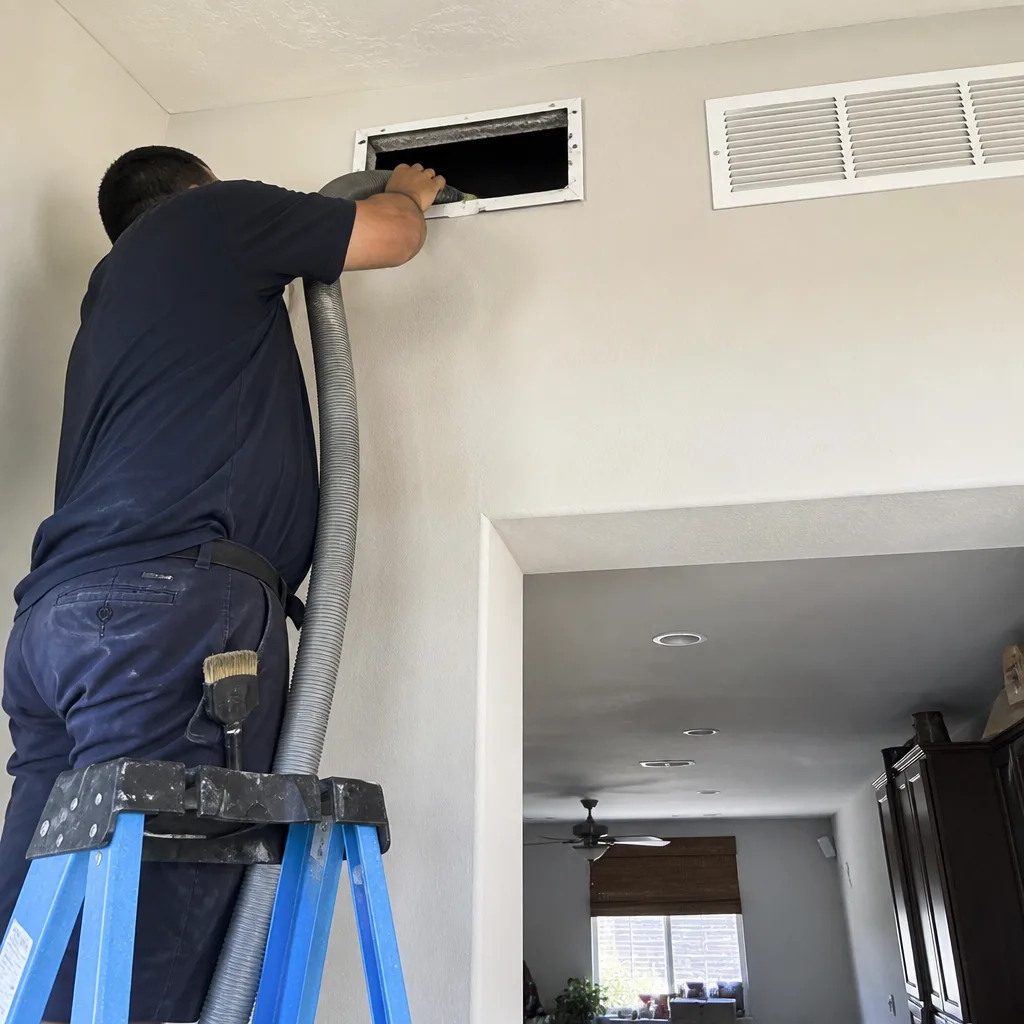
Whole-system duct and dryer vent check with before-and-after photos - you see exactly what came out of your vents
That "$99 whole-house special" is a bait ad - the real number appears once they are in your hallway, or the "clean" is a shop-vac at the register. We photograph the inside of your ducts before and after instead.
Air Duct Cleaning Warning Signs: A Jurupa Valley Homeowner’s Reference Guide
When a home in Jurupa Valley built in the 1980s or 1990s starts showing uneven room temperatures in summer, most homeowners assume the HVAC unit is failing. The actual cause is often collapsed or heavily contaminated flex duct sections that restrict airflow to certain zones. You’ll replace a compressor, spend thousands, and the back bedroom still won’t cool. This guide covers the warning signs that live inside your ductwork, the ones that never announce themselves with a blinking light, and how homeowners in Jurupa Valley can spot them before they become expensive problems. For a deeper dive, see The Complete Air Duct Cleaning Guide for Jurupa Valley Homeowners. You’ll learn what to look for, what to listen for, what your utility bill is trying to tell you, and when it’s time to call someone who can actually see inside the system.
Styles & brands we work with
- Whole-home duct cleaning
- Dryer vent cleaning
- Camera inspection
- Sanitizing & deodorizing
Quick Answer
The most reliable warning signs that you need air duct cleaning in Jurupa Valley are: visible debris blowing from supply registers, a musty or burning smell that persists beyond 15 minutes of runtime, uneven room temperatures caused by restricted airflow, a utility bill that climbs without a matching rate increase, and dust accumulation on surfaces within 48 hours of cleaning. Any three of these together means your duct system needs our Air Duct Cleaning services, not just a filter change.
Table of Contents
- How to Tell an HVAC Problem from a Duct Contamination Problem
- Why Older Jurupa Valley Homes Have a Fiberglass Liner Problem
- What Your Utility Bill Reveals About Duct Restriction
- The First-Run-of-the-Season Smell That Won’t Go Away
- Duct Leak vs. Dirty Duct System: Two Different Problems
- How to Verify the Work Was Actually Done
- Why Equipment Matters More Than the Coupon Price
- Seasonal Timing for Duct Cleaning in Jurupa Valley
- Common Mistakes to Avoid
- When to Call a Professional
- Frequently Asked Questions
- The Bottom Line
How to Tell an HVAC Problem from a Duct Contamination Problem
Most homeowners in Jurupa Valley call an HVAC technician when the real culprit is inside the ductwork. That’s an expensive confusion. A failing compressor costs $3,000 to $6,000. A duct contamination problem costs a fraction of that to diagnose and fix, but only if you know which one you’re looking at.
The distinction comes down to observable symptoms, not guesswork. Here’s a structured way to sort it out before you call anyone.
Signs the HVAC unit itself is failing:
- The outdoor condenser makes unusual mechanical noise (grinding, screeching, banging)
- The system short-cycles: turns on for 2-3 minutes, shuts off, repeats
- Ice forms on the refrigerant line or evaporator coil
- The blower motor won’t spin at all, or spins intermittently
- Multiple rooms lose cooling simultaneously and the thermostat never reaches setpoint
Signs the duct system is the problem:
- The system runs constantly but one or two rooms stay hot while others are fine
- You see dust or debris actively blowing from supply registers when the system starts
- The filter clogs with unusual speed (weekly instead of monthly)
- You can see dust streaks radiating outward from register openings on walls or ceilings
- Rooms above the garage or at the end of long duct runs consistently underperform
- You hear a whistling or hissing from closed-off rooms, indicating pressure imbalance in the ductwork
In Jurupa Valley, where July temperatures routinely cross 100°F, a duct restriction doesn’t just make a room uncomfortable. It forces the HVAC system to run longer cycles, which raises cooling costs and accelerates blower motor wear. We’ve seen homes in the Pedley area where a partially collapsed return duct doubled the runtime on a 4-ton unit. The homeowner thought the unit was undersized. It wasn’t. The return path was choked down to about 40% of its designed airflow.
If your system runs, cools some rooms adequately, and shows no mechanical faults, the odds are better than even that the ducts are the issue. Our air duct cleaning in Jurupa Valley service includes an airflow assessment that identifies whether the problem is contamination, collapse, or leakage before any cleaning begins. That diagnostic step matters because cleaning a duct system with a collapsed section won’t fix the airflow problem. You need repair, not just cleaning.
Why Older Jurupa Valley Homes Have a Fiberglass Liner Problem
Jurupa Valley’s housing stock skews older than much of western Riverside County. A significant share of single-family homes were built between 1975 and 1995, which means one thing for ductwork: fiberglass-lined sheet metal ducts. These were the builder standard, and they’re now 30 to 50 years old.
Fiberglass duct liner, also called duct board, is a rigid insulation panel with a fiberglass surface facing the airstream. It worked fine for its intended lifespan. The problem is that lifespan ended years ago for many Jurupa Valley homes.
Here is what happens as fiberglass liner ages:
- The resin binder that holds the fiberglass fibers together breaks down from decades of thermal cycling
- Microscopic glass fibers begin releasing into the airstream
- Dust, pet dander, and cooking oils embed in the now-rough liner surface
- In humid conditions, the liner absorbs moisture, creating a substrate for microbial growth
- The liner can delaminate and sag into the duct cavity, partially blocking airflow
You’ll see the evidence at the registers before you see it anywhere else. Look for a fine, glassy white or translucent dust that accumulates on register louvers and nearby surfaces. It feels slightly gritty between your fingers, not soft like household dust. That’s your duct liner breaking down.
A second signal: fiberglass shards visible when you remove a register and shine a flashlight into the duct boot. If the duct boot is metal and you can see the liner edges, check for fraying. If the edges look like a worn carpet, the liner is actively shedding.
This is not a problem a standard wand-and-vacuum cleaning solves completely. The cleaned duct may look better, but if the liner is degraded, the shedding resumes within months. That’s why we pressure-test the liner during our assessment phase before recommending cleaning alone. Sometimes the honest answer is a repair of the liner or replacement of the affected section, which is a service we provide as part of our air duct repair in Jurupa Valley work. If a company quotes you a cleaning price over the phone without asking about the age of your home and the type of ductwork, they’re not doing diagnostics. They’re doing production.
What Your Utility Bill Reveals About Duct Restriction
Your electric bill is a diagnostic tool, if you know how to read it. Duct restriction doesn’t just make rooms uncomfortable. It changes the relationship between outdoor temperature and your cooling cost.
Here’s baseline context for Jurupa Valley. Riverside Public Utilities and Southern California Edison serve the area, and summer rates mean a 3,000-square-foot home with a 5-ton unit can run $350 to $600 per month in July and August. A normal seasonal increase from spring to summer might double or triple your bill. That’s expected when daytime highs go from 78°F to 102°F.
What’s not normal:
- A bill that increases 30% or more compared to the same month last year, without a rate increase or a change in your thermostat habits
- Your system runs significantly longer to reach the same setpoint it reached easily last summer
- Cooling costs stay elevated in mild weather (75°F to 85°F) when the system should be cycling lightly
- Your neighbors with comparable homes report bills that are 25-40% lower than yours in the same time period
A duct system restricted by 20-30% contamination or collapse forces the blower to work harder against higher static pressure. The system moves fewer cubic feet per minute of air, so it runs longer to extract the same amount of heat from the house. That translates directly into kilowatt-hours. We’ve measured static pressure on Jurupa Valley systems where the return side was pulling 0.8 inches of water column against a 0.5-inch design maximum. The homeowner might as well have been running the system with the filter door half-blocked, permanently.
If you have a smart thermostat, pull 12 months of runtime history. Look at runtime hours per degree-day, not just dollar totals. A meaningful deviation shows up as the system running longer for the same cooling load. That’s ductwork obstruction making itself visible in the data.
The First-Run-of-the-Season Smell That Won’t Go Away
Most Jurupa Valley homeowners know the drill. In November or March, when you switch from cooling to heating or back, the first run of the season produces a dusty, sometimes slightly burnt smell. It’s usually harmless. Dust settles on the heat strips or heat exchanger during the off-season, the system fires up, the dust burns off, and the smell clears within 15 to 20 minutes.
That’s the normal version.
Here’s the version that should concern you: the same smell returns every time the system runs, not just the first time. Or the smell doesn’t clear after 20 minutes. Or it has a component that isn’t dusty at all. It’s musty. It’s organic. It smells like a damp basement or a wet towel left in a hamper. That’s not surface dust on a heating element. That’s embedded biological material inside the ductwork itself.
What happens in Jurupa Valley specifically: although our climate is dry, the winter months bring morning marine layer influence and occasional rain. The interior of ductwork, especially in homes where the ducts run through an attic, sees significant temperature swings. Warm, humid air from the living space can condense inside cool attic ducts on winter mornings. That moisture mixes with accumulated dust, pet dander, and skin cells, and creates a biofilm layer on the duct interior. Then summer comes, the system runs, and the temperature inside the ducts supports growth. You smell the result every time the blower kicks on.
Surface dust burns off. Contaminated duct liner does not. If your system produces a musty smell on every start, or a smell that lasts more than 15-20 minutes, you’re not dealing with a seasonal annoyance. You’re dealing with material that has colonized inside the ducts. That material gets airborne every cycle and circulates through your living space. A standard cleaning that doesn’t include contact-brush agitation won’t remove an embedded biofilm layer, as we explain in Choosing the Right Air Duct Cleaning Brand: A Buyer’s Guide for Jurupa Valley. The Rotobrush contact-cleaning system we deploy is designed for exactly this scenario, pulling bristled agitation through the full duct run while negative pressure captures the dislodged material. A wand that blows air into the vents just moves the problem around.
Duct Leak vs. Dirty Duct System: Two Different Problems
A dirty duct system and a leaking duct system produce some overlapping symptoms. Both can cause high utility bills. Both can cause uneven temperatures. But the fix is different, and treating one when you have the other wastes money.
Here’s how to tell them apart.
Signs of a leaky duct system:
- Rooms get dusty even when the system hasn’t run recently, because leaky return ducts pull attic or crawlspace air into the conditioned space
- You can feel air blowing from the duct connections when you’re in the attic, or see dust streaks on insulation near duct joints
- Rooms farthest from the air handler are consistently cool in summer while rooms near the unit are freezing, indicating the system is losing pressure along the run
- The system’s ability to hold temperature degrades gradually over months, and you can’t find a dirty register or filter to explain it
- Your cooling bill is high but the system isn’t running excessively long cycles – it’s losing conditioned air into unconditioned space
Signs of a dirty duct system:
- Supply registers blow visible debris when the system starts
- Dust accumulates on surfaces within 24-48 hours after cleaning, at a rate disproportionate to outside dust levels
- The filter captures an unusual volume of material, and the material is dark gray or black rather than normal household dust
- You smell dust or mustiness when the system runs, consistently
- The blower compartment and return plenum are visibly coated even though the filter has been maintained
The diagnostic question is where the air is going. A dirty duct system restricts airflow. A leaking duct system loses air entirely. Both increase cost, but a cleaning won’t fix a leak, and sealing a leak won’t remove contamination. Some companies in Jurupa Valley only offer one service, so they’ll diagnose every problem as the one they sell. That’s a structural conflict of interest. Our air duct repair in Jurupa Valley service exists specifically because we kept encountering homes that needed both problems addressed, and we didn’t want to leave the repair half to someone else. If a duct assessment identifies leakage at the plenum connection or at a joint in the attic, we fix it. Then we clean what remains. The order matters: you don’t clean a system that’s actively pulling attic dust back in.
How to Verify the Work Was Actually Done
The most common complaint in the duct cleaning industry isn’t the price. It’s the suspicion that the work didn’t happen. A crew shows up, runs a vacuum for 45 minutes, hands over an invoice, and leaves the homeowner with no evidence that anything inside the ducts changed. You deserve better than that.
Here’s what verification looks like when the work is done with professional equipment.
- Before photos: Any reputable cleaner should show you, with a camera scope, the condition inside your supply plenum or a representative duct run before they start. If they can’t show you the inside, they’re not doing the work.
- After photos: The same camera should capture the same duct sections after cleaning. The difference should be obvious. Dark, dust-caked liner should look visibly cleaner. Fines and debris should be gone from the boot and the first few feet of the run.
- Debris inspection: The technician should show you what came out of your system, whether that’s a collection canister on a HEPA-filtered unit or a visible volume of material captured by the collection bags. If they show you nothing, ask why.
- Airflow before and after: A professional crew measures static pressure or airflow before and after. If the restriction was significant, the post-cleaning measurement should show improvement.
The equipment matters here. A Nikro HEPA-filtered vacuum system with a transparent collection chamber lets you see the debris as it’s extracted. That’s the standard we work to at Mainstreet Air Duct Cleaning. We show you what we removed because we want you to understand what was in your ducts, and because we’re confident the before and after will look different. If a company cannot or will not provide visual verification, you paid for a guess, not a service.
Why Equipment Matters More Than the Coupon Price
The price spread in Jurupa Valley duct cleaning is wide. You’ll see mailers for $99 whole-house cleanings, and you’ll see quotes for $600 to $1,200 for the same square footage. The difference isn’t profit margin. It’s equipment and process.
Here’s what a discount operator uses: a truck-mounted or portable vacuum connected to a single hose, inserted through one register at a time. No mechanical agitation inside the duct. No brush contact. No negative pressure sealing. The vacuum pulls loose, light dust from the accessible sections and leaves the compacted material stuck to the duct walls. The duct looks marginally better on the inside surface you can’t easily see, and the job is done in under an hour.
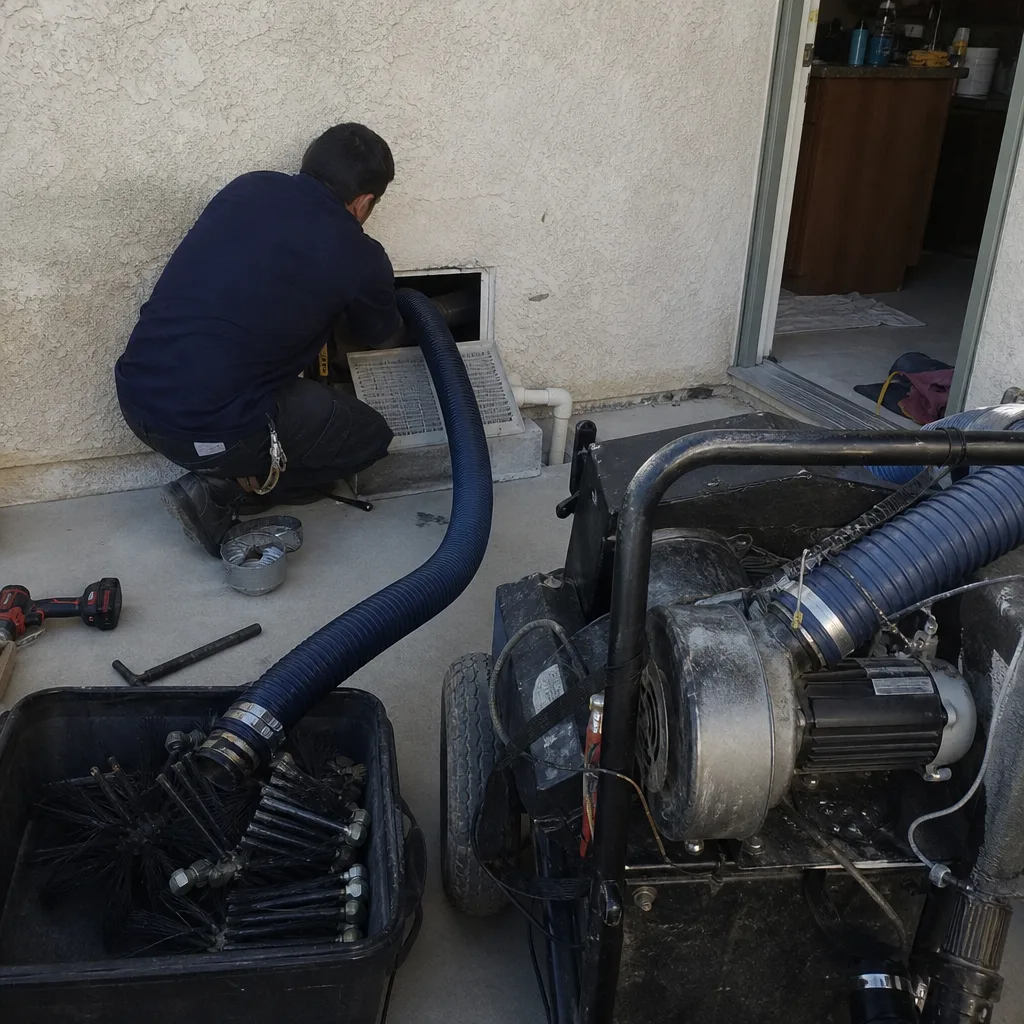
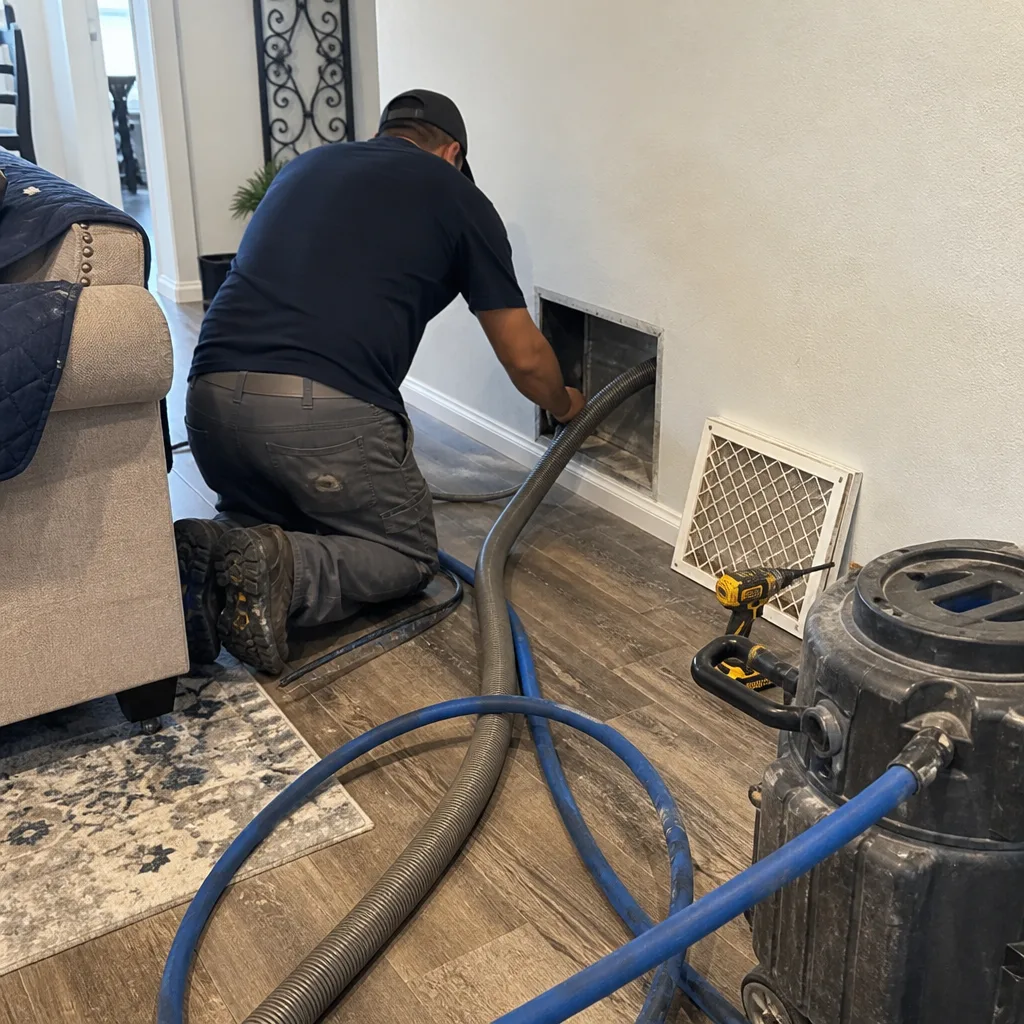
Here’s what professional-grade duct cleaning involves: mechanical contact agitation that dislodges adhered debris, paired with negative pressure and HEPA filtration that captures the loosened material at the point of service rather than venting it into the living space. Tools like the Rotobrush system rotate a bristled head through the full duct interior, physically scrubbing the surface. Nikro HEPA-filtered negative air machines run continuously during service, keeping the workspace under negative pressure so anything dislodged flows toward capture, not into your home. Abatement Technologies air filtration units scrub the ambient air during the process, which matters when you’re working in a Jurupa Valley attic at 130°F and anything kicked up wants to stay suspended.
This is the distinction we mean when we say professional-grade equipment, not a shop-vac and a coupon. The discount price is not a cheaper version of the same service. It’s a different service entirely, and it doesn’t solve the problems described in this guide.
Seasonal Timing for Duct Cleaning in Jurupa Valley
There is a best time to have ductwork cleaned in Jurupa Valley, and it’s not when you’d think. Most homeowners book duct cleaning in spring, right before cooling season. That timing makes intuitive sense, but it’s not optimal for this climate.
The issue is the Santa Ana wind cycle. Jurupa Valley sits in the path of the Santa Ana winds that funnel through the Cajon Pass and down through the Inland Empire. These winds carry fine particulate from the high desert, and they typically peak from September through November. If you clean your ducts in April, the system runs clean through summer, then picks up an entire Santa Ana season of fine dust before winter.
Better timing is early fall, after the worst of the Santa Ana season, or late winter before the transition to cooling. That way the system enters the period of heaviest use in its cleanest state. Early fall cleaning also addresses the accumulated summer load before the heating season starts.
That said, any time is better than never. If you’re seeing the warning signs described in this guide, don’t wait for a calendar date. Contamination doesn’t schedule itself around your convenience. Schedule when the signs show up.
Common Mistakes to Avoid
- Assuming a clean filter means clean ducts: A clean filter means the filter is doing its job. The ducts downstream can still be coated with material that predates your filter maintenance. Don’t use filter condition as a proxy for duct condition.
- Calling an HVAC tech for a duct problem: HVAC techs diagnose and repair mechanical failures. Many don’t inspect duct internals at all. If your system runs but airflow is bad, ask specifically whether the tech scoped the ducts or tested static pressure. If not, you still don’t have a diagnosis.
- Falling for a per-vent price: A price quoted per vent with no system-level assessment means the company hasn’t sized the job. Duct cleaning priced per vent usually ends with a higher total than a flat system quote, and tells you nothing about what equipment they’re using. We quote one flat price per system, agreed before work starts.
- Treating a leaky duct as a cleaning problem: If the issue is air escaping through gaps, cleaning won’t change your bill or your comfort. Identify leaks before you pay anyone to clean.
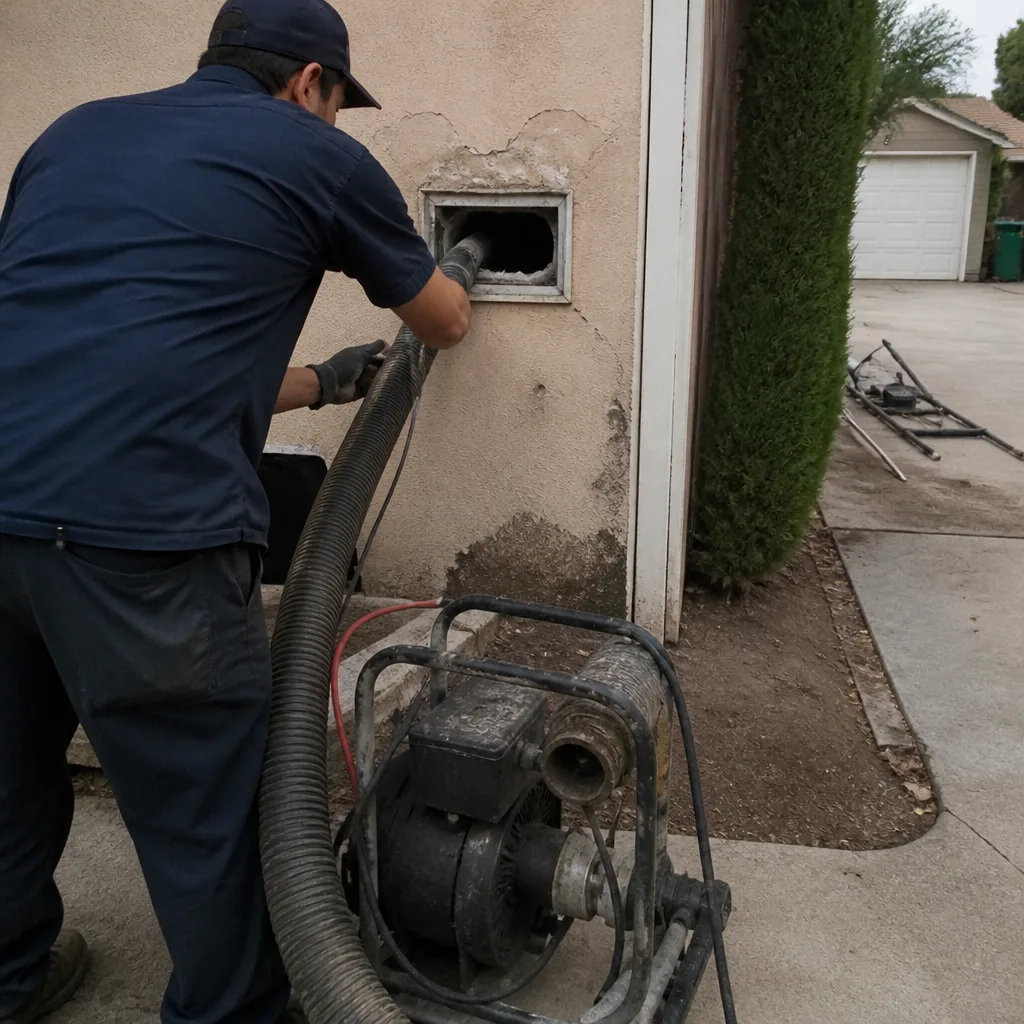
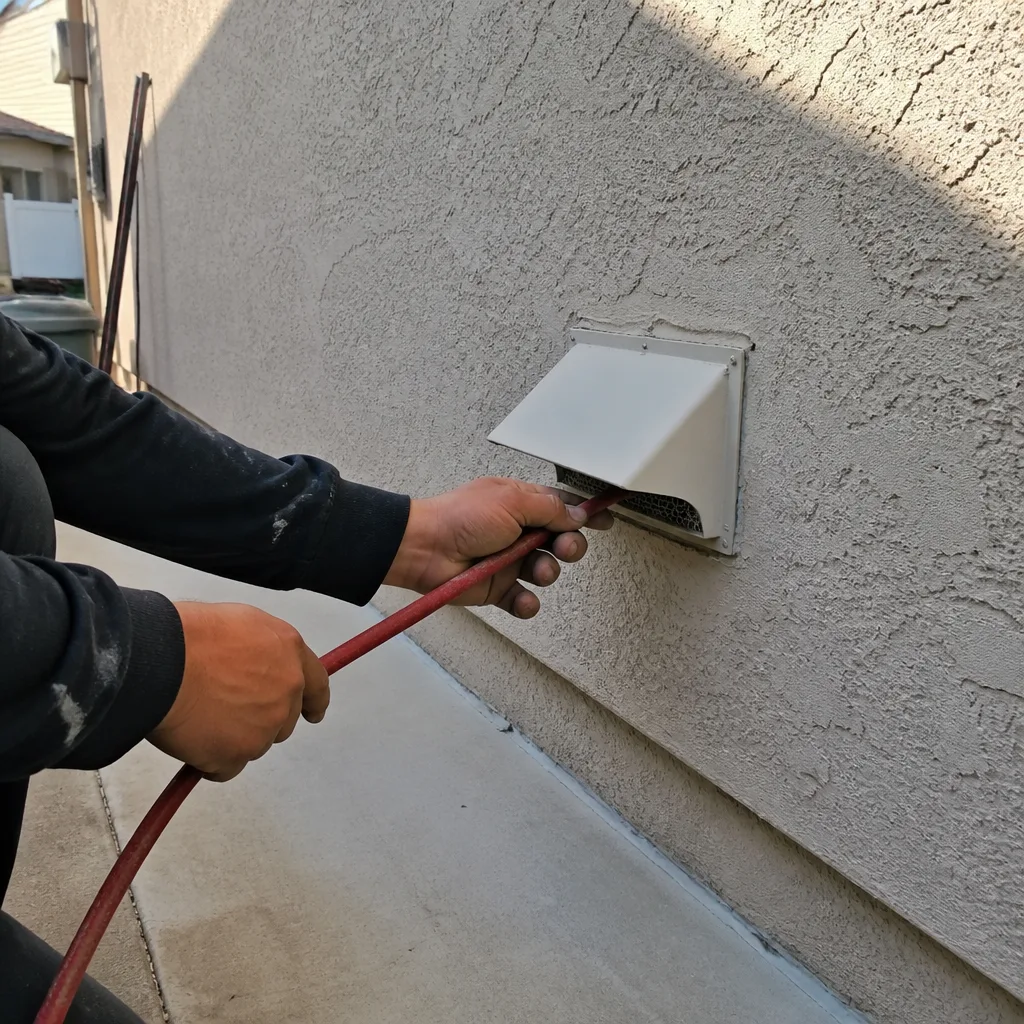
- Ignoring dryer vents while doing the ducts: The dryer vent is the single highest-fire-risk component in most Jurupa Valley homes. It accumulates lint that the duct cleaning doesn’t touch. If you’re already bringing out a crew, include dryer vent cleaning in Jurupa Valley in the same visit. It’s a separate system and needs separate attention.
- Skipping verification: If you don’t ask for before-and-after visuals, you can’t know whether the service did anything. Always ask. A company that won’t show you the work is answering your question.
- Choosing the lowest quote because all duct cleaning is ‘the same’: It isn’t. The equipment and process gap between a surface vacuum and a contact-brush, HEPA-captured cleaning is the entire value of the service. You’re not paying for the van to show up. You’re paying for what happens inside the ducts.
When to Call a Professional
Call a professional when the symptoms you’re seeing are mechanical, not cosmetic. Visible dust at the registers is a sign. Uneven room temperatures in a multi-zone home is a sign. A musty smell that recurs on every start is a sign. A utility bill that climbs 30% or more against the same month last year is a sign. Any two of these together is a reason to get a real assessment, not a reason to buy a better filter.
If you’re in Jurupa Valley and any of the warning signs in this guide match what you’re seeing, Mainstreet Air Duct Cleaning offers free estimates. We’ll scope the ducts, show you what’s inside, and tell you honestly whether cleaning is the right step or whether you’re dealing with a leak, a liner failure, or something else entirely. Call (877) 358-3053.
Frequently Asked Questions
Expect to pay between $400 and $900 for a professional duct cleaning on a typical 2,000 to 3,000 square-foot Jurupa Valley home, depending on the number of systems, the accessibility of the ductwork, and the level of contamination. The spread is driven by equipment quality and process depth. A discount operator using a single vacuum hose might charge $99 to $250, but that’s a surface service that doesn’t remove adhered debris. Call (877) 358-3053 for an exact quote on your home. Estimates are free.
Cheaper quotes come from companies using a single vacuum hose with no mechanical agitation, no HEPA filtration, and no negative pressure setup. That process removes loose dust from accessible sections but leaves the compacted material on the duct walls, which is where the problems described in this guide originate. A professional cleaning uses contact-brush technology and HEPA capture, which requires expensive equipment and trained technicians. You’re not paying for hype. You’re paying for the tools that actually change the condition inside the ducts.
Ask for before-and-after camera scope images of the same duct sections. Any company doing the work properly can show you the interior condition before service and the visibly different condition after. You should also see the debris that was extracted. If a company won’t provide visual verification, treat that as a red flag. At Mainstreet Air Duct Cleaning, we show you what we removed. That’s the standard.
For most Jurupa Valley homes, professional duct cleaning every 3 to 5 years is appropriate. Homes with pets, homes where the occupants smoke or vape indoors, homes near the Santa Ana dust corridors, and homes that have undergone recent construction should lean toward the shorter interval. If you’re seeing visible debris at the registers or smelling mustiness on every start, the interval doesn’t matter. It’s time now.
You can clean the parts you can reach: register covers, the first few inches of the duct boot, and the area around the return grille. What you cannot do with household tools is mechanically agitate the full interior surface of a duct run or capture the dislodged material under negative pressure. A shop-vac connected to a register pulls the loose dust out of one section and leaves everything else. The result looks like cleaning and changes nothing. Duct cleaning with real equipment is not a DIY job.
Yes, when the issue is accumulated allergens inside the duct system. Dust mite debris, pet dander, pollen and mold spores all embed in duct liner and recirculate every time the blower runs. Removing that material reduces the allergen load in the conditioned air. The benefit depends on the cleaning method. A contact-brush system with HEPA capture removes the embedded material. A vacuum-only service mostly doesn’t. If allergen reduction is your goal, the equipment matters more than the price.
The Bottom Line
Duct problems in Jurupa Valley don’t announce themselves with a failure light. They show up as uneven room temperatures, persistent smells, climbing utility bills, grit at the registers, and dust that comes back two days after you cleaned. Each of those signals points to a specific type of problem, and they’re not all solved the same way. A leak is not a cleaning. A collapsed liner is not a filter change. The most useful thing a homeowner can do is observe carefully, separate mechanical HVAC faults from duct-related symptoms, and call someone who can show you what’s actually inside your system. For more guides & resources, visit our blog. Clean ducts, repaired ducts, safe dryer vents, handled by one crew. That’s the standard. If you’re seeing the signs, call (877) 358-3053.
Written by the team at Mainstreet Air Duct Cleaning, serving Jurupa Valley since 2011.
See the difference
 Before
 After
 Before
 After
 Before
 After